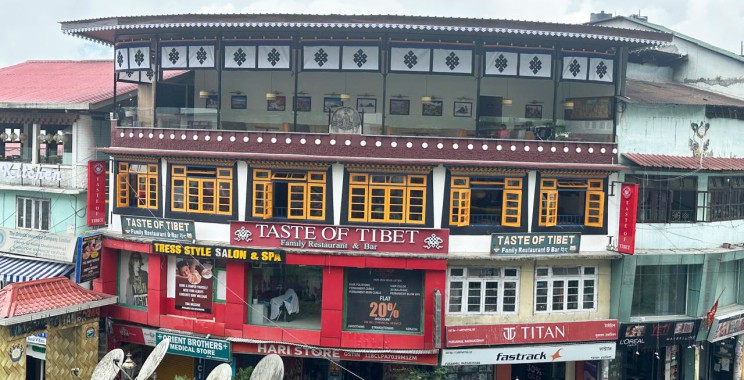

In MG Marg, a vibrant street filled with cafés, bookstores, and souvenir shops, one establishment has significantly shaped Gangtok’s culinary scene for over two decades: Taste of Tibet. Known and loved by locals, this restaurant, with its unassuming exterior, offers a warm atmosphere where generations have enjoyed steaming bowls of thukpa and plates of momo.
Recently relocated to a new two-floor, 108-seat venue that opened in June 2025, Taste of Tibet embodies a rich legacy that began in 1999. It was founded by Kunga Dhoundup Bhutia’s mother, a single parent whose quiet determination laid the groundwork for this beloved institution. The story of how this culinary gem came to be is steeped in ambition and resilience.
Curiosity led me to the restaurant one humid afternoon, prompting a conversation with Kunga Dhoundup Bhutia, the second-generation owner. As we spoke, it felt more like sharing a family story than an interview.
Kunga introduced himself as the middle child of three brothers and revealed that he has been managing the restaurant since 2018. He recounted their humble beginnings with a small three-table eatery called Tashi Restaurant on Tibet Road. Making the leap to MG Marg involved a terrifying increase in rent, from Rs 2,000 to roughly Rs 15,000. After discussions with his family, they decided to take the leap of faith. On their first day at the new location, they earned Rs 1,200, which fueled their determination to continue.
The name “Taste of Tibet” came from Kunga’s mother, who sought to bring attention to the Tibetan Sikkimese identity, especially as there were no restaurants showcasing it on MG Marg at that time. Her passion for cooking led her to whip up delightful Tibetan dishes like momos and thenthuk at home, and thus Taste of Tibet was born.
Kunga believes that the restaurant is deeply rooted in family tradition, with recipes passed down through generations. He fondly remembers his grandmother as one of the best cooks he knew, imparting her love for food to Kunga’s mother, who in turn passed it on to him.
Running the restaurant is not just a job for Kunga; it is a source of pride that allows him to share his Tibetan heritage. He noted that while Sikkim had few tourists in 1999, today people from around the world visit to savor authentic Tibetan cuisine. This evolution fills Kunga with pride, as he feels he is also contributing to the preservation of his culture.
Reflecting on the early days, Kunga mentioned the “hard work and consistency” that have guided their journey. He worked diligently, washing dishes and waiting tables while managing school, driven by the need to support his mother after his father’s passing.
The menu also holds secrets unique to their family story, with particular highlights like their radish pickle, based on his mother’s recipe. It has become an iconic pairing with momos, cherished by customers so much that they express disappointment when it runs out.
Kunga carries forward the ethos of quality, instilled by his mother, who would refuse to serve subpar food. This commitment to quality reflects their Buddhist values, emphasizing that customer trust must be respected.
Today, Kunga dreams of passing this legacy to his sons, expressing hopes that Taste of Tibet will thrive for another century, solidifying its place in Gangtok’s narrative. He acknowledges that maintaining the family business requires daily dedication but asserts it is a rewarding journey, contributing jobs and supporting community families along the way.
As I observed the bustling restaurant, filled with the sounds of laughter and the aromas of authentic dishes, it was evident that Taste of Tibet stands as a testament to resilience and cultural pride. For Kunga, seeing the restaurant reach its 100-year milestone is not just a dream; it is a symbol of how traditions thrive when nurtured through hard work and love.
Original Source: https://www.sikkimexpress.com/news-details/taste-of-tibet-a-family-legacy-at-the-heart-of-gangtok
Category:
Tags:
Publish Date: