Empowering Change: Doctors Urge Urgent Gender-Neutral Strategy for Cervical Cancer Prevention in India

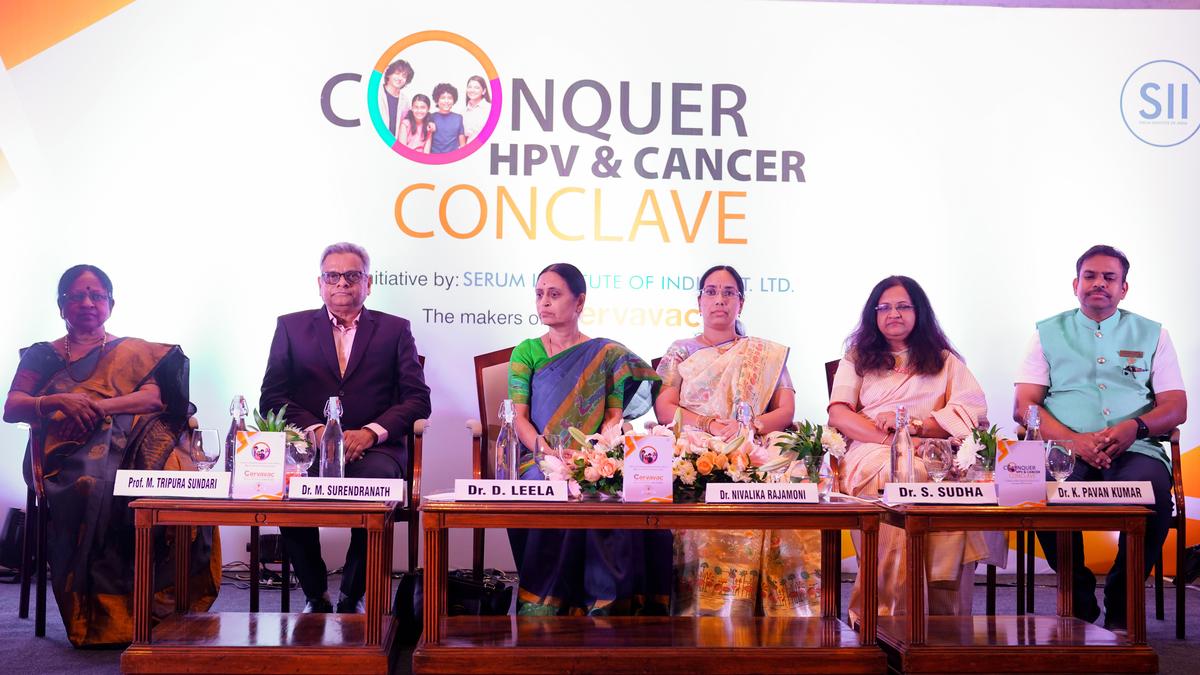
Prof. M. Tripura Sundari, Dr. M. Surendranath, Dr. D. Leela, Dr. Nivalika Rajamoni, Dr. S. Sudha, and Dr. K. Pavan Kumar gathered in Hyderabad on Thursday for the Conquer HPV and Cancer Conclave, emphasizing a growing consensus among healthcare professionals: boys should also receive the human papillomavirus (HPV) vaccine. Traditionally associated with the prevention of cervical cancer in women, experts argue that vaccinating boys is crucial in reducing HPV transmission and its related cancer risks for all genders.
Dr. M. Surendranath, Head of Pediatrics at Vijay Marie Hospital, pointed out that HPV is primarily transmitted through sexual contact, with statistics indicating one in three boys may carry the virus by age 15. “While HPV often remains asymptomatic in boys, it can be passed on to girls, increasing their vulnerability to cervical cancer,” he explained. Beyond cervical cancer, HPV is linked to penile, anal, and oropharyngeal cancers in men. Additionally, HPV types 6 and 11 cause genital warts, which, although non-cancerous, can have lasting psychological impacts. Referencing Australia’s success in reducing genital wart cases after including boys in its national vaccination program, Dr. Surendranath highlighted the potential benefits of a similar approach in India.
The “silent” nature of HPV complicates public awareness, according to Dr. D. Leela, a consultant gynecologist at St. Theresa’s Hospital. Unlike other viral infections that present immediate symptoms, most individuals are unaware they have contracted HPV, which can remain dormant for years and potentially manifest as cancer much later. This underscores the importance of public health messaging surrounding HPV.
While vaccination remains a vital preventive measure, the doctors also urged the necessity of regular screening, particularly for women 30 and older. Dr. Leela explained the three recommended screening methods: Visual Inspection with Acetic Acid (VIA), the Pap smear, and the more sensitive HPV DNA test. VIA uses vinegar to identify cervical abnormalities, while the Pap smear provides cytology testing, and the HPV DNA test can detect the virus directly, though it’s also the most costly option.
In India, the most commonly used HPV vaccines are quadrivalent, targeting types 6, 11, 16, and 18. Types 16 and 18 are responsible for over 80% of cervical cancer cases, while types 6 and 11 lead to genital warts. Dr. Surendranath noted that genital warts are less common in India compared to Western countries, accounting for approximately 5-10% of cases seen in gynecological practice. Many patients with warts often seek treatment from dermatologists rather than gynecologists.
The Conclave served as a pivotal platform for healthcare professionals to advocate for a broader understanding of HPV as a public health issue that must include male vaccination. As the fight against HPV and its associated cancers continues, these experts are leading the charge for a more inclusive approach that prioritizes the health of both boys and girls.
The discussions at the Conquer HPV and Cancer Conclave underscore a critical shift in public health strategy, aiming to reduce both the prevalence of HPV and the cancers it can cause. Such initiatives are essential in paving the way for a healthier future for all.
Original Source: https://www.thehindu.com/sci-tech/health/doctors-stress-the-need-for-gender-neutral-cervical-cancer-prevention-strategy-in-india/article69851000.ece
Category :
Tags:
Publish Date: 2025-07-25 00:37:00