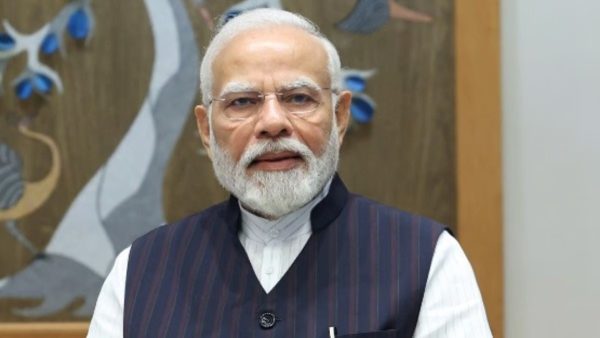

Prime Minister Narendra Modi conveyed a sense of progress in various sectors, from health to social security, highlighting India’s advancement toward a comprehensive framework of social justice. During his address on the Mann Ki Baat program, he emphasized that a significant portion of the Indian population benefits from social protection schemes, with a recent International Labour Organisation report noting that over 64% of people in India are availing themselves of these benefits.
He pointed out that approximately 950 million people in India are covered by various social security programs, a substantial increase from fewer than 250 million beneficiaries in 2015. Modi expressed confidence that these achievements signal an even brighter future for the nation, strengthening India’s position across all areas.
Additionally, he celebrated the World Health Organization’s declaration of India being free from Trachoma, attributing this milestone to the relentless efforts of countless individuals. He noted that initiatives like the Swachh Bharat Abhiyan and Jal Jeevan Mission played crucial roles in this success, reinforcing the significance of social justice in health outcomes.
Discussing historical concerns, Modi reflected on the 50th anniversary of the Emergency in India, urging citizens to remember the struggles endured during that time. He highlighted the resilience of the people, who steadfastly upheld democratic values and resisted tyranny.
On a lighter note, marking International Yoga Day, which took place on the 21st, he reported widespread global participation in yoga practices. He mentioned that roughly 300,000 individuals practiced yoga collectively on Visakhapatnam beach, with over 2,000 tribal students participating in 108 Surya Namaskars for 108 continuous minutes. This year’s theme, “Yoga for One Earth, One Health,” emphasizes the importance of community and global well-being.
Modi also spoke about the cultural significance of various pilgrimages, such as the Kailash Mansarovar Yatra and the Jagannath Rath Yatra, citing how these events offer opportunities for communal service. He acknowledged that during these pilgrimages, the spirit of giving is often more evident among supporters than among the pilgrims themselves.
Turning to regional developments, Modi highlighted the transformation of Bodoland in Assam, now a beacon of youth energy and unity through events like the Bodoland CEM Cup. He noted the remarkable participation of around 70,000 players, including many girls, showcasing a significant cultural shift.
Emphasizing India’s rich diversity, he commended the heritage of Eri Silk from Meghalaya, which is produced without harming silkworms, thus receiving the nickname “Ahimsa Silk.” Modi stated that the global demand for such ethical products is rising.
Further, he addressed the vital role of women in reshaping India’s future. He highlighted the achievements of women in Bhadrachalam, Telangana, who have transitioned from agricultural labor to producing “Bhadradri Millet Magic” biscuits, now reaching markets as far as London. Additionally, he praised Suma Uike from Madhya Pradesh for her journey toward self-reliance through mushroom farming and animal husbandry, reflecting a broader trend of women empowering themselves across the nation.
The Prime Minister also remarked on India’s contributions to international culture, citing the recent exhibition of Buddha’s relics in Vietnam, which drew an overwhelming response from the Vietnamese people. His call to visit Buddhist sites underlines the cultural interconnectedness facilitated by such initiatives.
On World Environment Day, Modi celebrated local grassroots efforts, such as that of Ramesh Kharmale, who, along with his family, created small ponds and an Oxygen Park in Junnar Hills, demonstrating a commitment to environmental sustainability.
He concluded by outlining the Ahmedabad Municipal Corporation’s tree-planting initiative, targeting millions of trees, alongside campaigns promoting carbon neutrality in villages like Patoda Gram Panchayat in Maharashtra, which exemplifies effective waste management practices.
Through these numerous initiatives, Modi articulated a vision for a unified, progressive, and environmentally conscious India, where the spirit of community service and the empowerment of women are key to national development.
Original Source: https://www.newsonair.gov.in/pm-modi-to-share-his-thoughts-in-mann-ki-baat-programme-on-akashvani-at-11-am-today-4/
Category: National
Tags:
Publish Date: 2025-06-29 13:57:00