
Tensions between Israel and Iran escalated dramatically on Friday as Israel launched a series of air strikes against Iranian targets, prompting a fierce retaliation from Tehran. Iranian forces fired approximately 400 missiles and numerous drones, resulting in casualties in Israel, where at least 24 people were killed and hundreds wounded. In contrast, recent attacks from Israel have claimed the lives of over 240 people in Iran, including 70 women and children.
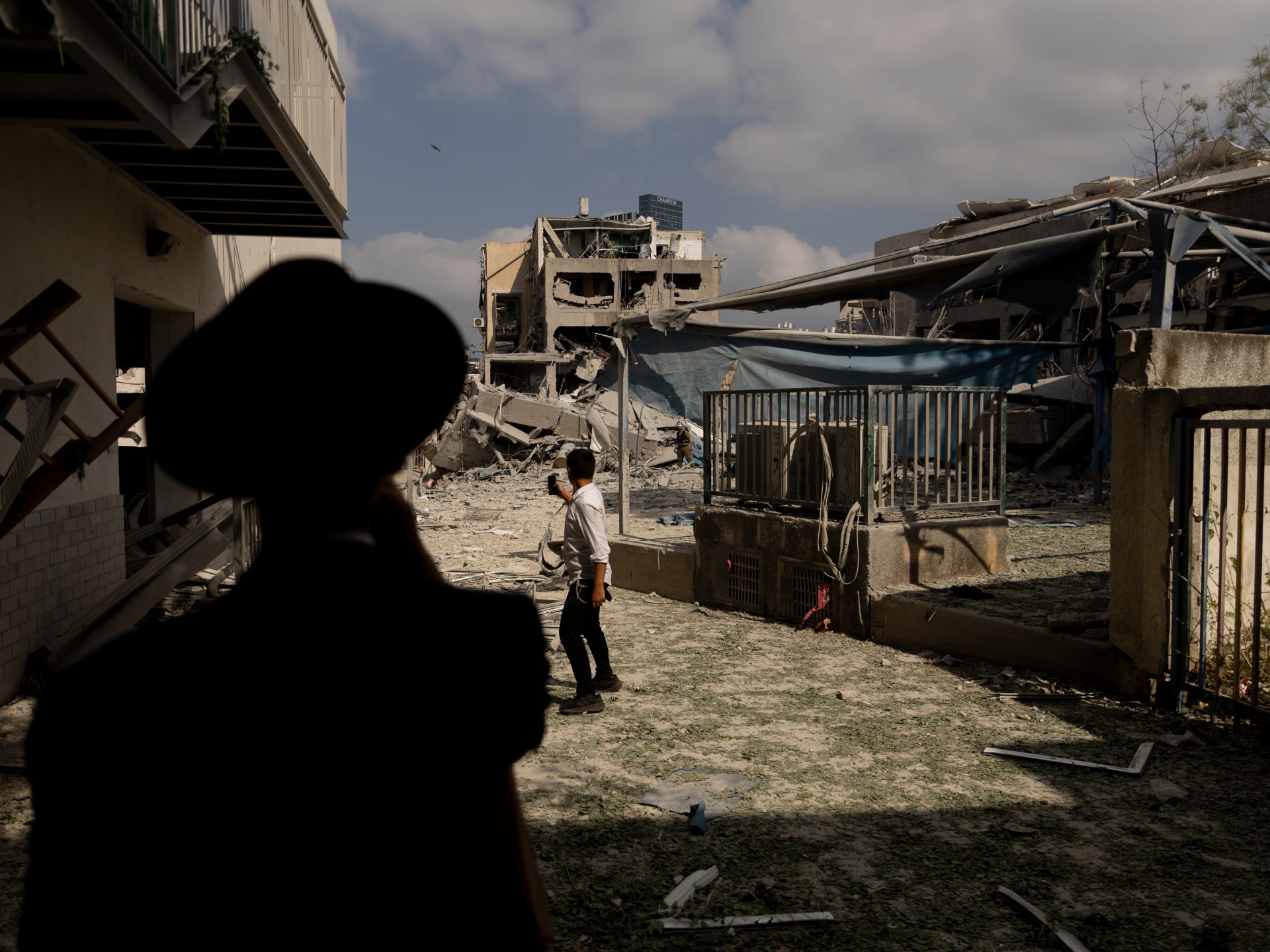
In a striking development, some Iranian missiles managed to breach Israel’s famed missile defense systems, hitting residential areas and heavily damaging infrastructure, including military installations in Tel Aviv. Notably, Iran claimed responsibility for targeting a military intelligence center and a Mossad operations center, raising questions about the efficacy of Israel’s defense networks. While Israel’s advanced systems, including the Iron Dome, have successfully intercepted numerous aerial threats in the past, some missiles have still managed to penetrate these defenses.
Israel’s Iron Dome, operational since 2011 and renowned for its 90% interception rate, is just one component of a multi-tiered air defense system designed to protect against a variety of threats. It primarily targets low-level rockets, while more sophisticated systems like the Barak-8 and Arrow-3 intercept medium to long-range missiles. However, the recent conflict has revealed vulnerabilities, as Iranian missiles have shown surprising effectiveness against these advanced systems.
As the conflict intensifies, experts have identified several potential reasons for the Iranian success in bypassing Israeli defenses. One explanation is the possible exhaustion of interceptor missiles; each defense system has a finite number of interceptors at its disposal. As Marina Miron, a researcher at King’s College London, noted, “You cannot shoot down more missiles if you only have a limited number of interceptors.”
Additionally, Iran’s development of hypersonic missiles presents a formidable challenge, as these projectiles travel at speeds exceeding five times the speed of sound. They can utilize maneuvers that make interception by traditional air defense systems significantly more difficult. Armed with gliding warheads, these missiles operate unpredictably, complicating interception efforts.
Cruise missiles further complicate Israel’s air defense scenario. Slower than ballistic missiles but maneuverable like drones, Iranian missiles such as the Hoveyzeh can evade radar detection and strike their targets with precision. Miron explained that the trajectory changes of these missiles can outsmart conventional air defense systems.
Iran has also been known to deploy decoys, overwhelming Israeli radar systems and depleting interceptor reserves, making it easier for actual strikes to succeed. Some Iranian missiles are equipped with radar suppression technologies, making them particularly challenging to track and intercept.
The ongoing conflict poses critical questions about the sustainability of military resources for both nations. The geographical distance between Iran and Israel complicates logistics for Israeli forces, limiting operational capacity. While recent Israeli claims suggest control over Iranian airspace, concerns remain regarding the number of missiles Iran can continue to launch in an attritional conflict.
As this intense military exchange unfolds, the complexities of modern warfare and missile defense systems are on display, highlighting the ongoing struggles in a volatile region that continues to captivate global attention.
Original Source: https://www.aljazeera.com/news/2025/6/18/how-has-iran-managed-to-pierce-through-israels-air-defence-systems
Category :
Tags:
Publish Date: 2025-06-18 20:51:00