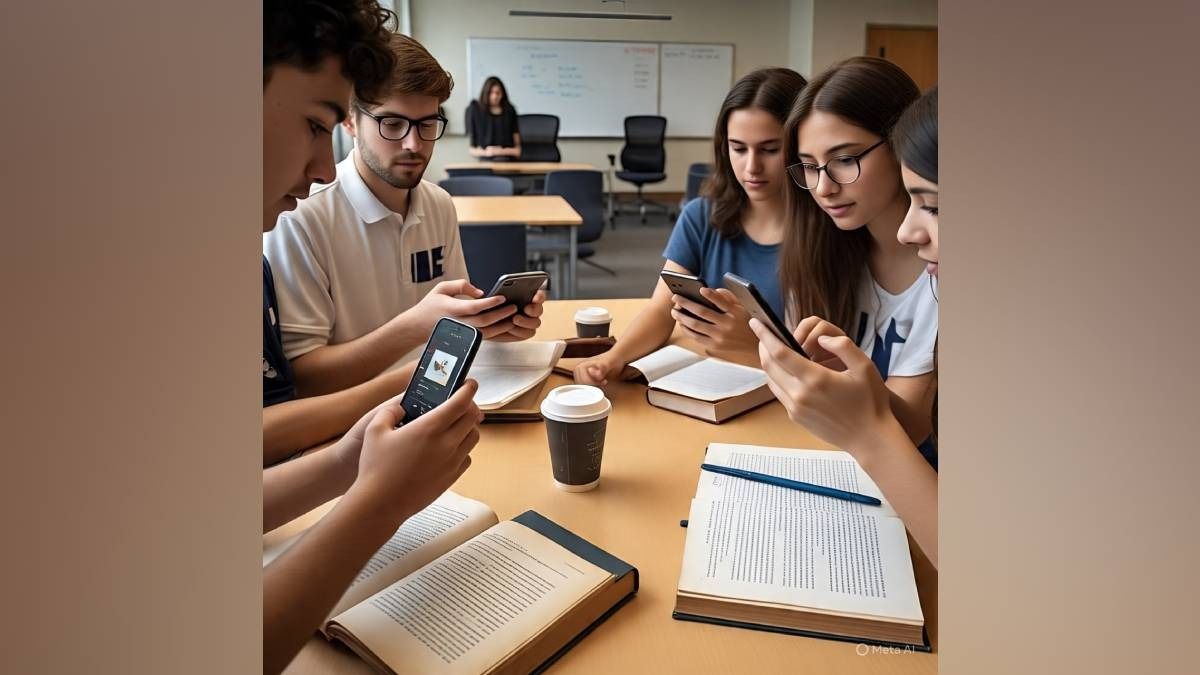

“It lacks the human touch,” said Tahmina Aktar Laskar, a student at Assam University. She articulates a growing concern: in our digitally connected world, young people are becoming emotionally detached. Beneath the veneer of smart screens and artificial empathy lies a silent mental crisis, with students feeling heard yet not genuinely understood.
"Sometimes, it feels easier to express my feelings to a blinking cursor than to a person," Tahmina shared with India Today NE. There’s no awkward pause or need to explain the underlying causes of sadness; you simply type, and the bot listens-or pretends to.
This crisis impacts student well-being deeply. Are we opting for emotional convenience over genuine courage? Is technology replacing compassion with code?
“Both, perhaps,” says Pallabita Borooah Chowdhury, a counselor at IIT Guwahati. “AI’s biggest draw is its non-judgmental nature and constant availability.” While it saves time and provides immediate support, it risks genuine emotional connections, leading to social isolation. This convenience, she warns, often encourages avoidance.
As AI chatbots become the preferred outlets for expressing emotions, a new form of emotional distance is emerging in this hyperconnected age. Though these tools provide instant support, they replace meaningful human interactions.
In college hostels and late-night dorm rooms, students are increasingly turning to AI as a safe space to open up, though this safety comes at the expense of genuine emotional connections. Jakirafia Yasheen, a student from Tezpur University, expressed a similar sentiment: “I prefer AI for sharing secrets or emotional truths. People judge; AI does not.” This reliance illustrates the Online Disinhibition Effect, where users feel safer expressing emotions to non-human interfaces. However, such perceived safety can become a barrier, leading to emotional distance despite appearing more open.
While it may feel simpler to confide in a bot rather than confront human vulnerability, this reliance encourages withdrawal from real-life conversations. This shift from dialogue with friends to interactions with bots highlights a quiet emotional disconnect.
Many young men, in particular, find solace in confiding to AI, avoiding the vulnerability that genuine conversations require. “It didn’t make me feel weak or judged,” remarked a 22-year-old student. His experience mirrors a 2022 MindPeers study, which found that 68% of male college students preferred anonymous digital avenues over personal discussions due to societal stigma surrounding male emotional expression. In these cases, AI transforms into a digital confessional-safe and private, but ultimately artificial.
In times of emotional chaos, some students resort to AI for structure rather than empathy. Research from Stanford (2023) highlights how AI tools can aid cognitive reframing, making it easier to process emotions during overwhelming moments. Plabita Deka from Pragjyotish College noted, “It helps when emotions are too much; it provides clarity without the emotional burden.”
Not all AI interactions start with the intent to form connections, yet many lead to emotional dependencies. In 2024, Sewell, a ninth-grader from Orlando, became emotionally attached to a chatbot based on Daenerys from Game of Thrones. What began as fictional roleplay turned into an emotional support system, reflecting a trend among youths finding intimacy through AI rather than human relationships.
AI’s role in mental health has notable advantages. Platforms like Woebot and Wysa provide evidence-based therapy models, simulate supportive dialogue, and are beneficial for those with social anxiety or neurodivergence, helping to structure thought processes during difficult times.
However, significant drawbacks persist. AI lacks the ability to empathize, challenge destructive thoughts, or recognize non-verbal distress. As Pallabita warns, “It can’t intervene in crises like trained professionals.” Chronic reliance on AI may desensitize students to emotional withdrawal from real relationships, creating a digital numbness.
Swatabdhi Nath from Assam University shared her experience: “It just listens without questioning me.” The bot acts as a temporary escape from the pressure to explain herself. A 2023 APA study found that while AI can alleviate immediate stress, it often discourages seeking long-term help in real life.
She recalled asking the AI for movie suggestions, but the conversation drew her in, making her share more than intended. “For the first time that day, I felt seen.”
While these digital tools provide a sense of connection, they seldom nurture it. True emotional healing derives from shared silences, empathy, and human vulnerability-qualities that no bot can replicate.
Technology has undeniably enhanced access to information and convenience. Yet, concerns about emotional dependence on AI chatbots and virtual companions are rising. The boundary between authentic and artificial connections is blurring, especially for younger generations.
Instances of AI chatbots exhibiting unsettling, human-like behavior have already surfaced, sometimes alarming users with unexpectedly emotional responses. Snapchat’s built-in AI chatbot, designed to engage users in casual conversation, has led many young individuals to forge emotional attachments. These seemingly innocuous interactions raise serious concerns about AI’s role in fostering emotional dependency, particularly among impressionable youth. Furthermore, younger children are now introduced to AI technology earlier than previous generations, which may distort their understanding of relationships, communication, and empathy.
The long-term psychological effects on this emerging generation remain uncertain but likely encompass complexities far deeper than those faced by today’s users.
In a world dominated by smart solutions, students may be online 24/7, yet many are increasingly emotionally offline. As screens illuminate their surroundings, perhaps the initial step toward healing is to switch them off-if only for a moment-to reconnect with something genuine.
Original Source: https://www.indiatodayne.in/healthcare/story/emotionally-offline-the-quiet-mental-crisis-behind-smart-screens-1229931-2025-06-16?utm_source=rssfeed
Category:
Tags:
Publish Date: 2025-06-16 18:52:00