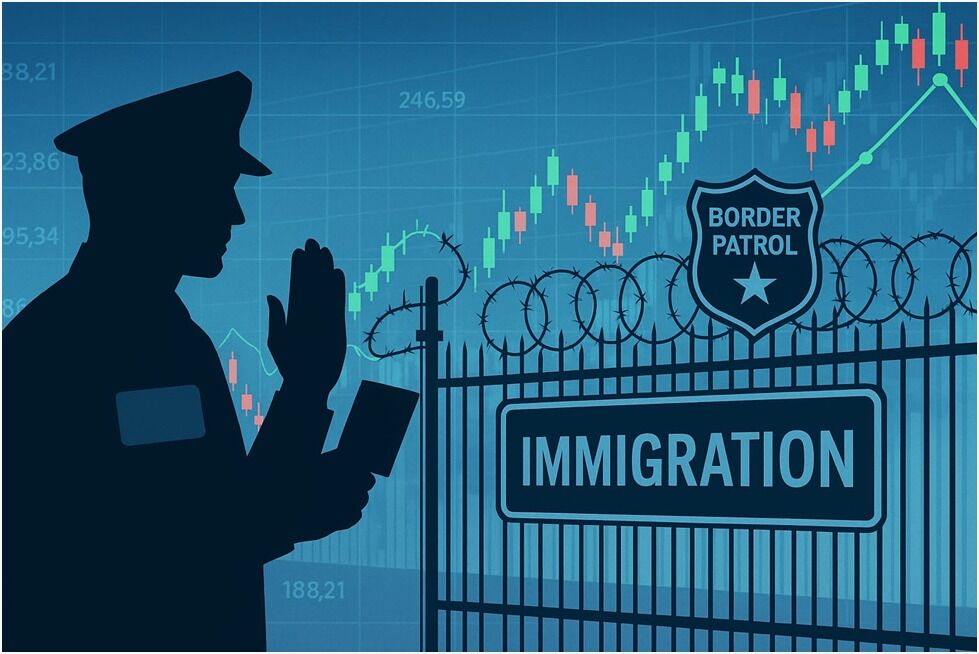

Immigration has been a significant driver of economic growth in many developed countries, supporting labor supply, spurring innovation, increasing demand, and helping maintain demographic stability. Recently, however, a noticeable global trend toward tighter immigration laws and stricter border policies has emerged. Initially framed as issues of domestic security, national sovereignty, or labor protection, these policy shifts have profound implications for capital markets around the world. From stock prices and bond yields to venture capital and real estate, the economic effects of reduced immigration are multifaceted and far-reaching. Investors, policymakers, and businesses must carefully examine these changes.
Stricter immigration laws directly reduce the available labor pool, which is particularly impactful in nations with aging populations and declining birth rates, where immigrants often fill essential jobs in various sectors, including agriculture, construction, healthcare, and technology. A reduced labor force can trigger upward wage pressures, particularly in low-skilled occupations typically occupied by immigrants. While this might benefit some native workers, it can also raise production costs for businesses. Research from T. Rowe Price indicates that limiting immigration could reduce the U.S. labor force by 2.1 million workers, potentially leading to higher inflation.
Moreover, immigrants often introduce diverse skills, fresh ideas, and entrepreneurial vigor, significantly contributing to innovation and productivity. Curbs on immigration could hinder long-term growth in these areas. Immigrants are also vital consumers, spending on housing, food, clothing, and services, thereby boosting aggregate demand. Fewer immigrants may dampen overall consumption and retail sales, which is particularly concerning given that population growth often fuels housing demand. When immigration slows, it can adversely affect construction and real estate development.
Research consistently shows that immigrants are more likely to start businesses and obtain patents. In the U.S., foreign-born individuals disproportionately account for patents and new companies, with recent research indicating they were responsible for 24% of U.S. patents, contributing to 36% of all innovations through collaborations.
Tax contributions from immigrants, including income, consumption, and property taxes, tend to be higher than their use of social services, especially during their working years. A reduction in immigration could strain public finances by leading to fewer tax contributions amid an aging population. Immigrants help broaden the working-age population, easing pressure on social security and healthcare systems. Restrictions can worsen these demographic challenges, complicating the fiscal landscape.
The economic shifts due to stricter immigration policies create immediate effects on capital markets. Industries reliant on immigrant labor, such as agriculture, construction, hospitality, and healthcare, face labor shortages and rising wage costs, directly affecting profitability and stock valuations. Additionally, companies in sectors like technology and pharmaceutical that depend on skilled immigrant talent for research and development might see their growth prospects deteriorate. A decline in overall population growth and consumer activity could further hurt retail, consumer goods, and leisure industries, causing a potential realignment of investments toward sectors less impacted by immigration.
The broader market may experience slower long-term growth if reduced immigration leads to diminished GDP figures and lackluster corporate earnings. In bonds and fixed income markets, a sustained upward wage pressure could trigger inflation, spurring central banks to maintain or increase interest rates. While new bonds might offer higher interest rates, existing bonds with lower yields could lose value, affecting overall bond market dynamics.
Real estate markets are also influenced, as reduced immigration can slow population growth, a key driver of housing demand. This situation could lead to slower appreciation of housing prices and decreased demand for new construction. Additionally, a slowdown in population growth might impact commercial real estate sectors, leading to higher vacancy rates and diminutive rental income.
Countries with stringent immigration policies that yield slower economic growth may see weakened currencies compared to nations with more open policies. If stricter immigration policies result in higher inflation and subsequently higher interest rates, a country’s currency could experience short-term appreciation. However, a dim long-term growth outlook might nullify this benefit, while perceptions of harmful immigration policies can stunt foreign investments, further devaluing the currency.
Real-world implications reveal varied effects across regions. In the U.S., immigration restrictions under the Trump administration emphasized an “America First” approach, causing challenges in labor supply and specific industries. Growth was achieved during parts of that era, but potential long-term effects remain a concern. Recently, rising immigration has aided labor market recovery, indicating a complex relationship between immigration and economic health. In Europe, post-refugee crisis, some nations saw increased immigration, but political shifts have resulted in tighter controls in many EU countries. Japan continues to face economic stagnation partly due to its reluctance to embrace significant immigration.
The economic impact of immigration restrictions varies based on the skill levels of immigrants and how well they fit into labor market needs. Countries with effective integration policies can reap benefits even with lower immigration numbers. In response to labor shortages, some industries may increase automation and AI investments, which could offset labor supply challenges. Furthermore, restrictive immigration policies might lead skilled workers to migrate to countries with more welcoming environments, reshaping global economic dynamics.
In conclusion, tighter immigration laws pose significant macroeconomic challenges with complex consequences for capital markets. They reshape critical growth drivers by impacting labor supply, wage structures, innovation, consumption, and government finances. Investors must recognize immigration as a crucial economic variable, as sectors heavily reliant on human capital are particularly vulnerable to these changes. Broader market indices, bond yields, and currency values are likely to react to the cumulative effects of slower growth and inflationary pressures. As political climates evolve, the ramifications of restrictive immigration policies will become more evident, creating new challenges and opportunities for those attuned to these intricate connections.
Original Source: https://assamtribune.com/article/impact-of-stricter-immigration-laws-on-capital-markets-1580711
Category: Article
Tags:
Publish Date: 2025-06-11 21:38:00