Unveiling Hope: Ax-4 Crew’s Pioneering Role in Revolutionary Diabetes Study on Glucose in Space

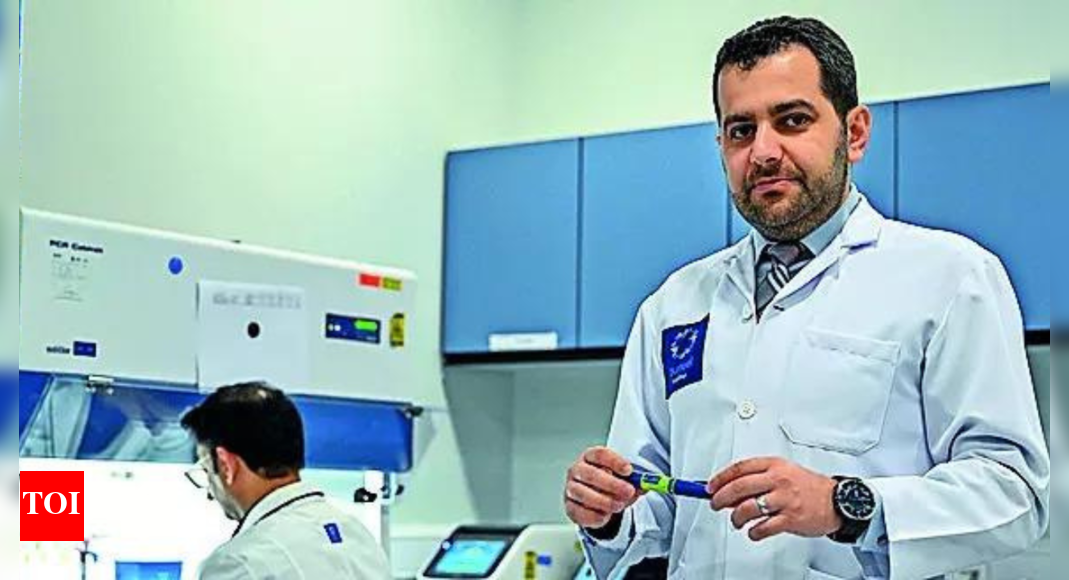
TITUSVILLE, FLORIDA: Astronauts on the groundbreaking Axiom mission (Ax-4), including India’s Group Captain Shubhanshu Shukla, are taking part in a pioneering medical study known as the Suite Ride experiment. This research aims to redefine the possibilities for who can travel to space. In a recent interview, Mohammad Fityan, Clinical Lead for Suite Ride and Chief Medical Officer at Burjeel Medical City, shared insights into the significance of this experiment.
Currently, astronauts with insulin-dependent diabetes are barred from space flights. However, Dr. Fityan emphasized that the Suite Ride study could lay the foundation for changing this policy. He stated, “This study is laying the groundwork to change that,” highlighting the initiative’s potential to validate technologies designed to support diabetics in space. Developed in collaboration with Burjeel Holdings and Axiom Space, the Suite Ride experiment focuses on the behavior of glucose in microgravity and the stability of insulin during space missions.
Although none of the four astronauts on Ax-4 have diabetes, they have undergone extensive pre-flight evaluations to establish baseline glucose levels on Earth. “They act as healthy controls,” Dr. Fityan explained. This methodology allows researchers to compare data gathered in space with ground-based measures, which is essential for verifying the reliability of continuous glucose monitors (CGMs) configured for orbit.
Throughout the mission, at least one astronaut will wear a CGM to transmit real-time metabolic data back to the research team. While the crew does not directly use insulin pens, these devices have been sent to space to observe how they interact with the unique conditions of microgravity. Post-mission, samples stored at various temperatures will be analyzed to assess any potential degradation of the insulin compound.
Dr. Fityan noted, “Microgravity gives us a chance to observe metabolic functions without the confounding factors of gravity, posture, and muscle use.” This clarity enables researchers to better understand how hormones and cells regulate glucose and may even reveal early signs of insulin resistance, which are often more difficult to identify on Earth. The findings from Suite Ride could significantly influence future medical protocols for long-duration space missions, potentially allowing astronauts requiring insulin to join future flights.
The implications of Suite Ride extend beyond space exploration. The experiment also promises terrestrial benefits, with potential advancements in glucose monitoring tools and more effective insulin therapies for individuals on Earth, particularly those in remote or under-resourced regions. Technologies tested during the mission include advanced blood glucose monitors, i-STAT blood analyzers, and remote data capture platforms.
Ultimately, if the technologies tested in the Suite Ride experiment prove effective, the longstanding exclusion of insulin-dependent diabetics from spaceflight could be re-evaluated, marking a significant step towards more inclusive space exploration. The insights gained not only promise to enhance our understanding of diabetic care in extreme conditions but may also have a lasting impact on how diabetes is managed on our home planet.
Original Source: https://timesofindia.indiatimes.com/science/glucose-in-space-ax-4-crew-to-play-key-role-in-diabetes-study/articleshow/121702460.cms
Category :
Tags:
Publish Date: 2025-06-08 05:55:00