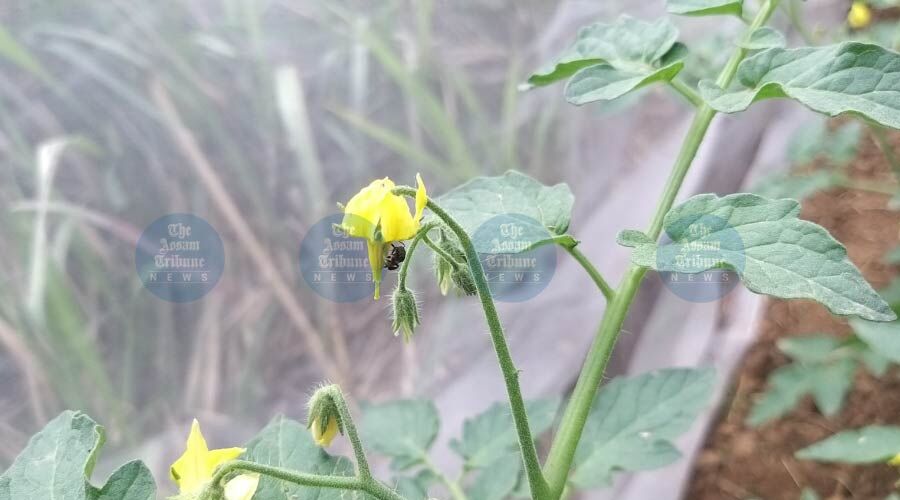

In a significant development for Indian agriculture, researchers at Nagaland University have identified two species of stingless bees-Tetragonula iridipennis Smith and Lepidotrigona arcifera Cockerell-that substantially improve both the quality and quantity of crop yields through pollination. Led by Dr. Avinash Chauhan, a scientist and principal investigator at the All India Coordinated Research Project (AICRP) on Honeybees and Pollinators, this groundbreaking research has been published in several respected peer-reviewed journals, including the International Journal of Farm Sciences.
According to Chauhan, “Stingless bees can be safely used for pollination without the risk of stings. Their honey also possesses known medicinal properties, providing farmers with an additional income source alongside increased crop yields.” The research team discovered that pollination by these stingless bees significantly enhances fruit set and seed quality, particularly in crops like chilli (Capsicum annuum). In king chilli, for instance, the fruit set surged to 29.46% compared to only 21% in non-pollinated plots. In regular chilli, the fruit set increased by 7.42%, healthy fruit production rose by 7.92%, and seed weight-a crucial indicator of germination-escalated by an impressive 60.74%.
“This is the first documented attempt in India to study the pollination potential of stingless bees for crop production and quality honey yield,” Chauhan stated, further adding that this research opens up viable income-generating opportunities through sustainable beekeeping. Historically, insufficient pollination by honeybees has posed challenges due to their behavioral limitations. However, this study indicates that stingless bees, along with other native pollinators like Apis dorsata, Apis florea, halictid bees, syrphid flies, and Amegiella bees, can be strategically conserved and utilized to mitigate pollination deficits.
Over the past decade, Chauhan’s team has concentrated on the scientific domestication of stingless bees, especially in Nagaland, developing specialized hives and mass multiplication techniques that utilize queen cells. These practices are now being applied in other northeastern states, such as Meghalaya and Arunachal Pradesh. “While stingless bees have been traditionally kept in homestead apiaries in the Northeast and Southern India, scientific rearing practices are still in the early stages in many other regions. Our current efforts are aimed at enhancing these techniques and promoting scientific beekeeping for improved honey production and pollination efficiency,” Chauhan explained.
Stingless bees are reported from various regions across India, including the North, Central, and Western areas. The research team is also working to raise awareness about the importance of conserving wild bee species and pollinators, which are vital for food security and biodiversity. Chauhan emphasized, “This initiative is a win-win-for farmers, the environment, and the economy.”
Original Source: https://assamtribune.com/north-east/nagaland-university-researchers-harness-stingless-bees-to-boost-crop-yields-1578778
Category: North East,Featured
Tags:
Publish Date: 2025-05-26 16:51:00