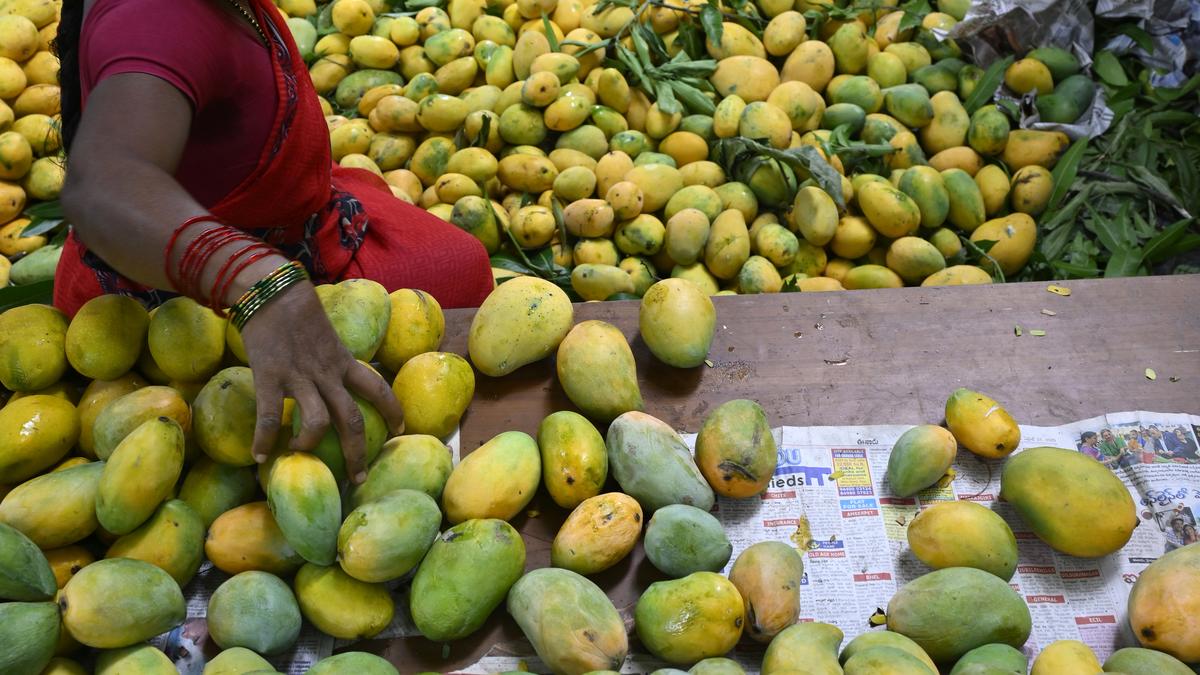
Discover the Irresistible Charm of Sweet and Tangy Mangoes in Hyderabad: A Journey of Flavor and Delight!

From April to June, Hyderabad bursts into vivid color as the city becomes a paradise for mango enthusiasts, showcasing a stunning variety of this beloved fruit. Lorries roll in daily from neighboring states including Andhra Pradesh, Karnataka, Maharashtra, and Gujarat, delivering types such as Himayat, Daseri, Benishan, Alphonso, and Rasalu. However, this mango season has faced challenges, particularly due to unseasonal rains and winds earlier this year that severely affected primary suppliers in Andhra Pradesh and Telangana. The impact was felt in Hyderabad’s wholesale markets, where unripe mangoes, locally known as kairi, flooded the scene, initially driving prices to ₹200-₹400 per kilogram before stabilizing as market dynamics shifted.
In peak season, Batasingaram, Hyderabad’s dedicated mango hub, processes an impressive 3,000 to 5,000 quintals of mangoes daily, with average prices hovering around ₹2,345 per quintal. The Jambagh market, another key player, sees initial daily sales of 500 to 800 quintals, ramping up to 1,000 to 1,500 quintals in April. Amid this thriving market landscape, vendors like Zubair in Kothapet are busy with customers who cherish the tradition of selecting mangoes. “Himayat is the favorite,” Zubair mentions, highlighting how they expedite ripening using calcium carbide just before sale. Current mango prices range from ₹70 to ₹200 per kilogram, showing little change compared to last year.
This season also illustrates a stark contrast between traditional street vendors and modern rapid-commerce services offering swift delivery. While local shops might sell organic Banganapalli mangoes ranging from ₹150 to ₹400 per kg, quick-commerce outlets offer them for just ₹79.12 per kilogram. Concerns surrounding calcium carbide have caused consumers to hesitate when purchasing from street vendors. Abdul Qadeer, president of the Jambagh market, emphasizes the need for fair treatment of farmers, stating, “The fear surrounding carbide harms their livelihood.”
As online markets rise, some consumers now prefer farm-to-home delivery services for mangoes. Raghavendra, who launched his online store in 2011, sources mangoes from Sadashivpet and Shamirpet for delivery across Hyderabad and even overseas. “These services offer safer, organic options that I can trust,” shares Tahseen Farha, a customer in Attapur. This digital shift is rekindling interest in lesser-known mango varieties, such as Panduri, which was once exclusive to the elite.
While the sweet mangoes capture attention, there is also a market for tangy and spicy options. Pavan, who operates a store in Kukatpally Rythu Bazaar, has noted a decrease in the sale of raw mangoes from 30-40 bags daily to about 20. Many prefer to purchase directly from Andhra Pradesh or order online. “But this is our tradition, so we hold on, even if profits drop,” he adds.
Every mango has its purpose: Tella Gulaabi for pickle-making, Kothapalli Kobbari for longevity, and Jalaalu for unique flavors, all sourced from Nuziveedu, Kakinada, and Vijayawada. Demand for digital pickle sales has surged post-COVID, with brands like Abhiruchi Swagruha Foods witnessing increased online orders. “Our children are overseas, but we want them to remember these tastes,” says Lakshmi, a grandmother keen on sharing nostalgic flavors.
Whether from street stalls, loyal pickle shops, or online services, mangoes represent more than just a seasonal delight for Hyderabadis; they are an enduring link to culture, family, and cherished memories.
Original Source: https://www.thehindu.com/news/cities/Hyderabad/a-tale-of-sweet-and-tangy-mangoes-in-hyderabad/article69605881.ece
Category : Hyderabad
Tags:
Publish Date: 2025-05-26 16:56:00