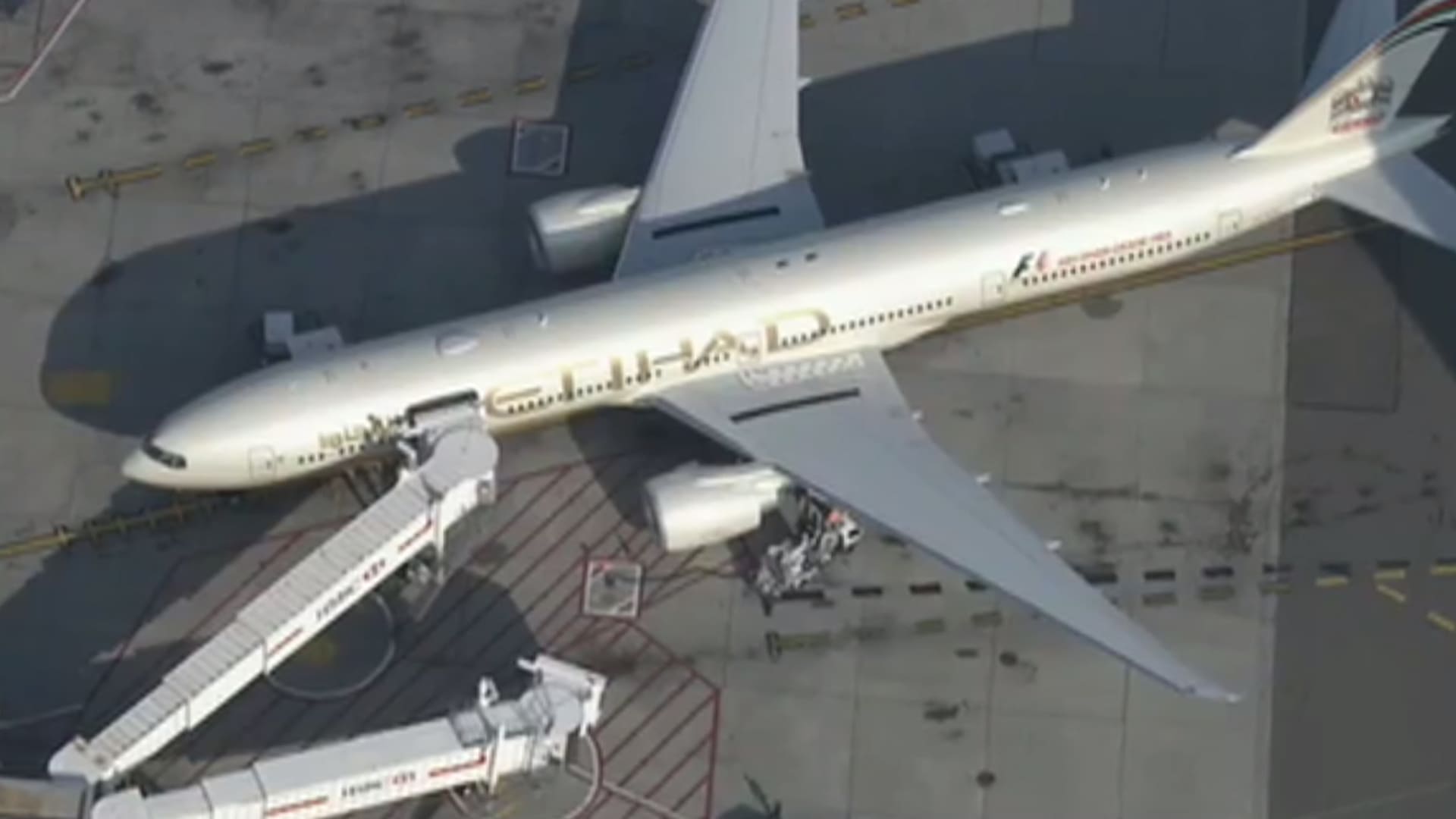

Abu Dhabi’s Etihad Airways is navigating Boeing’s recent delivery delays while simultaneously enhancing its fleet capabilities through a substantial order and a multibillion-dollar upgrade plan. Speaking to CNBC’s “Access Middle East,” Etihad CEO Antonoaldo Neves expressed confidence in the airline’s approach to fleet planning, which is more “diligent,” allowing the carrier to adapt to potential disruptions in aircraft delivery schedules. “Boeing is improving and ramping up,” Neves indicated. “We feel confident, and I think Boeing is getting back on track.”
This optimism follows Etihad’s announcement of a $14.5 billion agreement with Boeing and GE Aerospace for 28 wide-body aircraft, including the Boeing 787 and 777X models, during a visit by former President Donald Trump. The deal is part of over $200 billion in commercial agreements between the U.S. and the UAE unveiled last week. Neves projected positive news from Boeing in the coming months, stating, “I think we’re going to see very good news from Boeing in the next six months to one year.”
While acknowledging challenges with the 777X, which is still awaiting certification, Neves noted that this aircraft won’t be delivered until after 2030. He emphasized that the timing of the order was deliberate to avoid complications associated with certification delays. Boeing’s stock has shown resilience, climbing 17% year-to-date, with analysts at Bernstein recently raising their price target for the company from $218 to $249 per share.
The order expands Etihad’s long-haul capabilities, but it also introduces delivery risks as Boeing faces ongoing regulatory and supply chain issues. Delays in production for the 737 MAX and 787 have created challenges for airlines globally. “We add as we go,” Neves reassured. “As far as our planes are concerned, we are in good shape because the 787 is coming out of the factory on time now.”
Boeing’s pressure to deliver is compounded by competition; Qatar Airways made headlines with a record-breaking order of 210 jets during Trump’s visit, further escalating industry dynamics. In light of possible delays, Etihad announced a $7 billion, five-year plan to retrofit its existing fleet, enhancing cabin interiors and upgrading service offerings to mitigate the impact of extended delivery timelines.
Financially, Etihad reported a 30% boost in profit after tax for the first quarter, reaching a record $186.5 million, attributed to strong demand and improved operational efficiencies. Total revenue rose by 15%, driven largely by growth in passenger and cargo services. Neves noted, “A lot of our focus on efficiency is paying back, so the airline is improving and expanding its margins.” First-quarter passenger revenue, reaching $1.5 billion, soared by 16%, bolstered by increased capacity, network expansion, and more frequent flights.
When questioned about the potential impact of U.S. tariffs on travel demand, Neves stated, “We don’t see any impact whatsoever, and we’re really excited about the forward curves.” This reflective approach comes as Emirates Airline President Tim Clark highlighted the unpredictable landscape facing the aviation industry due to ongoing trade disputes that could inflate costs.
As Etihad restructures its operational framework, it prioritizes profitability and agility in preparation for a potential initial public offering (IPO). While details about the IPO timeline remain unconfirmed, Neves explained that the timing is complex and depends on both margin expansion and shareholder needs, specifically pointing to the Abu Dhabi sovereign fund, ADQ.
This strategic outlook positions Etihad Airways for resilience in an industry marked by challenges, while expanding its fleet and enhancing operational efficiency.
Original Source: https://www.cnbc.com/2025/05/21/why-etihad-airways-thinks-it-can-weather-the-storm-of-boeing-delays-.html
Category :
Tags:
Publish Date: 2025-05-21 19:42:00