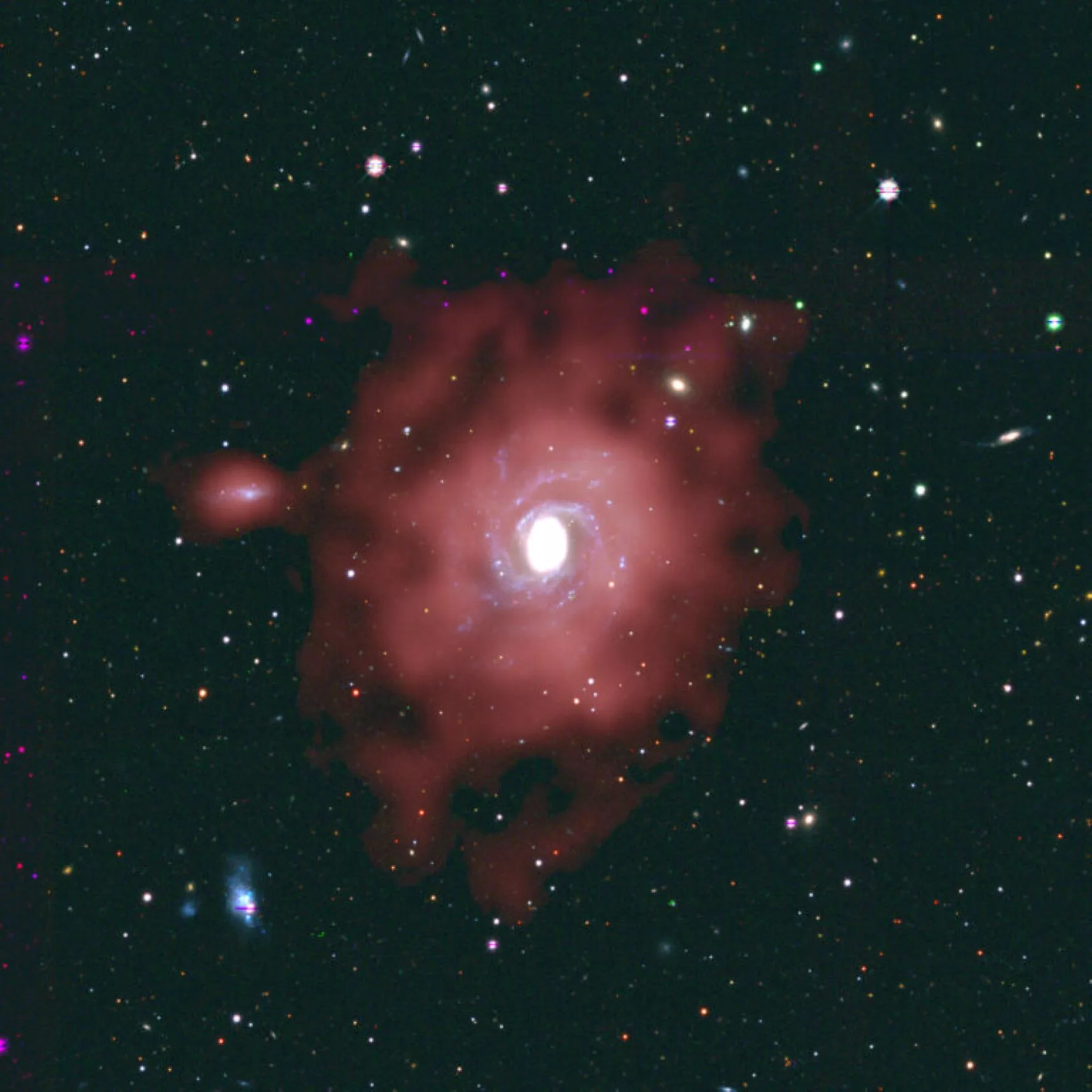

Astronomers have made a groundbreaking discovery regarding the processes that drive star formation, revealing that it’s not merely the abundance of gas in a galaxy that matters, but the specific concentration of that gas that influences whether new stars will emerge. Utilizing the advanced capabilities of the CSIRO’s ASKAP radio telescope, researchers at the International Centre for Radio Astronomy Research (ICRAR) conducted a comprehensive analysis of gas distribution in nearly 1,000 galaxies as part of the WALLABY survey. This discovery challenges long-held beliefs about the relationship between gas volume and star activity.
Seona Lee, a PhD student at the University of Western Australia node of ICRAR and the lead author of the study, expressed her excitement over the findings. “It was very exciting to see a correlation between star formation and where the atomic hydrogen gas is located,” she remarked, underscoring the study’s implications.
Traditionally, astronomers assumed that galaxies rich in gas were inherently more likely to spawn new stars. However, the research indicates that a high volume of gas alone does not automatically lead to star formation. The findings point to a more intricate relationship where galaxies that actively generate stars possess dense clusters of atomic hydrogen gas precisely situated in the regions where stars are born.
The team’s ability to discern these patterns marks a significant advancement in astronomical research, largely facilitated by ASKAP’s high-resolution capabilities. Prior surveys had only mapped gas distribution in a few hundred galaxies, but the WALLABY project has substantially broadened that reach.
Professor Barbara Catinella, a Senior Principal Research Fellow at ICRAR and co-leader of the WALLABY survey, elucidated the concept through an analogy: “Making stars is like baking a cake. Different cakes need different amounts of flour, but to bake a cake properly, you focus on the flour in the bowl-not the leftover flour still in the package. Similarly, studying star formation requires us to measure the atomic gas in the regions where stars form, rather than looking at total gas content across the galaxy.”
This pivotal discovery enriches our understanding of galaxy evolution. By accurately mapping gas distribution, scientists can refine their models of how galaxies grow and gain deeper insights into the stellar birth mechanisms that shape our universe.
Highlighting the importance of continued research, Lee noted, “To truly understand how stars are formed, we must examine the atomic hydrogen gas exactly where stars are actively coming to life. This is essential to determining how much gas directly fuels star creation.”
With emerging technologies like ASKAP broadening their observational capabilities, researchers are positioned to unveil even more about the dynamic processes that govern the cosmos. This advancement not only enhances our knowledge of star formation but also paves the way for future breakthroughs in understanding the intricate tapestry of the universe.
The study is documented in the publication by Lee and her colleagues in the Publications of the Astronomical Society of Australia, detailing the WALLABY pilot survey’s findings regarding gas scaling relations within the stellar discs of nearby galaxies.
Journal Reference: Lee S, Catinella B, Westmeier T, et al. WALLABY pilot survey: Spatially resolved gas scaling relations within the stellar discs of nearby galaxies. Publications of the Astronomical Society of Australia. 2025;42:e046. DOI: 10.1017/pasa.2025.30
Original Source: https://www.techexplorist.com/gas-location-quantity-drives-star-formation-galaxies/99507/
Category :
Tags:
Publish Date: 2025-05-21 15:05:00