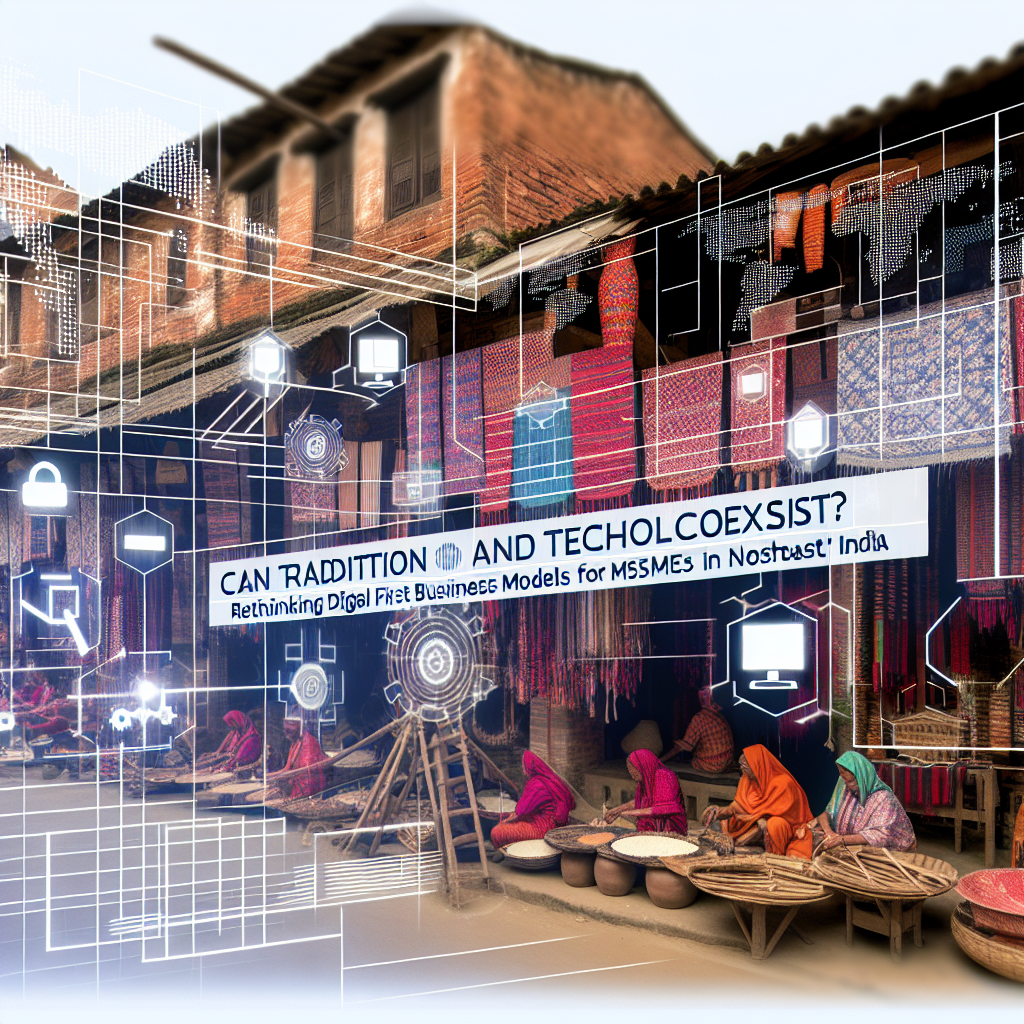
Can Tradition and Technology Coexist? Rethinking Digital First Business Models for MSMEs in Northeast India

Can Tradition and Technology Coexist? Rethinking Digital First Business Models for MSMEs in Northeast India
In the heart of Northeast India, the vibrant tapestry of tradition intertwines with the relentless march of technology. Picture a bustling market in Shillong, where the aroma of local spices mingles with the sound of mobile notifications. Here, artisans craft exquisite handwoven textiles while a nearby vendor uses a smartphone to take orders for delivery. This scene encapsulates a pivotal question: Can tradition and technology coexist harmoniously? For the Micro, Small, and Medium Enterprises (MSMEs) in this region, the answer lies in rethinking digital-first business models that honor cultural heritage while embracing innovation.
As I reflect on my journey through the tech landscape, I often think of the artisans I’ve met-individuals whose craftsmanship is steeped in centuries of tradition. They possess an intrinsic understanding of their craft, yet many struggle to navigate the digital world. This disconnect can stifle growth and limit market reach. However, it also presents an opportunity. By integrating technology into their operations, these artisans can amplify their voices and expand their horizons.
Consider the story of a small bamboo craftsman in Manipur. For years, he relied solely on local markets, unaware of the vast potential that lay beyond. With a little guidance, he set up an online store, showcasing his intricate designs to a global audience. His sales skyrocketed, but more importantly, he retained the essence of his craft, weaving his cultural narrative into every product description. This blend of tradition and technology not only elevated his business but also enriched the cultural tapestry of the region.
The challenge for MSMEs in Northeast India is not merely about adopting technology; it’s about weaving it into the fabric of their traditional practices. A digital-first approach should not mean abandoning age-old methods but rather enhancing them. For instance, using social media platforms to tell stories about the artisans behind the products can create a deeper connection with consumers. This storytelling approach resonates with modern buyers who seek authenticity and a sense of belonging in their purchases.
Moreover, as we navigate this digital transformation, it’s crucial to address the unique challenges faced by MSMEs in our region. Limited access to high-speed internet, lack of digital literacy, and financial constraints can hinder progress. However, these obstacles can be overcome through community-driven initiatives. Collaborations between local governments, educational institutions, and tech companies can foster an ecosystem that nurtures digital skills and provides resources for MSMEs to thrive.
One practical takeaway is to encourage local entrepreneurs to form cooperatives. By pooling resources, they can invest in shared digital tools and training programs, making technology more accessible. This collective approach not only empowers individual businesses but also strengthens the community as a whole. Imagine a network of artisans sharing best practices, learning from each other, and promoting their crafts together-this is the power of collaboration.
Another essential aspect is to prioritize user-friendly technology. As we design digital solutions for MSMEs, we must ensure they are intuitive and culturally relevant. A mobile app that simplifies inventory management or a platform that connects artisans directly with consumers can be game-changers. By focusing on usability, we can bridge the gap between tradition and technology, making it easier for artisans to embrace the digital age.
As we stand at this crossroads, the potential for MSMEs in Northeast India is immense. By honoring our traditions while embracing technology, we can create a vibrant ecosystem that celebrates both. The future is not about choosing one over the other; it’s about finding a harmonious balance.
In this journey, I invite you to reflect: How can you contribute to this blend of tradition and technology in your community? What stories can you tell that honor our heritage while paving the way for innovation? The answers lie not just in the tools we use but in the narratives we choose to share.
Author Profile: Sanjeev Sarma
Sanjeev Sarma is the Founder Director of Webx Technologies Private Limited, a leading technology consulting firm with over two decades of experience. A seasoned technology strategist and Chief Software Architect, he specializes in enterprise software architecture, cloud-native applications, and AI-driven platforms. Recognized as a "Technology Hero" by Microsoft for his pioneering work in e-Governance, he actively advises state and central technology committees. Passionate about fostering innovation, Sanjeev mentors aspiring entrepreneurs and leads transformative digital solutions for enterprises and government sectors from his base in Northeast India.