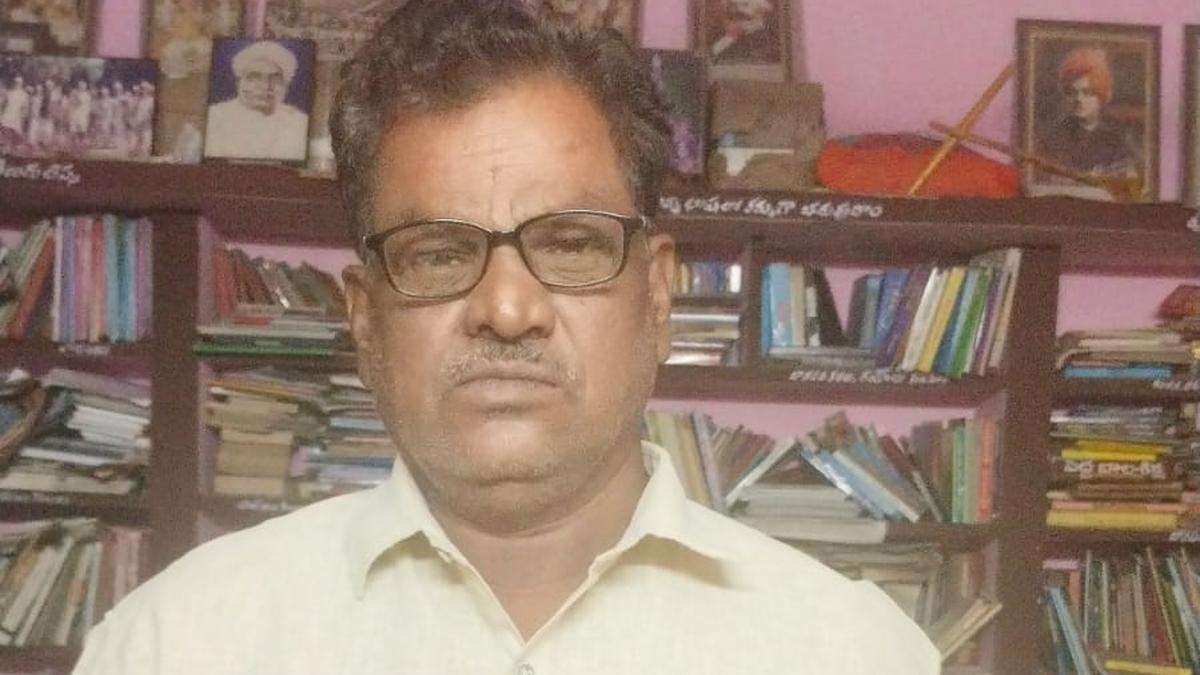

Badri Kurma Rao, founder of Gidugu Ramamurthy Telugu Bhasha and Janapada Kalapeetham, is advocating for urgent government action to safeguard folk arts in Andhra Pradesh. The retired educator argues that these vibrant art forms, once supported by royal patrons, are at risk of fading away without renewed governmental support and institutionalization.
Kurma Rao calls for each significant temple to adopt at least one folk art form. This initiative, he believes, would ensure that artists can perform regularly, thereby passing their skills and traditions to younger generations. He notes the historical significance of folk arts in storytelling, particularly within the Kakatiya and Reddiraja kingdoms, as well as the princely states of Venkatagiri, Bobbili, and Vizianagaram. These art forms played a crucial role in disseminating epics and celebrated the achievements of local rulers through dance and music.
During the Bhakti movement, folk artists significantly contributed to cultural life by performing spiritual activities like Burrakatha and Harikatha at major temples. However, Kurma Rao laments that many temples have stopped supporting these artists, leading to a decline in such cultural practices. Previously, the Department of Culture would also enlist folk artists to promote welfare schemes, but this support appears diminished.
The Telugu film industry played a pivotal role in supporting folk artists for decades. Veteran artists like Mikkilineni Radhakrishna Murthy successfully encouraged filmmakers to include traditional folk dances in their projects. Murthy’s efforts culminated in the publication of “Teluguvari Janapada Kalarupalu,” documenting many vanishing folk art forms, with help from Potti Sreeramulu Telugu University.
More recently, Kurma Rao published “Pillalu Raasina Kalingaseema Janapada Kathalu,” a compilation of folk songs from Vizianagaram and Srikakulam districts. He highlighted the challenge of gathering material, noting the scarcity of written literature on many local folk songs. His research involved extensive interviews with parents, teachers, and students.
Recognizing the need for a systematic approach to preserve folklore, Kurma Rao stressed the importance of establishing a permanent research initiative in Andhra Pradesh. He pointed out that institutions in Tamil Nadu and Karnataka are already conducting research on local folk arts. Such endeavors could significantly enhance understanding of these art forms, which also reflect rich historical narratives tied to the Indian freedom struggle.
In response to these challenges, T.V. Kattimani, Vice-Chancellor of Central Tribal University of Andhra Pradesh, shared plans to create a study center dedicated to tribal folk art forms in North Andhra. He emphasized that tribespeople convey vital cultural knowledge through songs and dances, encapsulating themes of family, tradition, and the medicinal properties of local flora. Kattimani affirmed that involving youth in research within tribal areas would not only gather essential data but also cultivate a deeper appreciation for folk arts in future generations.
As Badri Kurma Rao pushes for changes, the conversation around revitalizing and preserving Andhra Pradesh’s rich cultural heritage gains momentum. Ensuring the survival of folk arts is not just about preserving traditions but also about celebrating identities that have shaped the region for centuries.
Original Source: https://www.thehindu.com/news/national/andhra-pradesh/patronage-from-government-needed-for-keeping-folk-arts-alive/article69540752.ece
Category : Andhra Pradesh
Tags:
Publish Date: 2025-05-17 09:10:00