
As tensions escalated between India and Pakistan, Vice President JD Vance asserted on Fox News that the conflict was “fundamentally none of our business,” suggesting the U.S. could advise both sides to de-escalate but should not become involved. However, within a day, Vance and National Security Adviser Marco Rubio found themselves deeply engaged in the situation. This urgent response was driven by fears of a nuclear confrontation in a long-standing rivalry, echoing past U.S. interventions since the late 1990s.
The catalyst for renewed hostilities was alarming evidence of dogfights between Indian and Pakistani Air Forces and reports of 300 to 400 Pakistani drones entering Indian airspace. Worry intensified late Friday when explosions rocked the Noor Khan air base in Rawalpindi, a critical military installation responsible for air refueling and located near Pakistan’s Strategic Plans Division, which manages the nation’s nuclear arsenal estimated to be at least 170 warheads.
The violence escalated after a terrorist attack on April 22 in Kashmir claimed 26 lives, primarily Hindu tourists. By Saturday morning, President Trump announced a cease-fire agreement between the two nations. A former U.S. official highlighted Pakistan’s anxiety over its nuclear command authority being compromised, suggesting that the strike on Noor Khan could have been perceived as a warning of potential drastic actions by India.
While U.S. intelligence regarding the conflict’s possible nuclear escalation remains unclear, reports indicated that Pakistani Prime Minister Shehbaz Sharif convened the National Command Authority—a group that advises on nuclear policy. Despite this, Pakistan’s Defense Minister Khawaja Muhammad Asif denied such meetings occurred, expressing that nuclear discussions should be regarded as a distant concern.
At the Pentagon, it became evident that mere statements and diplomatic calls were insufficient to manage the crisis. Interventions from Saudi Arabia and the UAE brought little relief as tensions continued to mount. Following Vance’s initial dismissive stance, serious concerns emerged within the administration that the conflict could spiral out of control. The rapid succession of military strikes prompted officials to recognize the need for direct intervention.
U.S. officials determined Vance should personally contact Indian Prime Minister Narendra Modi. During the call, Vance conveyed the U.S. assessment of a high risk for escalation into war and urged Modi to consider alternatives to further military actions. Although Modi listened, he did not commit to a proposed diplomatic off-ramp.
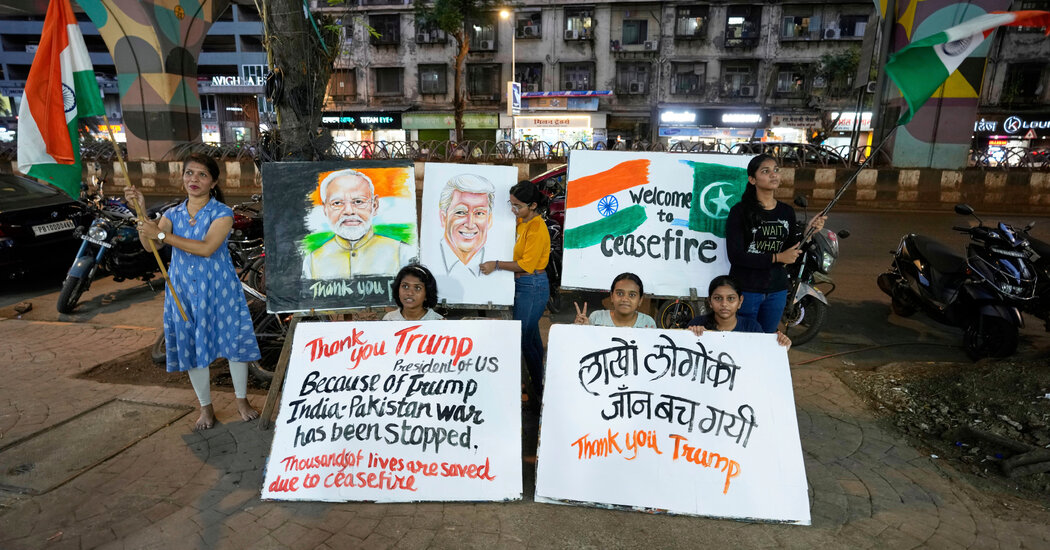
In a parallel effort, Rubio engaged with key military and foreign officials from both nations. His discussions contributed to the diplomatic groundwork necessary for a possible cease-fire. By late Saturday, there was acknowledgement from Pakistani intelligence officials that American involvement had been instrumental in brokering the truce, although reports of cross-border firing persisted.
While Pakistani leaders expressed gratitude for President Trump’s proactive role in fostering peace, Indian officials contended that U.S. influence was minimal. As the situation remains precarious, it is uncertain whether the cease-fire will endure or if retaliatory measures may follow, especially with reports that Pakistan had downed five Indian aircraft.
The complex dynamics of this conflict continue to unfold, highlighting the challenges for U.S. foreign policy in navigating nuclear threats in South Asia.
Original Source: https://www.nytimes.com/2025/05/10/us/politics/trump-india-pakistan-nuclear.html
Category : United States Politics and Government,International Relations,Nuclear Weapons,Military Bases and Installations,Rubio, Marco,Trump, Donald J,Vance, J D,India,Kashmir,Pakistan,South Asia
Tags:
Publish Date: 2025-05-11 04:26:00