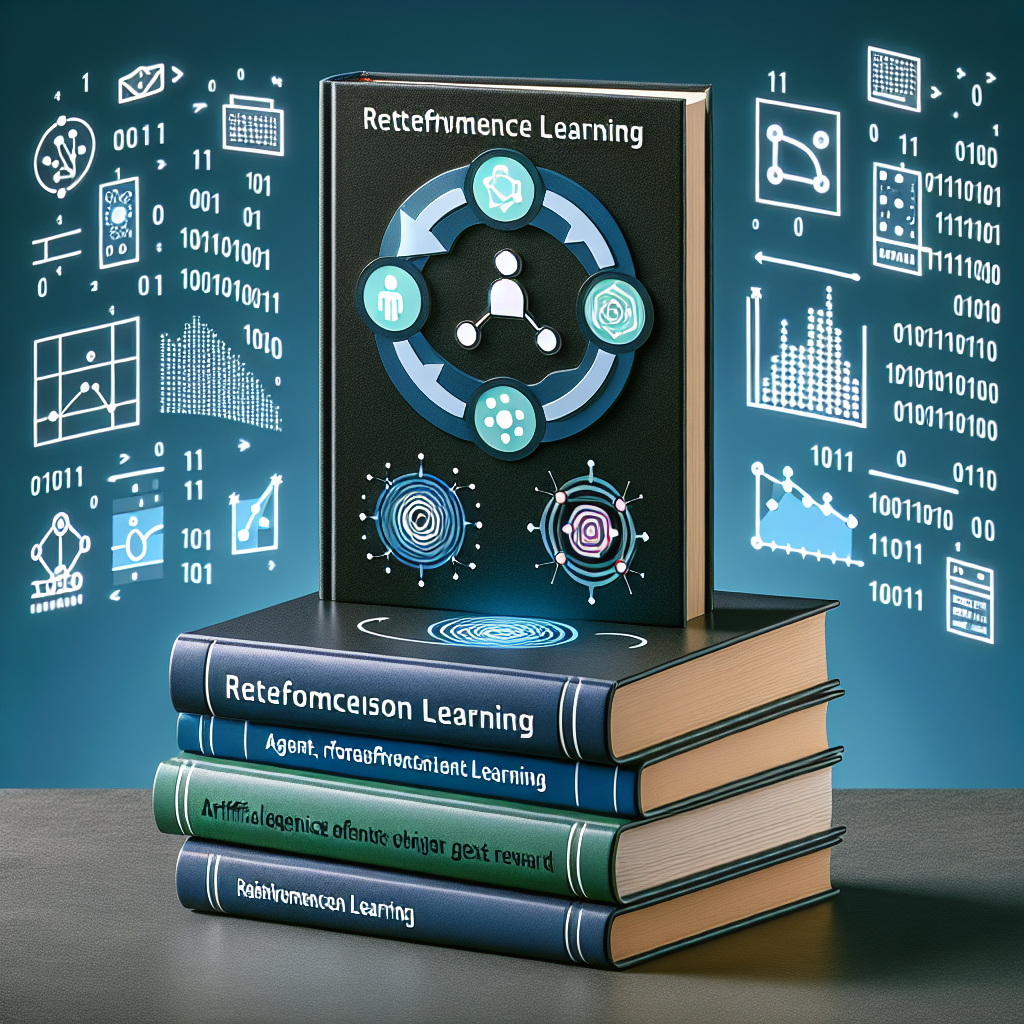
Mastering Reinforcement Learning: Unlock the Secrets to Advanced Algorithms and Transform Your AI Skills

Reinforcement Learning (RL) has emerged as a cornerstone of Artificial Intelligence, captivating the interest of researchers and professionals across various industries. Unlike traditional supervised learning paradigms that rely on labeled datasets, RL emphasizes learning through interaction with the environment, where an agent aims to maximize a reward signal. While the fundamentals of RL may be accessible, delving into its complexities reveals a wealth of nuances that are crucial for effectively deploying these algorithms.
At its core, RL involves an agent, an environment, actions, and rewards, making it a dynamic learning process. The agent observes the current state of the environment, chooses an action based on that state, and receives feedback—positive or negative—through the reward signal. This cycle continues, allowing the agent to adapt and improve its strategy over time. One of the standout examples is AlphaGo, developed by DeepMind, which prominently showcased how RL can master complex games by learning from thousands of games played against itself, ultimately defeating a world champion in Go.
An area worth exploring is the dilemma of exploration versus exploitation. While agents need to explore new strategies to enhance performance, they must also exploit known actions that have yielded positive rewards. This balance is often managed through strategies like ε-greedy methods or softmax action selection, where the agent occasionally tries random actions to discover potentially better rewards. In practical terms, consider how a recommendation system on a streaming platform like Netflix might shuffle its suggestions; it needs to offer familiar content based on user preferences while also introducing new shows that could become favorites.
With advancements in Deep Reinforcement Learning (DRL), the integration of neural networks has drastically improved the scalability and performance of RL applications. For example, Proximal Policy Optimization (PPO) and Asynchronous Actor-Critic Agents (A3C) have gained immense popularity for tasks ranging from gaming to robotics. The beauty of these algorithms lies in their ability to learn complex policies directly from high-dimensional sensory input, such as images. Tesla’s Autopilot is a case in point, leveraging DRL to optimize driving strategies in real-time as the vehicle navigates diverse driving conditions.
However, the path to successful RL implementation is fraught with challenges. Stability and convergence issues often arise due to the non-stationary nature of the environment. Techniques like experience replay and target networks, as seen in Deep Q-Networks (DQN), help mitigate these issues by allowing agents to learn from past experiences and stabilize updates. Furthermore, transfer learning—a method wherein a model trained on one task is fine-tuned for another—has opened doors for efficient learning. Imagine leveraging knowledge from simpler driving scenarios to enhance performance in complex urban environments without starting from scratch.
To make RL more accessible, professionals should focus on available tools and frameworks such as OpenAI Gym, Ray Rllib, and TensorFlow. These platforms provide robust environments and libraries for testing and building RL algorithms, complete with pre-packaged environments that simulate various real-world scenarios. For those looking to dip their toes into this cutting-edge field, starting with simplified environments—such as classic control problems or grid worlds—can provide the foundational knowledge needed to tackle more complex applications.
As organizations increasingly recognize RL’s potential to drive innovation, it’s crucial to align AI initiatives with business goals. Whether optimizing supply chains, enhancing customer engagement through personalized experiences, or automating routine tasks, practical application often requires tailored RL approaches. Collaborating with cross-functional teams can lead to a deeper understanding of the complexities and variations needed for successful deployment.
The world of reinforcement learning is not just a theoretical playground; it’s a vibrant field with tangible impacts across industries. By grasping the subtleties—from balancing exploration versus exploitation to navigating stability challenges—professionals can harness RL’s full potential and lead transformative initiatives with confidence.
Author Profile
Sanjeev Sarma is an IT enthusiast and Chief Software Architect at Webx Technologies, where he spearheads innovative projects in Artificial Intelligence and Machine Learning. With a keen interest in the intersection of technology and real-world applications, he explores the impact of emerging tech on education, health, and career growth. Sanjeev advocates for responsible AI deployment and shares insights on digital transformation and cybersecurity trends. His goal is to bridge the gap between complex technologies and practical, accessible solutions for businesses and individuals alike. When not immersed in coding or research, you can find him enjoying a good book or exploring the latest advancements in tech and business strategy.