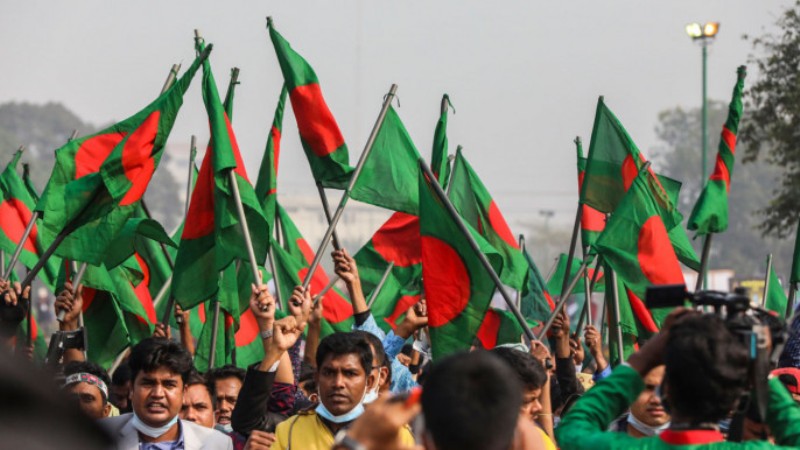

Talk of elections in Bangladesh is intensifying, yet tangible actions remain elusive. Despite statements from the interim government indicating that elections are slated between December this year and June of next, specifics have yet to be communicated to the electorate. Compounding this uncertainty, government officials assert that there is no widespread discontent among the populace regarding the current administration. A comment from the home affairs advisor, suggesting public desire for the current regime to continue for another five years, lacks clarity on how this conclusion was reached.
As political jitters grow, the Bangladesh Nationalist Party (BNP) is particularly anxious. Initially optimistic following the Sheikh Hasina government’s fall in August last year, BNP leaders are now grappling with the reality that numerous obstacles lie ahead. A pressing concern is the absence of their exiled acting chairman, Tareque Rahman, who has not hinted at a return to Dhaka from London. Although the legal challenges against him have been withdrawn, his supporters are increasingly puzzled by his prolonged absence since he fled in 2007.
Throughout the past nine months, BNP figures like Mirza Fakhrul Islam Alamgir have kept the party’s demands alive, urging the interim government to set an election timeline and restore constitutional governance. However, the Yunus administration has responded with indifference, complicating matters further for the BNP. Young opposition members, particularly from the newly formed National Citizens Party (NCP), have emerged, reportedly receiving support from the interim regime, suggesting this could be an engineered effort to stifle BNP’s resurgence.
Tareque Rahman’s statements to BNP supporters demonstrate newfound maturity, marking a shift from his earlier, more confrontational stance against historical figures like Bangabandhu Sheikh Mujibur Rahman. The current political landscape has forced the BNP to reassess its strategy, especially as its former ally, Jamaat-e-Islami, has begun charting an independent political course.
Both the BNP and the Awami League appear to be confronting significant challenges. The Awami League, facing protests from its young supporters, has yet to articulate a coherent strategy for future engagement. Speculation arises that these two major parties may eventually forge an alliance to exert pressure on the interim government for a timely election schedule. Interestingly, the BNP has hinted at a willingness to engage with the Awami League, suggesting they do not see it as unworthy of participation in politics.
Oddly, while the NCP calls for a ban on the Awami League, the situation remains fluid, with the need for cooperation between political factions becoming increasingly evident. The Jatiyo Party, led by G.M. Quader, might also play a significant role in any coalition aimed at advocating for elections.
In a historical context, alliances among these three parties—BNP, Awami League, and Jatiyo Party—could be pivotal in compelling the interim rulers to establish a clear electoral timeline. Given the history of political maneuvering in Bangladesh since 1971, overtures for collaboration are plausible. As all parties grapple with survival and public perception, it is clear that a united front may be essential for stabilizing the political climate.
The road ahead is fraught with challenges as both the BNP and Awami League navigate their way through this political quagmire. The Jatiyo Party, currently weakened, may struggle to reestablish its presence. This precarious situation underscores the urgent need for these political entities to seek common ground for the sake of Bangladesh’s democratic future.
Original Source: https://nenews.in/articles/in-bangladesh-the-questions-around-the-bangladesh-nationalist-party/24576/
Category : Articles,Neighbours,Bangladesh Nationalist Party,National Citizen’s Party
Tags:
Publish Date: 2025-05-02 10:25:00