
The U.S. Supreme Court recently ruled that migrants from Venezuela must receive adequate notice and the opportunity to legally dispute their removal before being deported to El Salvador’s maximum-security prison. A document revealed during a Thursday hearing at the Federal District Court in Brownsville, Texas, disclosed how the Trump administration planned to comply with this directive. The court order mandated that deportees be informed “within a reasonable time,” but the specifics were shrouded in controversy.
Before the Supreme Court’s stay was issued Saturday, halting the deportation under the Alien Enemies Act of 1798, Venezuelan detainees were provided with a form indicating their right to make a phone call. This one-page document, according to a newly unsealed four-page declaration from an Immigration and Customs Enforcement (ICE) official, required detainees to express intent to challenge their situation within 12 hours and file a habeas corpus petition within 24 hours to secure a judicial hearing. The form, penned in English, was reportedly explained to detainees in their native language; however, these procedures have faced skepticism.
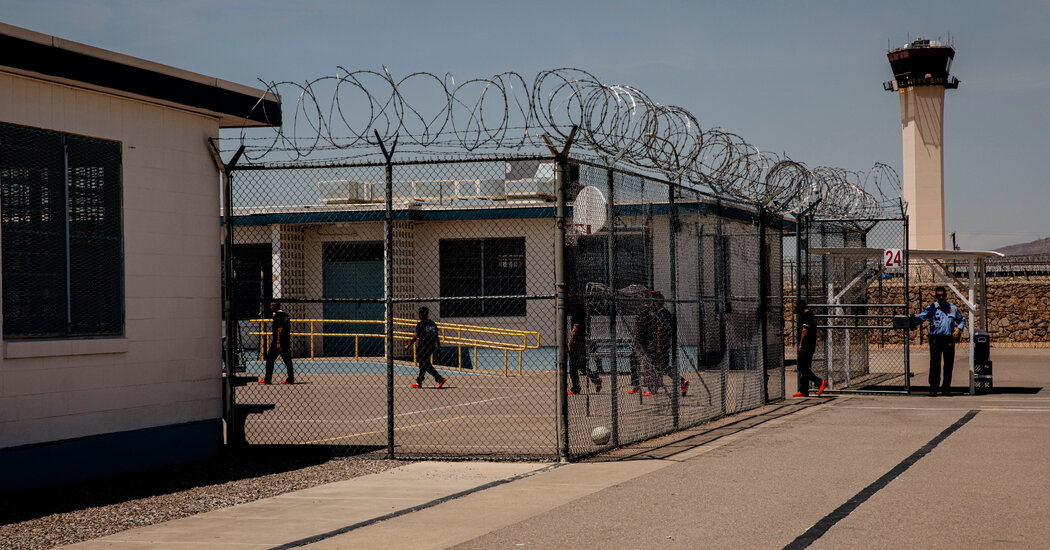
The case centers on three Venezuelan men confined at the El Valle Detention Facility, approximately 50 miles from Brownsville. Lawyers representing detainees in other Texas locations have criticized the government, saying the notice procedure was inadequate. They argue the form, labeled as Form AEA-21B according to ICE, was not duly explained, and detainees were simply instructed to sign without understanding its implications.
During the two-hour hearing, Judge Fernando Rodriguez Jr. unsealed the ICE declaration despite governmental concern about its sensitive content. He expressed doubt over President Trump’s executive order, suggesting the Alien Enemies Act could deport the men due to unsubstantiated gang affiliations. The government’s argument compared gang activity to an “invasion” but failed to provide historical documentation justifying such a claim. “You’re giving me your view of what the words mean,” Judge Rodriguez stated. “What I’m looking for is what the words meant at the time.”
Lee Gelernt of the American Civil Liberties Union, representing the three plaintiffs, criticized the procedure, asserting, “Twelve hours is obviously too short to find out who to contact, and 24 hours to file a habeas corpus petition is obviously inconsistent with any notion of due process or the Supreme Court’s ruling.”
Judge Rodriguez’s case is part of a broader legal pushback, as at least five district court judges have temporarily halted deportations under the Alien Enemies Act, challenging the administration’s narrative. Importantly, Judge Rodriguez and another involved judge were appointed by President Trump, reflecting internal division within his judicial appointees.
Concluding the hearing, Judge Rodriguez extended his temporary restraining order, so it remains effective through May 2, underscoring the ongoing legal complexity surrounding this case. Alan Feuer contributed additional reporting on this development.
This case highlights key issues surrounding deportation processes, legal rights of detainees, and government adherence to Supreme Court mandates. As it unfolds, it will continue to shape discussions about immigration, due process, and the nuanced interpretation of historic laws like the Alien Enemies Act.
Original Source: https://www.nytimes.com/2025/04/24/us/politics/deportations-ice-document-venezuelan-migrants.html
Category : Immigration and Customs Enforcement (US),Trump, Donald J,Deportation,Immigration Detention,Supreme Court (US),Habeas Corpus,Federal Courts (US),Brownsville (Tex),Venezuela,El Salvador
Tags:
Publish Date: 2025-04-25 11:16:00