
Amid escalating tensions and uncertainty in the Israel-Gaza conflict, efforts to negotiate a ceasefire and facilitate hostage-prisoner exchanges have faced continuous hurdles. Arab mediators, alongside the United States, have been striving to close the rift between Hamas and Israel, but a concrete agreement remains elusive. President Donald Trump has recently hinted at progress, suggesting that an agreement might be near. “We’re getting close to getting them back,” Trump stated during a cabinet meeting, referring to efforts regarding hostages. However, specific details were scant as neither Hamas nor Israeli Prime Minister Benjamin Netanyahu’s office immediately commented on the developments.
The ongoing conflict has plunged Palestinians into a cycle of hope and despair, with negotiations consistently failing to yield lasting solutions. The Israeli military has reported significant actions aimed at weakening Hamas’s capabilities, claiming recent operations have dismantled weapons infrastructure and neutralized key militants. On Thursday, the Israel Defense Forces announced their role in the death of a Hamas commander involved in a previous attack on October 7, 2023, in Gaza City’s Shajaiye neighborhood. While Hamas did not comment, the Palestinian Civil Defense reported 23 casualties in the operation, without distinguishing between civilians and combatants. Israel has often been criticized for its operations in civilian areas, although it argues that Hamas strategically embeds itself within these regions. Legal experts maintain that there remains an obligation to minimize civilian harm during military actions.
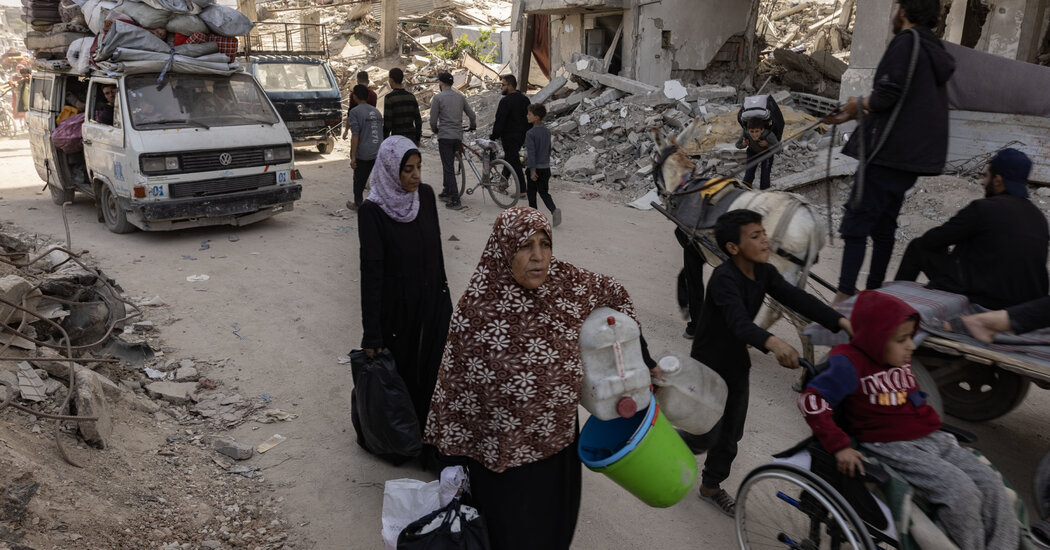
The conflict’s impact has been severe and widespread. Israeli evacuation orders and military operations have stretched across approximately half of Gaza’s territory, with a New York Times analysis confirming significant territorial control shifts. Satellite imagery reveals Israeli forces encircling Rafah, Gaza’s southernmost city, raising alarm about potential humanitarian implications. The Gaza health ministry reports over 1,500 deaths since the ceasefire’s breakdown and over 50,000 fatalities since the war erupted. The casualty figures don’t differentiate between combatants and non-combatants, but hospital sources indicate that many affected are children.
The United Nations has expressed growing concern over humanitarian conditions in Gaza, highlighting the severe impact of continuous evacuations and military strikes on the civilian population’s ability to sustain itself. Ravina Shamdasani, spokesperson for U.N. human rights chief Volker Türk, emphasized, “The death, the destruction, the displacement, and denial of access to basic necessities raise serious questions about the future viability of Palestinians in Gaza.” According to the U.N., between mid-March and now, 21 evacuation orders have been issued, alongside 224 attacks on residential buildings, exacerbating the dire situation in Gaza.
As the conflict persists, it is critical for global attention to focus on both immediate humanitarian needs and long-term resolutions to reduce suffering and restore stability in the region. The international community watches closely, hoping for a breakthrough that might end the cycle of violence and offer a peaceful future for those caught in the crossfire.
Original Source: https://www.nytimes.com/2025/04/11/world/middleeast/israel-gaza-evacuations.html
Category : Israel-Gaza War (2023- ),Palestinians,Refugees and Displaced Persons,Evacuations and Evacuees,Defense and Military Forces,Gaza Strip,Israel,Hamas,Israeli Defense Forces
Tags:
Publish Date: 2025-04-12 01:27:00