Unveiling the Shift: Why Iran’s Supreme Leader Embraced Trump’s Nuclear Talks for a Transformational Future

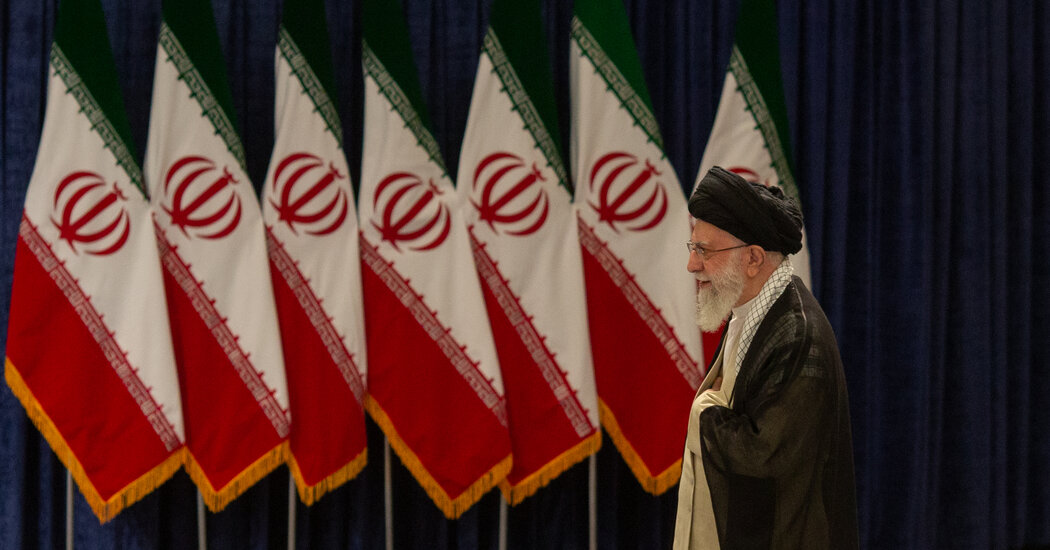
In a significant diplomatic pivot, Iran has agreed to engage in nuclear negotiations with the United States, following a private, high-level meeting involving Iran’s Supreme Leader, Ayatollah Ali Khamenei, President Masoud Pezeshkian, and other top officials. Previously, Khamenei had declared any talks with Washington as “unwise and idiotic.” However, under pressure from senior officials concerned about the nation’s stability and international relations, he granted his approval for negotiations, as revealed by two anonymous Iranian officials. In late March, Iran formally responded to Trump’s overture, signaling readiness for dialogue.
The pressing concerns for Iran are multifaceted: a faltering economy, an unstable currency, and looming threats of military conflict with the United States and Israel. Officials cautioned that without negotiations, military strife could be unavoidable, particularly targeting Iran’s key nuclear sites at Natanz and Fordow. Such an escalation would force Iran into retaliation, escalating tensions and potentially destabilizing the regime.
This crucial meeting marks a departure from Iran’s historical stance; Khamenei’s approval for indirect talks—potentially leading to direct negotiations—reflects an acknowledgment of the existential threat posed by prolonged conflict and economic hardship. Talks are set to commence on Saturday in Oman, with plans for indirect communication through Omani intermediaries, though the U.S. has indicated an openness to direct discussions. This diplomatic move highlights Khamenei’s core principle: the preservation of the regime above all else, as noted by Hossein Mousavian, a former Iranian diplomat.
President Trump, steadfast in his position, has reiterated his willingness to take military action should negotiations falter. He emphasized, “I’m not asking for much, they can’t have a nuclear weapon. I want them to thrive. I want Iran to be great.” The silent backdrop to these negotiations is a shifting geopolitical landscape, with Iran’s traditional allies, Russia and China, urging de-escalation and advocating for dialogue. Recent meetings in Beijing and Moscow have underscored this stance.
The economic aspect of these talks is crucial, with Iran’s oil exports to China threatened by potential U.S. sanctions, which could slash exports by nearly half a million barrels per day, further crippling the Iranian economy. Discussions between high-ranking officials highlighted the unviability of managing the nation’s fiscal crises without diplomatic engagement.
Khamenei has authorized discussion on the nuclear program, suggesting limits to uranium enrichment and more rigorous monitoring but categorically refusing any talks about Iran’s missile defense capabilities. Additionally, Iran is open to revisiting its regional policies and support for militant groups, signaling a potential decrease in regional tensions.
This diplomatic initiative also opens avenues for U.S. business engagements in Iran. The anticipation of the upcoming talks has even slightly boosted the Iranian rial and stock market, indicating cautious optimism in economic circles. According to Ali Vaez of the Crisis Group, diplomacy with Trump offers Iran a unique opportunity to resolve long-standing tensions, marking potential détente with the U.S. and mitigating near half-century diplomatic rifts. The stakes are immense, and the world watches as both nations navigate this complex geopolitical chessboard.
Original Source: https://www.nytimes.com/2025/04/11/world/middleeast/us-iran-talks-trump-khamenei.html
Category : International Relations,United States International Relations,Embargoes and Sanctions,War and Armed Conflicts,Nuclear Weapons,Defense and Military Forces,Iran-Israel Proxy Conflict,Iranian Rial (Currency),Islamic Revolutionary Guards Corps,Khamenei, Ali,Trump, Donald J,Witkoff, Steven,Araghchi, Abbas,Iran,Middle East
Tags:
Publish Date: 2025-04-11 19:39:00