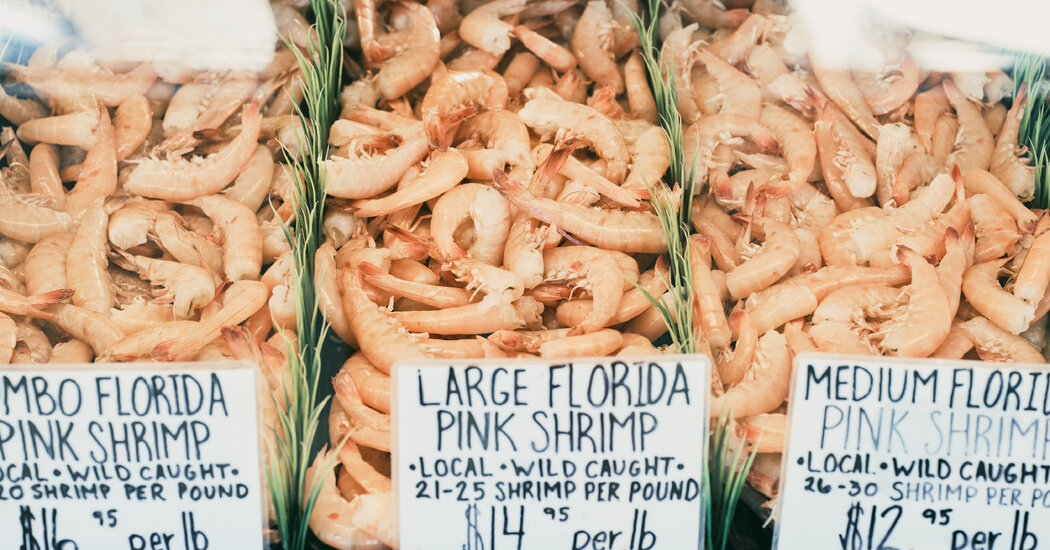

In a significant move for the Gulf Coast’s shrimping industry, veteran Mississippi shrimper Frank Parker decided to upgrade to a larger vessel in December. This strategic decision, motivated by President Trump’s return to the White House and his commitment to imposing tariffs on nearly all imports, aims to enable Parker to remain in deeper waters for extended periods and capitalize on potential market changes. These new tariffs, announced recently, have sparked a sense of optimism among shrimpers like Parker, who said the policy shift felt “like the sun coming out of the tunnel.”
The new tariffs target major shrimp-exporting nations, including Vietnam, Indonesia, and India, providing a potential lifeline for U.S. shrimpers struggling against cheap, farm-raised imports. The local industry has faced numerous challenges, from natural and economic disasters to rising operational costs, with the price of headless shrimp plummeting to as low as $1.50 per pound. Parker expressed frustration over devalued prices, stating, “I’ve left shrimp out there because I didn’t want to give them away for $1 a pound.”
While some American seafood producers in Alaska worry about retaliatory tariffs on exports like salmon and pollock, Gulf Coast shrimpers largely focus on the domestic market. The influx of cheaper, often mislabeled imports has severely impacted their business, exacerbated by revelations through genetic testing that some imported shrimp are fraudulently labeled as Gulf Coast products. Ryan Bradley, a former shrimper and executive director of Mississippi Commercial Fisheries United, likened the problem to a market flooded with imitation products, suggesting the tariffs could level the playing field.
The U.S. International Trade Commission’s recent decision to allow the Department of Commerce to impose these tariffs reflects mounting pressure to support domestic industries. As more than 90 percent of shrimp consumed in the United States is imported, primarily from India, Ecuador, Indonesia, and Vietnam, the tariffs aim to bolster local producers. Despite this step, revenue from wild-caught shrimp fell by 38 percent from 2022 to 2023, further underscoring the industry’s perilous position amidst constant cost inflation.
Aside from economic considerations, ethical and environmental issues with some international shrimp farms have fueled the call for tariffs. Reports of labor exploitation and substandard practices contrast starkly with American shrimpers who adhere to stricter regulations, such as using turtle excluder devices. The Gulf Coast Fishery Management Council’s ongoing freeze on new shrimping permits highlights the industry’s commitment to sustainable practices.
Shrimpers assert that beyond the tariffs, consumer education is critical. They argue the distinct taste of wild-caught Gulf Coast shrimp, which boast a richer flavor due to their natural habitat, warrants increased demand for locally sourced seafood. Justin Versaggi, a fourth-generation shrimper, expressed hope the tariffs will restore momentum and fair pricing in the market. “The fear that I have is that once our industry is gone, it’s gone forever,” he emphasized.
The Southern Shrimp Alliance advocates for continued legislative efforts, including accurate labeling requirements, to ensure transparency for consumers. As the industry navigates uncertainty surrounding tariffs, shrimpers like Acy Cooper of Louisiana remain cautiously optimistic, viewing potential financial gains as a worthwhile risk despite potential cost hikes in equipment due to broader trade policies.
For shrimpers in areas like Fort Myers and Fort Myers Beach, Florida, recovering from Hurricane Ian’s devastation, the tariffs offer a glimmer of hope. Local businesses and shrimpers, still reeling from infrastructure losses and being forced to rebuild, anticipate the tariffs will increase sales of local pink shrimp varieties. Dana Gala, managing her family’s seafood market, voiced optimism that protective measures might secure the shrimping legacy for future generations, noting, “in the long run, it will help tremendously.”
Original Source: https://www.nytimes.com/2025/04/07/us/politics/trump-tariffs-fishing-shrimp.html
Category : Shrimp,International Trade and World Market,United States Politics and Government,Customs (Tariff),Fishing, Commercial,Prices (Fares, Fees and Rates),Seafood,United States International Trade Commission,Trump, Donald J,Biloxi (Miss),Fort Myers (Fla),Fort Myers Beach (Fla),Gulf Coast (US),Mississippi
Tags:
Publish Date: 2025-04-08 07:21:00