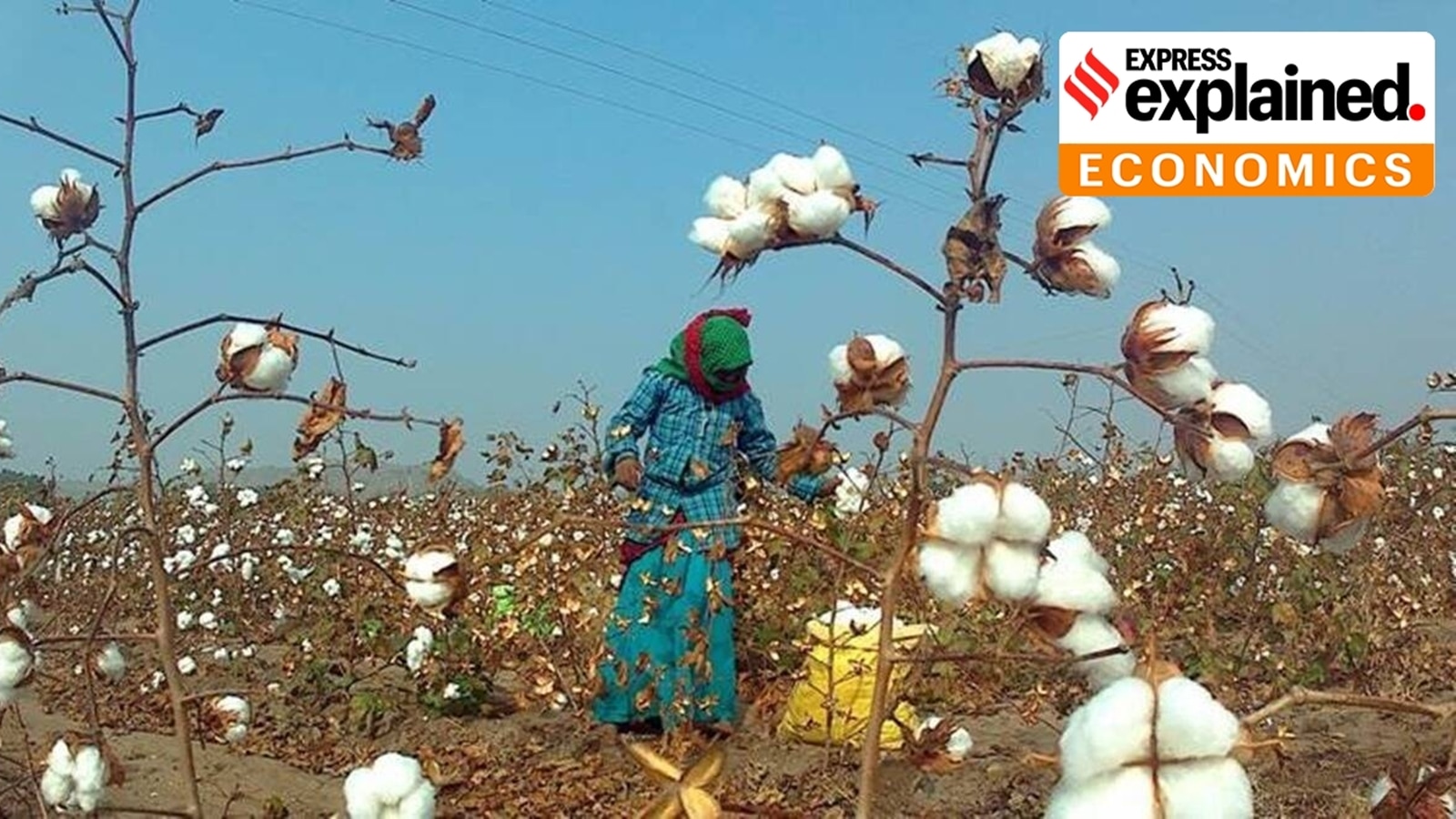

India’s Cotton Crisis: A Result of Waning Production and Pests
India, despite being a significant producer of cotton and having a competitive edge in the global market, is facing a major crisis in its cotton economy. The country’s production has been on a decline since 2013-14, with the 2024-25 marketing year projected to reach a record low of 294 lakh bales. This is a stark contrast to the peak production of 398 lakh bales in 2013-14.
The main culprit behind this decline is the pink bollworm (PBW), an insect pest that feeds on cotton seeds and lint, causing yield loss and lint discolouration. The PBW has developed resistance to genetically modified (GM) cotton hybrids, which were introduced to control other pests. These hybrids initially provided protection against the PBW, but this effectiveness has worn off over time.
The situation has become so dire that India is expected to surpass its cotton imports to meet domestic demand, with imports set to reach 30 lakh bales this year. This is in contrast to the country’s export-dependent model, which has been a major driver of its economy. India’s cotton textile exports face a 27% duty under US President Donald Trump’s “reciprocal tariff” policy, making it challenging to compete with other countries like China, Vietnam, and Bangladesh.
In an effort to combat the PBW, leading Indian seed companies are developing new GM cotton hybrids that deploy new genes from Bt. Bioseed Research India, a division of DCM Shriram Ltd, is conducting confined field trials of its proprietary ‘BioCotX24A1’ transgenic technology, which expresses the ‘cry8Ea1’ gene found in Bt. Other companies like Rasi Seeds Pvt Ltd and Ankur Seeds are also working on commercializing PBW-resistant GM cotton hybrids.
The Indian government is taking steps to address the crisis, with Finance Minister Nirmala Sitharaman announcing a five-year ‘Mission for Cotton Productivity’ in her 2025-26 Union Budget speech. This mission aims to provide “the best of science and technology support” to farmers and “ensure a steady supply of quality cotton” for the Indian textile industry.
The government’s support is crucial in addressing the PBW crisis, as regulatory barriers and opposition from environmental groups have hindered the commercialization of new GM crops in India. The urgency of the situation may prompt the government to adopt a more proactive approach to new GM hybrid events, given the opportunity opened up by Trump’s reciprocal tariffs for India’s cotton textile exports.
As India works to address the PBW crisis and restore its cotton production, it is essential to balance the need for GM crops with concerns over environmental and food safety. With the right approach, India can regain its position as a leading cotton producer and exporter, supporting the growth of its textile industry.
Original Source: https://indianexpress.com/article/explained/explained-economics/a-cotton-emergency-9928795/
Category : Explained,Explained Economics
Tags:
Publish Date: 2025-04-07 07:00:00