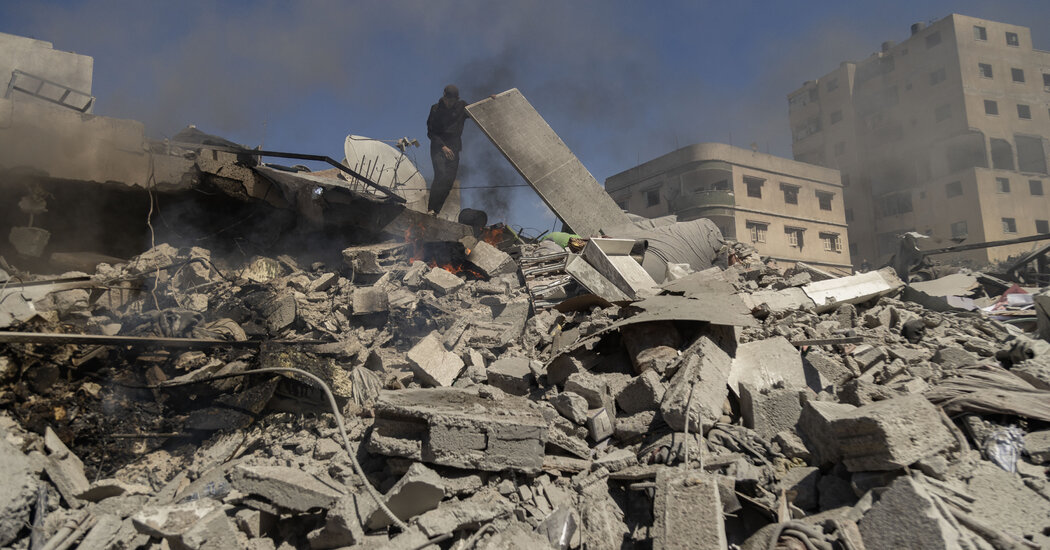

In the early hours of March 18, Israeli airstrikes broke a two-month cease-fire in Gaza, shattering the hopes of many families who had started to envision a return to normalcy. Among them was the Abu Teir family, who had faced multiple displacements over 15 months of conflict. They had recently returned to their home in Abasan al-Kabira, southeastern Gaza, where 19-year-old Huda Abu Teir had been planning her future as a nurse. A pizza party with her cousins characterized the brief moment of peace they enjoyed. However, their world collapsed again when a sudden explosion transformed their home into rubble.
The strike, part of an Israeli military operation, claimed the lives of Huda, her parents, and several other family members, including her cousin Anas, who died while waiting for medical assistance. Cousin Qasim described the chaotic scene he encountered with his phone flashlight, revealing the bloody aftermath and the collapsed four-story house. Dr. Huda, a nursing aspirant, was among eight family members killed, leaving her brother Abdullah, 15, injured and fighting to comprehend the tragedy around him.
The Israeli military stated it was targeting a Hamas operative on March 18, not specifically identifying any individual or location. Family members, however, insisted there was no reason for their home to be targeted. In the pervasive tragedy that night, more than 400 people lost their lives, with continued strikes adding to the toll. The Gaza health ministry reported over 600 additional deaths since then, with casualties including both civilians and Hamas combatants.
The renewed airstrikes were a response to demands for the release of Israeli hostages, captured after a Hamas-led attack on Israel that began in October 2023, resulting in significant loss of life and captives. The New York Times noted changes in the Israeli military’s engagement rules, potentially increasing civilian risks as they target Hamas fighters embedded within civilian areas. Israeli Defense Minister Israel Katz announced an expanded military offensive, adding pressure to an already beleaguered Gaza population.
The broader scope of conflict since October has led to the deaths of over 50,000 people, largely impacting civilian infrastructure and daily life. Gaza has endured ravaging effects on healthcare, education, and its economy, with entire families and neighborhoods devastated by the ongoing onslaught.
Abdullah, stricken with grief and injuries, remained unaware of the full extent of his family’s loss, only knowing he was trapped under debris during the night of destruction. The Abu Teirs were known for their familial closeness, with Mohammed and Asmaa remembered for their affection, unusual in a society of traditionally arranged marriages. Post-war, the family eagerly anticipated reuniting for occasions like Ramadan, which matriarch Shawqia marked with her culinary specialty, maftoul. Her death followed her husband’s earlier passing amid war-induced stress.
The Abu Teirs’ narrative is emblematic of Gaza’s continuing struggle with cyclic violence and its severe humanitarian fallout. As the Israeli-Gaza conflict amplifies, civilian casualties and displacement stories like the Abu Teirs underline the persistent tragedy, emphasizing the urgent need for resolution and lasting peace in the region.
Original Source: https://www.nytimes.com/2025/04/02/world/middleeast/one-family-gaza-deaths.html
Category : Israel-Gaza War (2023- ),Civilian Casualties,Hamas,Gaza Strip,Israel,Refugees and Displaced Persons
Tags:
Publish Date: 2025-04-02 21:27:00