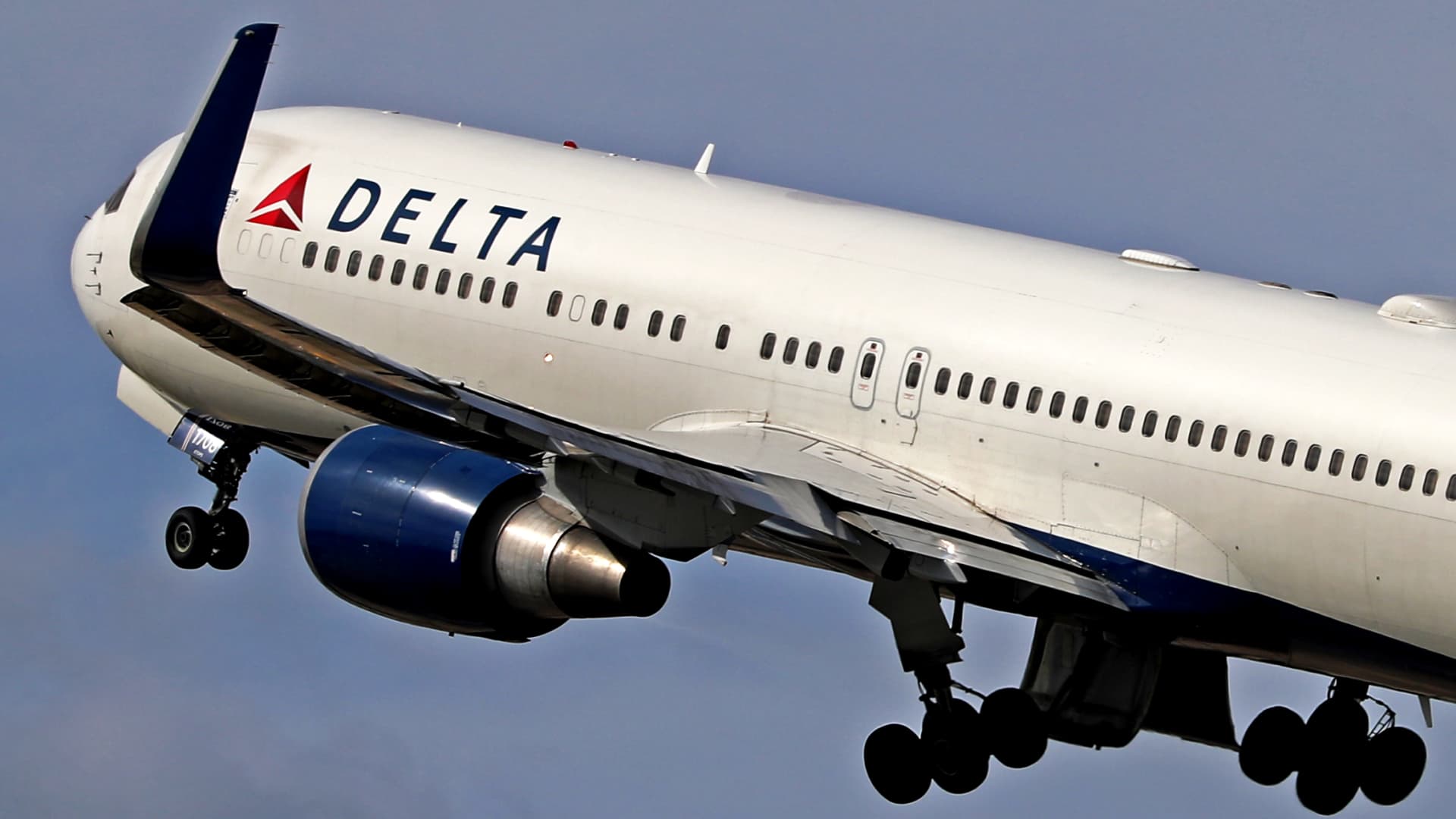

Airline stocks took a tumble on Tuesday, further exacerbating concerns on Wall Street about potentially faltering travel demand amidst looming tariffs and dwindling consumer confidence. Delta Air Lines, the most profitable U.S. carrier, experienced a notable dip as its shares fell approximately 5% during morning trading. This downturn followed a downgrade by Jefferies from a “buy” to a “hold” rating, while the price target was nearly halved to $46. This decision came on the heels of Delta’s recent adjustments to its first-quarter guidance and a forecast that could potentially see further reductions for 2025.
Executives at Delta have attempted to allay rising anxieties by highlighting a growth in revenue from premium cabin bookings, including first-class, along with a profitable credit card collaboration with American Express. However, Jefferies’ caution extends beyond Delta, as it also lowered ratings for American Airlines, Southwest Airlines, and Air Canada, citing concerns over a slowdown in cross-border travel with the U.S. Jefferies maintains United Airlines as the only U.S. carrier with a “buy” rating, albeit with its price target slashed by 48%.
These developments come at a time when airline executives are voicing concerns over softer-than-anticipated demand, especially for domestic travel, a critical component of the U.S. travel market. Conversations at a JPMorgan industry conference in mid-March highlighted these challenges. Data supports this sentiment, with a Bank of America report indicating that, while overall U.S. household credit and debit card spending saw a modest 1.5% increase over the previous year as of March 22, spending specifically on airlines experienced a significant 7.2% drop.
Further insights from the Bank of America Institute suggest that this decline in travel-related spending could be attributed to a recent dip in consumer confidence, prompting vacationers to either postpone or scale back their travel plans. The report also points to possible influencing factors such as adverse weather conditions and the timing of Easter this year.
This downturn in airline stocks is reflected in the broader market metrics. The NYSE Arca Airline Index, which primarily tracks U.S. carriers, plummeted nearly 17% in the first quarter. This decline is particularly stark when compared to the S&P 500’s downturn, marking the airline sector’s most significant percentage drop since the third quarter of 2023.
In the face of these challenges, the airline industry continues to navigate a complex landscape of economic pressures and shifting consumer behaviors. As airlines prepare to report earnings, beginning with Delta’s announcement slated for next Wednesday morning, market watchers will be keenly observing these indicators to understand the evolving dynamics of the travel sector.
Readers and investors alike will be closely following these developments, as the interplay between economic indicators, consumer confidence, and travel demand continues to shape the trajectory of airline stocks. As the industry adapts to these conditions, insights from financial analysts and airline executives will be crucial in forecasting future performance and navigating potential opportunities for growth.
Original Source: https://www.cnbc.com/2025/04/01/airline-stocks-slide-consumer-travel.html
Category :
Tags:
Publish Date: 2025-04-01 20:12:00