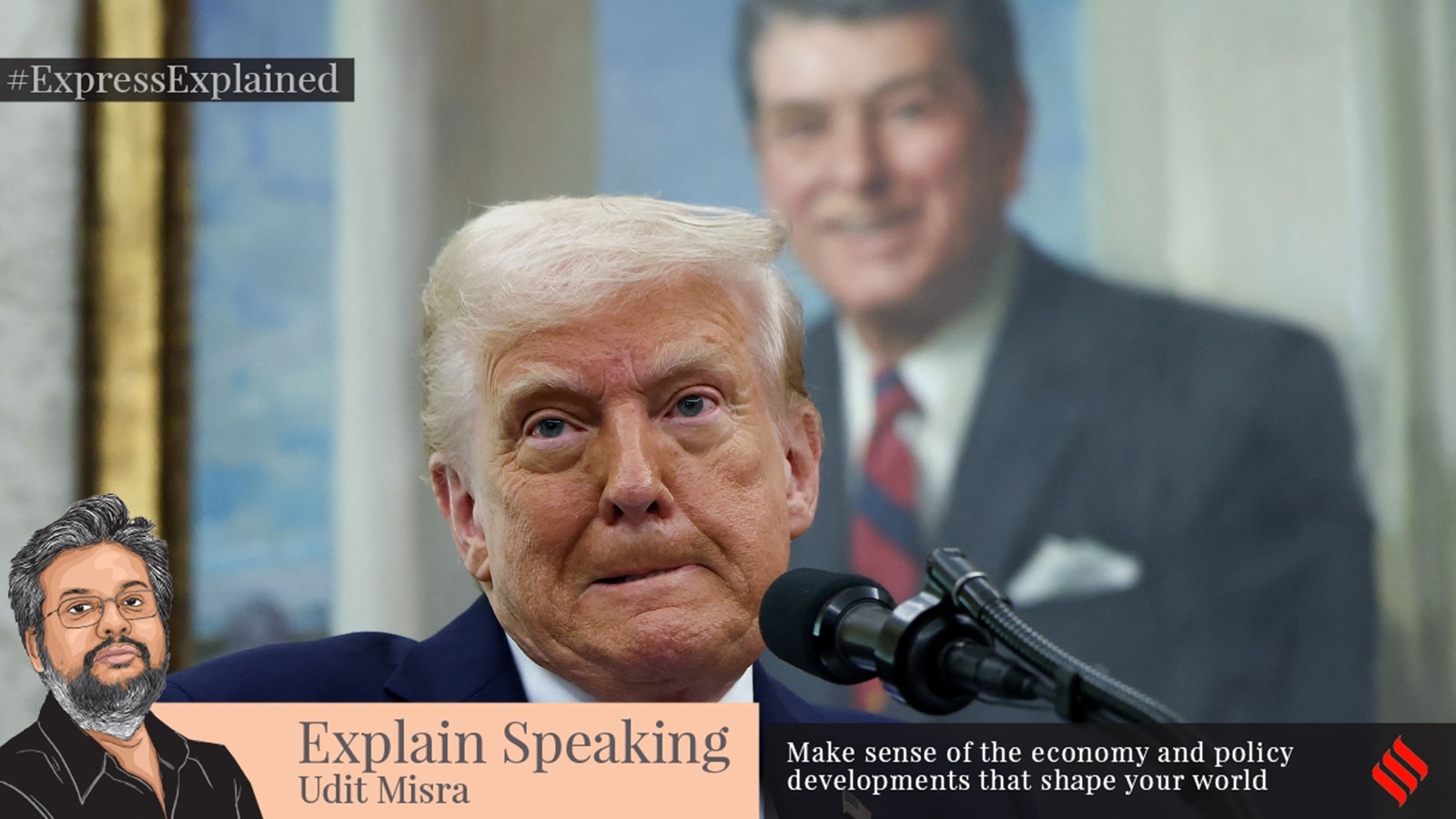

Global Economic Turmoil Looms as US President Trump Prepares to Announce Reciprocal Tariffs
The world is on edge as April 2 approaches, the date when US President Donald Trump is set to unveil his plan for reciprocal tariffs on major trading partners. The anticipation is palpable, with policymakers and investors worldwide waiting with bated breath to see how this move will impact the global economy. But what exactly is the problem that Trump is trying to solve, and how will this new policy affect the exchange rates, stock markets, and real estate?
According to experts, the issue at hand is the over-valuation of the US dollar, which has been a major contributor to the country’s trillion-dollar trade deficit. The dollar’s peculiar problem, as Harvard economist Stephen Miran puts it, stems from its status as the default global currency, which guarantees an unwavering demand for it, regardless of the state of the US economy. As a result, the dollar has become overvalued, making US exports less competitive and imports cheaper, while manufacturing employment declines and local communities suffer.
So, why not address the over-valuation of the dollar directly? Trump’s advisors argue that tariffs are a better solution, as they can help rechannel global demand towards the US and recapture some of the benefits that other nations receive from the dollar’s reserve status. This approach is predicated on the assumption that tariffs are paid by foreign countries and will not lead to inflation in the US.
The conventional view on tariffs, however, is that they are paid by domestic consumers, leading to higher prices and inflation. But Trump’s team sees things differently, citing data from the first round of tariffs against China, which showed that the effective tariff rate on Chinese imports increased by 17.9% points, while the after-tariff US dollar import price rose by only 4.1%, due to the yuan’s depreciation against the dollar.
The stakes are high, with the potential for global economic turmoil if tariffs are imposed on multiple major trading partners. While some experts, like Harvard economist Stephen Miran, argue that tariffs can be paid by foreign countries and will not lead to inflation, others, such as Nobel laureate Paul Krugman, are more skeptical, warning of potential higher inflation and a stall in global economic growth.
As the world holds its breath, the question remains: Who will pay the tariffs? Will it be the foreign countries, as Trump’s team suggests, or the US consumers, as the conventional view would predict? One thing is certain – the global economy is at a crossroads, and the direction it takes will have far-reaching consequences for trade, investment, and growth worldwide.
Original Source: https://indianexpress.com/article/explained/explained-economics/explainspeaking-trump-tariff-love-shouldnt-9914723/
Category : Explained,Explained Economics
Tags:
Publish Date: 2025-03-31 06:30:00