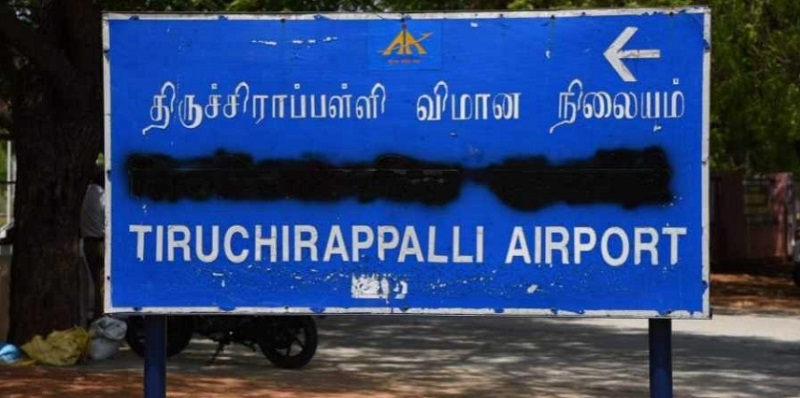

As a country with a rich cultural diversity, India has long struggled with the issue of language and its impact on national unity. The latest flashpoint is the dispute between the Central Government and the Tamil Nadu Government over the implementation of the National Education Policy (NEP) 2020, which some perceive as an attempt to impose Hindi on the southern state. This inflammatory issue has once again exposed the nation’s linguistic divide, a problem that has historically led to violent language movements in various parts of the country, particularly in the southern states.
The imposition of Hindi in the 1950s and 1960s resulted in bloody conflicts, and although the issue is not as intense today, the situation has not significantly improved. Non-natives continue to face harassment and discrimination in states like Karnataka, Tamil Nadu, and Maharashtra, often fuelled by political opportunism. The struggle for linguistic identity is a powerful force, and incidents like the violent language movements in the 1950s and 1960s demonstrate its potential to disrupt social harmony.
The importance of language is not unique to India; it has far-reaching implications across the subcontinent. The creation of Bangladesh from Pakistan and the observance of “International Mother Language Day” on February 21, 1952, are testaments to the deep connection people have with their language. The imposition of Urdu across Pakistan ultimately proved costly, while a similar attempt to impose Hindi in India led to bloodshed in the 1950s.
Policymakers have attempted to address these issues by recognizing multiple languages, such as the two-language formula adopted in India, where English and Hindi are recognized along with 22 other scheduled languages. However, language-related disputes persist, as seen in the reorganization of states in 1956 and subsequent carving out of new states due to language-related issues. The ongoing conflict in Assam, where language movements have historically led to violent scenes, is a stark reminder of the gravity of the problem.
The recent confrontation between the Central Government and the Tamil Nadu Government over the NEP’s three-language formula is a prime example of how leaders and parties often exploit language divisions to divert attention from pressing issues of governance, law and order, and economic downturn. By weaponizing language, they perpetuate polarization along linguistic lines, as seen in the responses to the NEP.
Fortunately, not all states have responded with the same level of defiance. Andhra Pradesh Chief Minister N Chandrababu Naidu, for instance, has supported the NEP’s three-language formula and advocated for learning Hindi, stating that “a language is not for hating.” The forced dichotomy between language and unity is a false one; instead, languages worldwide have always influenced and enriched each other. India’s language diversity is an asset, and it is crucial that we recognize and celebrate our shared heritage, rather than using it as a tool to create divisions.
As India navigates the complexities of language and national unity, it is essential to remember that the views expressed in this article do not reflect the views of Northeast Now. Anirban Choudhury is a senior journalist based in Guwahati and can be reached at [email address].
Original Source: https://nenow.in/opinion/why-do-language-conflicts-persist-in-india-historical-context-and-current-issues.html
Category : Assam,Opinion
Tags:
Publish Date: 2025-03-24 23:12:00