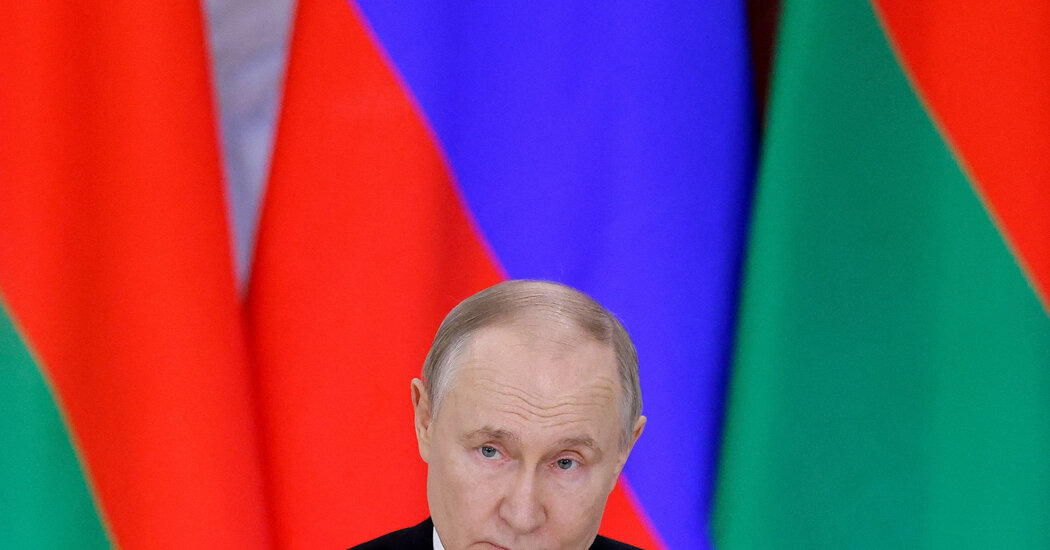

In a recent phone conversation with former U.S. President Donald Trump, Russian President Vladimir Putin expressed his willingness to cease strikes on Ukraine’s energy infrastructure, provided both nations mutually honor the agreement, as per the Kremlin’s statement. However, Putin withheld consent for a broader 30-day ceasefire proposed by the U.S. and Ukraine. Ukrainian President Volodymyr Zelensky remains open to a suspension of attacks on energy targets but stresses the importance of a balanced deal, asserting, “It cannot be the case that Russia attacks our energy sector, and we remain silent. We will respond.”
Putin highlighted to Trump that a crucial step toward resolving the conflict involves the cessation of Western military and intelligence aid to Ukraine. This stance, Kremlin watchers note, would likely render Ukraine vulnerable to Russian pressure, effectively undermining its defense capabilities. Meanwhile, the White House views a pause on energy strikes as a preliminary move towards broader peace, although the outcome of the Putin-Trump discussion reportedly fell short of the progress Trump had anticipated.
Halting attacks on energy infrastructure stands to benefit both countries. Ukraine’s energy grid has suffered from repeated Russian strikes, while Ukrainian counterattacks on Russian oil and gas facilities have put pressure on Russia’s vital revenue streams. Meanwhile, with the U.S. eyeing access to Ukraine’s mineral resources that require substantial energy for processing, the Russian-controlled Zaporizhzhia power plant in southern Ukraine becomes strategically significant.
In a separate but equally volatile hotspot, the Gaza Strip is once again engulfed in conflict, with Israeli airstrikes killing over 400 people, including children, according to Gaza’s health ministry. This sudden violence follows a breakdown of a fragile ceasefire with Hamas, which had been in place since January. Efforts to extend the truce, which expired in early March, were unsuccessful. The initial truce was meant to facilitate the release of 59 Israeli hostages, though fewer than half are believed to still be alive.
Israeli Prime Minister Benjamin Netanyahu signaled the likelihood of further military operations in conjunction with ongoing negotiations. “This is just the beginning,” he declared. In response, Hamas has accused Israel of disrupting the ceasefire but has not yet launched a military counteraction. Experts suggest that Israel’s military maneuvers aim to undermine Hamas’s control over Gaza.
The geopolitical landscape is further complicated by ongoing debates in U.S. domestic policy regarding presidential powers. Chief Justice John Roberts recently commented that impeachment is not an appropriate means of disagreeing with a judicial decision, a remark made amidst discussions on the deportation case involving migrants to El Salvador under the Trump administration. This case has fueled debates about the balance of power and judicial oversight in the U.S.
In other news, Lucy’s, a cherished dive bar in New York City, faced closure due to steep rent hikes but has gained a new lease on life thanks to the unexpected partnership between Ludwika Mickevicius and John Neidich. Also, John Hemingway, the last surviving pilot of the Battle of Britain, has passed away at 105.
For art enthusiasts, Jason Farago, a critic at large, recently highlighted Piet Mondrian’s deviation from his typical abstract style in a captivating portrait of a chrysanthemum—a testament to the exquisite interplay of parts and wholes in art.
Stay informed with these updates and more. We’ll be back with more headlines soon.
Original Source: https://www.nytimes.com/2025/03/19/briefing/trump-ukraine-gaza.html
Category :
Tags:
Publish Date: 2025-03-19 10:30:00