Urgent: Breakthrough in Ukraine Crisis Looms as Russia Poised to Agree to Cease-Fire, Rubio Reveals

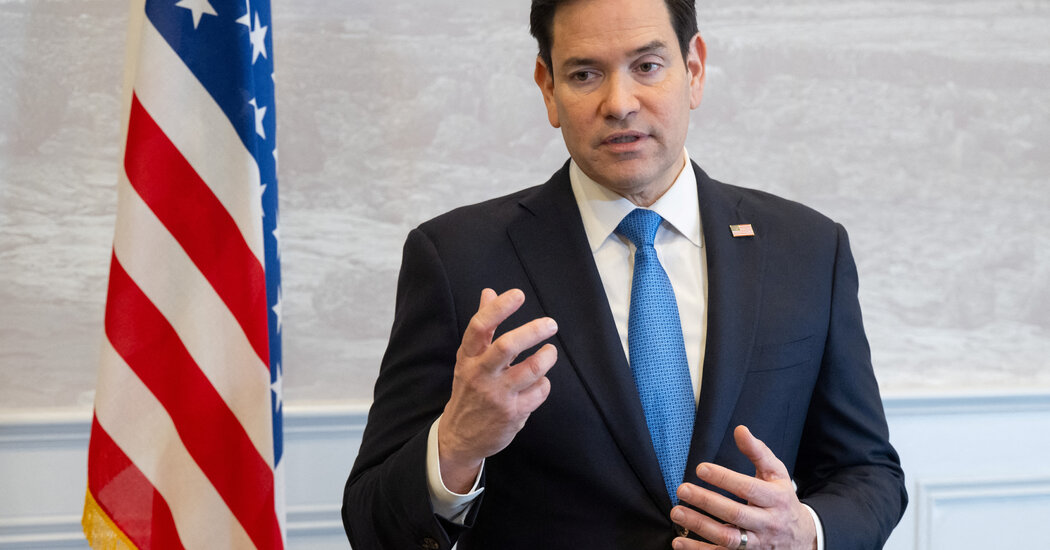
In a significant diplomatic push, Secretary of State Marco Rubio expressed optimism for a possible cease-fire between Russia and Ukraine, contingent on Russian cooperation. Speaking during a refueling stop in Ireland en route to a crucial Group of Seven (G7) meeting in Canada, Rubio emphasized the urgent need for both sides to halt hostilities, stating, “The shooting stops, the fighting stops, and the talking starts.” His comments come amid rising tensions and geopolitical complexities involving the United States’ alliances and economic policies.
Rubio dismissed concerns of potential diplomatic friction, particularly regarding President Trump’s contentious tariff policies and recent provocative remarks about annexing Canada. He assured reporters that such issues would not overshadow the G7 agenda, highlighting instead the imperative of fostering collective action among allied nations to address the crisis in Ukraine. “It is not a meeting about how we’re going to take over Canada,” he clarified, emphasizing cooperation with Canada, the host nation.
Recent high-level consultations, including a meeting on Tuesday with Ukrainian officials in Jeddah, Saudi Arabia, have set the stage for potential diplomatic movements. These discussions, led by Rubio and National Security Adviser Michael Waltz, have resulted in Ukraine’s agreement to a proposed 30-day interim cease-fire. Previously strained ties due to the withholding of U.S. aid appear to be stabilizing as support resumes.
Amid ongoing negotiations, Rubio disclosed plans for U.S. officials to engage Russian counterparts regarding the cease-fire proposal. “If their response is no, it would be highly unfortunate, and it’d make their intentions clear,” he warned. Recent interactions with Russian officials suggested a conditional openness to peace talks, noted Rubio. The G7 meeting will serve as a platform to unify international voices in urging Russia towards a peaceful resolution.
Uniquely poised at this geopolitical juncture, the G7, comprising Britain, Canada, France, Germany, Italy, Japan, and the United States, is expected to formulate a consolidating message to expedite the cessation of hostilities in Ukraine. Rubio expressed hope that the summit outcome would affirm U.S.-led efforts in fostering a diplomatic breakthrough.
Key topics poised to feature prominently in negotiations include humanitarian concerns, such as prisoner exchanges and the repatriation of Ukrainian children abducted by Russia. Moreover, Ukraine’s demand for security guarantees is pivotal, aligning with broader deterrence strategies embedded in future peace initiatives.
International dynamics remain strained as European countries advocate for involvement in any comprehensive settlement, with sanctions and frozen Russian assets likely to surface in forthcoming dialogues. The overarching aim remains a peaceful resolution to the warfare that commenced with Russia’s annexation of Crimea in 2014 and escalated with a full-scale invasion in 2022.
While discussions at the G7 will inevitably touch upon President Trump’s controversial diplomatic approach and tariff measures, Rubio reiterated that these actions serve national interests, particularly in bolstering domestic defense capabilities. Canadian officials, led by incoming Prime Minister Mark Carney, are navigating these complexities with reciprocal responses.
The discourse underscores a multifaceted geopolitical landscape with Secretary Rubio at the helm of pivotal international efforts, steering diplomatic engagements towards a strategic resolution, prioritizing peace, and stabilizing the global order.
Original Source: https://www.nytimes.com/2025/03/12/us/politics/rubio-canada-trump.html
Category : Russian Invasion of Ukraine (2022),Foreign Aid,United States International Relations,Territorial Disputes,Rubio, Marco,Trump, Donald J,Zelensky, Volodymyr,Canada,Russia,Ukraine,Group of Seven
Tags:
Publish Date: 2025-03-13 17:04:00