Unseen Struggles: Women and Girls Courageously Facing Cyberbullying in the Disability Community

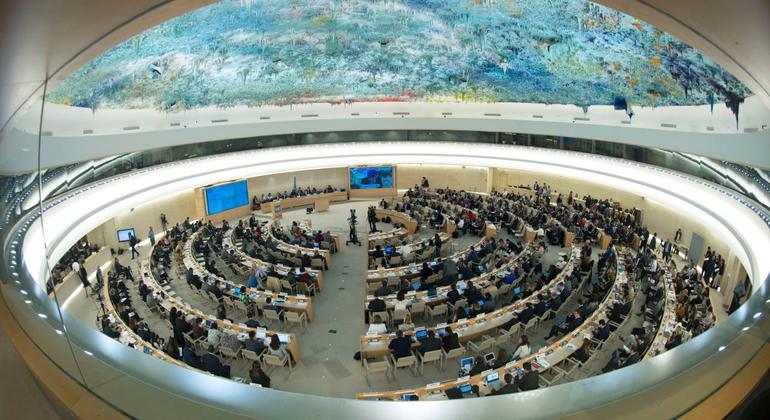
In a compelling address to the UN Council, Human Rights Chief Volker Türk highlighted a significant lapse in the protection of individuals with disabilities, a failure to align with the core principles established by the Universal Declaration of Human Rights. Emphasizing the mantra “nothing about us, without us,” originally championed by the disability rights movement, Türk criticized the pervasive global discrimination against people with disabilities, particularly women and girls. “In all regions, people with disabilities are discriminated against and dismissed,” Türk stated, pointing out their frequent undervaluation and neglect.
Special Rapporteur on the Rights of Persons with Disabilities, Heba Hagrass, further stressed the stagnation or regression in meeting disability-related Sustainable Development Goals (SDGs). According to the 2024 Disability and Development Report, 14 percent of SDG targets are lagging, with 30 percent showing minimal progress. Hagrass underscored the compounded discrimination against women and girls with disabilities, highlighting their underrepresentation in education and workforces and their increased vulnerability to violence and abuse.
The digital landscape offers both hope and hazards, as evidenced by disability rights advocate Nikki Lilly’s insights into the dual-edged nature of social media. Diagnosed with a rare condition affecting her appearance, Lilly turned to online platforms for support and connection. She narrated her personal experiences, noting that abusive comments escalated over time. Addressing the Council, Lilly urged social media companies to enhance content moderation processes and directly involve individuals with disabilities in developing technology.
Lilly also criticized current facial recognition technologies, which frequently fail individuals with facial differences, creating hurdles in accessing essential services like banking or job applications. Her call to action was for Council members to realize the vision of the UN Convention on the Rights of Persons with Disabilities by funding accessible technologies and establishing policies that ensure equitable societal participation for all.
Volker Türk additionally highlighted a design gap in assistive technologies, which often fail to accommodate women. According to the World Health Organization, only 10 percent of people with disabilities have access to suitable technology, a sentiment echoed by Sanja Tarczay of the World Federation of the Deaf-Blind. These technologies are crucial, Tarczay stated, for enabling full participation and inclusion.
Addressing the intersection of financial and environmental issues, Independent Expert Attiya Waris presented a stark assessment of the fiscal constraints faced by developing nations. Ongoing debt repayments severely restrict these countries from investing in climate resilience, a pressing concern given that their contributions to global carbon emissions are minimal. Waris reported that nearly 3.3 billion people reside in nations that prioritize debt payments over essential services like education and health. She highlighted a call for more robust financial assistance from developed nations, as current efforts fall short of addressing climate change adequately.
The report underscored the economic burden carried by these nations, with developing countries spending significantly more on debt servicing than on climate change initiatives. This financial strain is particularly pronounced across Africa, where countries face substantial debt payments despite contributing minimally to global emissions.
This discourse at the UN Council reflects an urgent appeal to respect and integrate the rights of individuals with disabilities, while also addressing the broader implications of financial inequities in the context of climate responsibility.
Original Source: https://news.un.org/feed/view/en/story/2025/03/1160981
Category :
Tags:
Publish Date: 2025-03-11 17:30:00