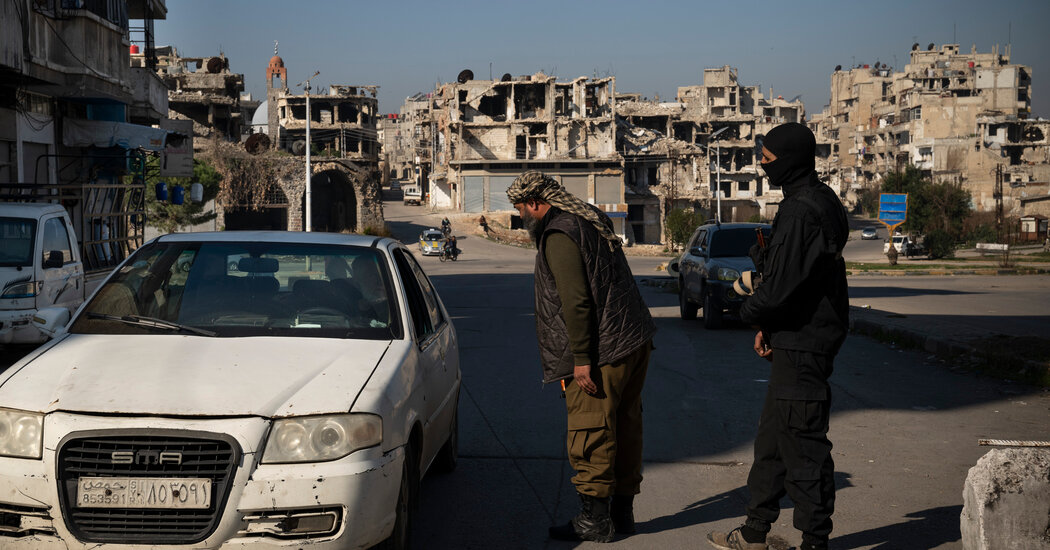

In the wake of intensified kidnappings across Syria, Sami al-Izoo faces a desperate situation. Ten days following his brother’s abduction by masked men, Sami received a chilling video showing Abdulrazaq al-Izoo, hands bound, hooded, and screaming under duress. The kidnappers demand a staggering $400,000 ransom—an amount unattainable for Sami despite efforts to liquidate his assets. “If I sell everything I have, I won’t reach that amount,” he lamented from his home in Talbiseh, near Homs.
These abductions are part of a broader surge of kidnappings since the rebel coalition ousted President Bashar al-Assad. In a controversial move, the new leadership disbanded the existing police and security forces tied to Assad’s regime, creating a security void. While efforts are underway to train a new police force, the inadequate coverage has heightened public fear, especially against the backdrop of longstanding sectarian tensions and opportunistic crimes.
The precarious security situation is exacerbated by the recent clashes in Syria’s coastal region, resulting in numerous casualties, and highlighting the pressing need for effective governance. The precise tally of kidnappings in recent months remains unknown, but at least a dozen incidents have been reported, causing demands for more robust policing and checkpoints. “They have to show their strength,” Sami asserted, urging the new leaders to establish authority and safety.
The interim president, Ahmed al-Shara, acknowledged the daunting security challenges, admitting past oppressive policies can’t be easily overturned. Meanwhile, Lt. Col. Alaa Umran of Homs Province emphasized the necessity of rebuilding a security framework from scratch. The process entails a “reconciliation” for former regime officers, currently sidelined pending investigation.
Despite these efforts, residents continue facing insecurity amid power outages and scarce police presence, forcing many to modify their routines out of fear. Husam Kashi, a victim of a recent kidnapping, described the anxiety plaguing his community, leading him to close his shop earlier than usual.
Some families, like the Shadoods, suffer without closure. Rania Shadood recounted the trauma of witnessing her sons, Amjad and Mohammad, abducted at night, only to find their bodies days later. The family’s Alawite faith, previously a shield under Assad, now amplifies their vulnerability. “What was their sin?” she questioned, mourning the loss of her sons.
Syria’s new government faces overwhelming challenges as it strives to rebuild. Military expert Issam al-Reis argues patience is key, cautioning against hasty judgments of failure. The road to security and peace remains long, with many Syrians, like the Shadoods, appealing for greater protection to prevent further tragedies.
Muhammad Haj Kadour contributed to this report, which remains aligned with key themes of security, kidnapping, and the sociopolitical climate in Syria, along with the leadership roles of figures like Ahmed al-Shara and the enduring legacy of Bashar al-Assad.
Original Source: https://www.nytimes.com/2025/03/10/world/middleeast/syria-security-kidnappings.html
Category : Security and Warning Systems,Kidnapping and Hostages,War and Armed Conflicts,Politics and Government,Police,al-Shara, Ahmed (Abu Mohammad al-Jolani) (1982- ),Assad, Bashar al-,Homs (Syria),Syria
Tags:
Publish Date: 2025-03-10 14:31:00