
Detroit Automakers Face Gains and Losses Amid Market Adjustments
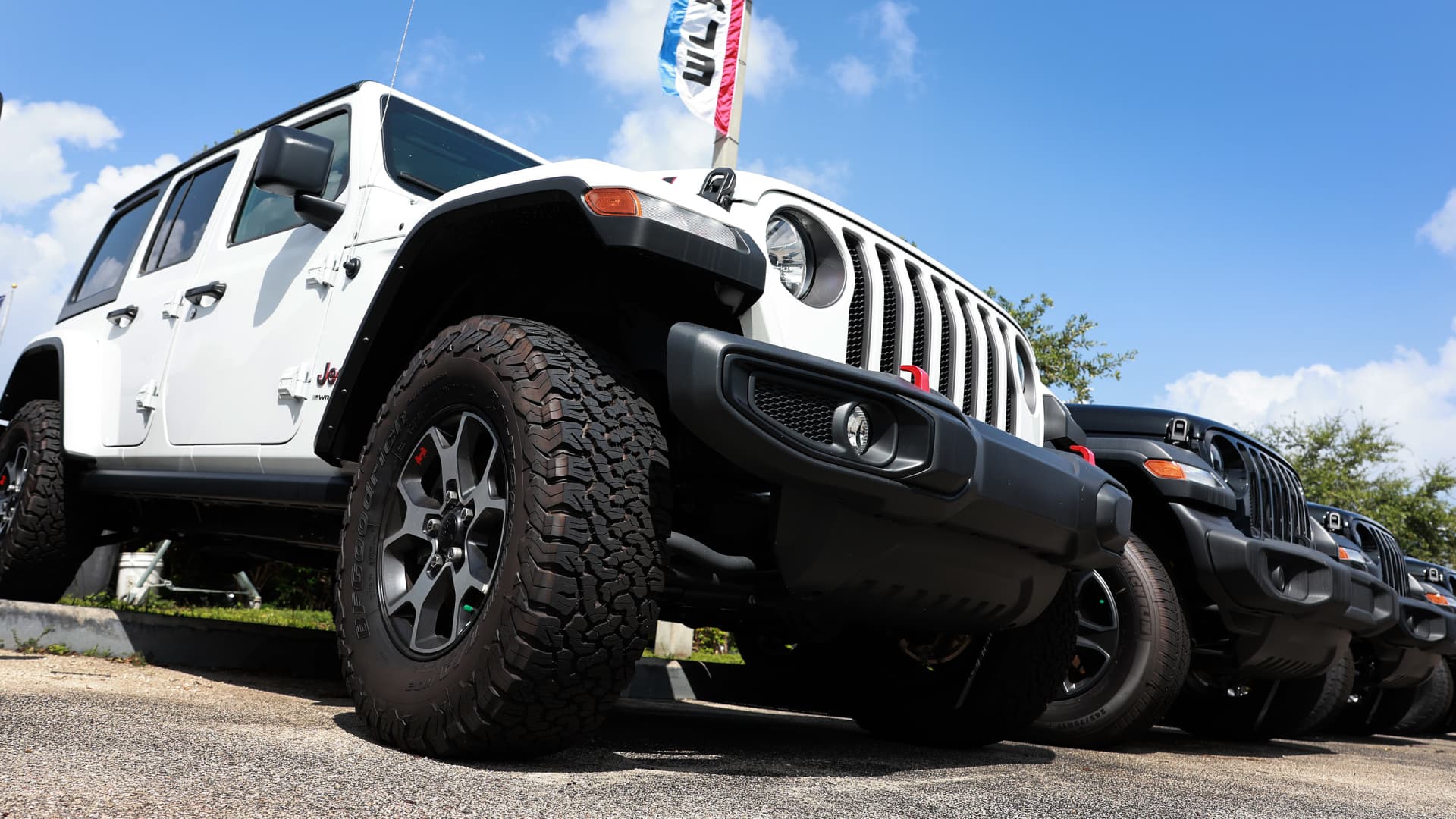
New Jeep vehicles are shown at a Dodge Chrysler-Jeep Ram dealership in Miami, Florida, on October 3, 2023. Amid changing market dynamics, shares of Ford Motor recently experienced their steepest one-day decline since the Great Recession, plunging over 18% after missing Wall Street’s earnings expectations. This drop mirrors the broader challenges the U.S. automotive industry faces, with normalization in vehicle pricing and inventory levels following years of high prices and strong demand.
Wall Street had anticipated a downturn in the cyclical auto industry, yet the specific struggles of automakers varied. Analyst Adam Jonas of Morgan Stanley highlighted the potential for lowered investor spending and increased mergers and acquisitions due to rising incentives and delinquencies. Last week, Jonas downgraded GM while pointing out the significant competition and excess capacity plaguing the industry.
Ford’s Challenges and Disappointments
Ford’s stock endured the worst week since March 2020, closing down 20%. The company faces pressure as it leans on dividends rather than share repurchases to reward investors, a decision influenced by the Ford family’s control over the board. Despite initial expectations for special dividends or buybacks, Ford maintained its stance.
Looking at the second half of the year, Ford predicts adjusted earnings between $2 billion and $3 billion, down from $5.5 billion in the first half. Ford CFO John Lawler discussed efforts to maintain cash generation and improve business quality and costs.
GM Grapples with Declining Profits and EV Push
General Motors (GM) also faced investor wariness, reflected in an 8.7% decline in shares. Analysts were concerned about GM’s decreased earnings projections and significant expenses linked to marketing and EV production. Despite previous growth in earnings, the company now plans for a dip, projecting second-half earnings between $4.7 billion and $6.7 billion, compared to $8.3 billion in the first half. The troubled Chinese market further complicates GM’s outlook, which posted consecutive quarterly losses.
CEO Mary Barra acknowledged the challenges and emphasized the need for more effective measures to handle rising inventories and production costs.
Stellantis Confronts Struggles in the U.S. Market
Stellantis saw a 12.6% drop in shares and continues to confront significant challenges, particularly in its U.S. operations. CEO Carlos Tavares cited "arrogant mistakes" regarding inventory levels and sales strategies. The company’s U.S. sales fell about 16% in the first half of the year, aggravating market share losses.
Nonetheless, Stellantis is determined to meet its 2024 guidance, targeting double-digit operating income margin and positive cash flow, supported by 20 new model launches and potential job cuts.
The collective struggles of Ford, GM, and Stellantis highlight the turbulent path ahead for the auto industry as it adjusts to new market realities and navigates the push toward electric vehicles.
Original Story https://www.cnbc.com/2024/07/29/ford-gm-stellantis-face-daunting-second-half.html
Category :
Tags: