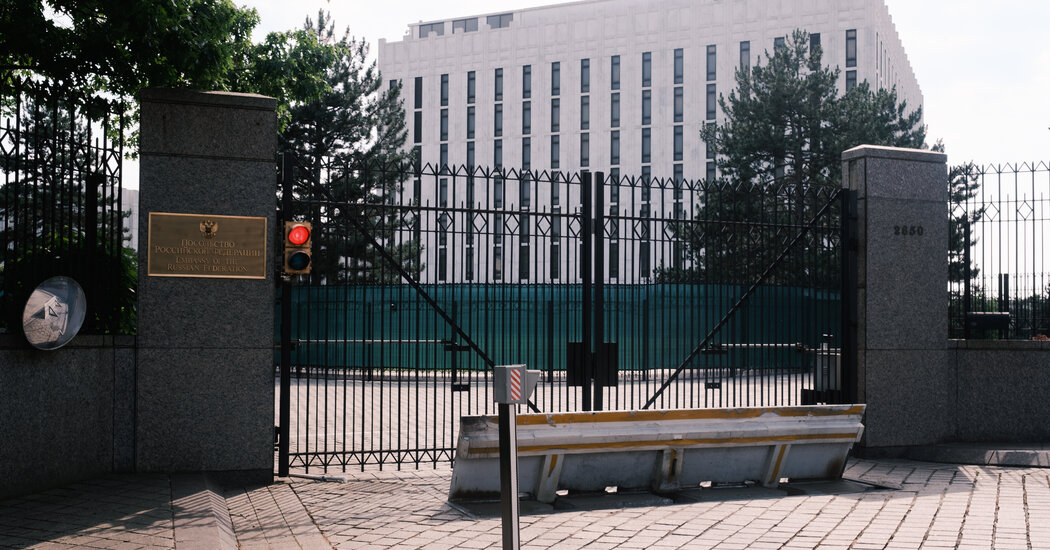

In a move aimed at reshaping U.S.-Russia relations, the Trump administration is exploring the possibility of readmitting numerous Russian diplomats back into the United States—a gesture intended as a reciprocal goodwill action to ease years of diplomatic tension. However, experts warn that this move could unwittingly facilitate espionage, as the Kremlin might seize the opportunity to send operatives disguised as diplomats to regain their intelligence foothold in the U.S.
Diplomatic discussions were held in Istanbul last month, focusing on reestablishing full diplomatic presence after years of tit-for-tat expulsions and consulate closures have left both nations with just skeletal diplomatic representations. The talks, reflective of the Trump administration’s recent diplomatic overtures to Moscow, were held at the residence of the U.S. consul. In a parallel meeting in Riyadh, U.S. Secretary of State Marco Rubio, along with top Russian officials, underscored the necessity of operational diplomatic missions, aiming to potentially lay the groundwork for a broader accord to resolve the ongoing conflict in Ukraine.
Such an agreement might also enable the United States to enhance its intelligence capabilities, as embedding spies within diplomatic ranks is a longstanding practice, though experts contend that Russian operatives would have an upper hand within the U.S. due to its open society. Coupled with President Trump’s overtures to President Vladimir Putin, this strategy could reinvigorate Russia’s espionage missions, which have become increasingly audacious, analysts and former officials suggest.
The current geopolitical landscape sees the U.S. dealing with a scaled-down diplomatic workforce in Russia, reduced by 90% to around 120 Americans, as opposed to over 1,200. Meanwhile, about 220 Russian diplomats, many under suspicion of intelligence ties, remain stationed in the U.S. in Washington D.C., New York, and Houston. This drastic reduction in diplomatic presence follows a series of accusations and counter-accusations of espionage activities, which have led both nations to cap diplomatic staff.
This thaw in diplomatic hostilities raises concerns of enhanced Russian intelligence gathering, as Moscow has been proactive in dispatching intelligence officers under diplomatic guise. According to Paul Kolbe, a senior fellow at Harvard’s Belfer Center, “The Russian diplomatic presence will be heavily loaded with intelligence officers aiming to penetrate the American government and businesses.”
Further complicating the scenario, Russia’s intelligence operations against the West have grown bolder, including attempts to sabotage European cargo planes and plot assassinations. Counterintelligence operations in the U.S. could be affected by appointments within the FBI perceived as sympathetic to Russia, potentially reshaping priorities.
Despite these complexities, any potential agreement on expanding diplomatic corps would allow the U.S. to monitor Russian activities more visibly. Andrei Soldatov, a Russian intelligence expert, highlights that engaging with Americans poses significant risks for Russian personnel, given the high stakes involved back home.
The diplomatic stalemate stems in part from various U.S. presidencies responding to specific incidents—such as cyberattacks and the poisoning of a Russian ex-spy in the UK—by expelling Russian diplomats accused of espionage. Moscow’s retaliations and the subsequent operational challenges have contributed to mutual diplomatic isolation. Discussions are ongoing, but the balance of intelligence capabilities and strict reciprocity remain central to any progress.
As these diplomatic discussions progress, caution is advised. Kolbe suggests a measured, phased approach to prevent immediate full staffing for Russia, while Soldatov warns that Russia might exploit any opening as a strategic advantage in intelligence operations.
Original Source: https://www.nytimes.com/2025/03/09/us/politics/russia-spies-diplomats.html
Category : United States International Relations,Russian Invasion of Ukraine (2022),Espionage and Intelligence Services,Diplomatic Service, Embassies and Consulates,Sabotage (Crime),Central Intelligence Agency,Federal Bureau of Investigation,State Department,Putin, Vladimir V,Trump, Donald J,Moscow (Russia)
Tags:
Publish Date: 2025-03-09 14:30:00