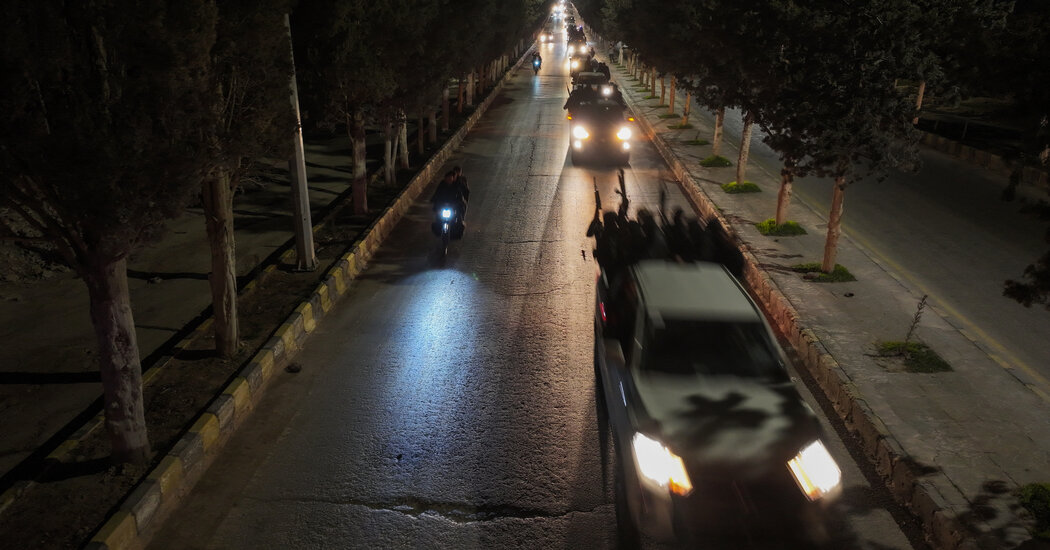

In a chilling escalation of violence, the town of al-Haffa on Syria’s Mediterranean coast was engulfed in gunfire at dawn on Friday. Wala, a 29-year-old local resident, was jolted from sleep by the harrowing sound of gunshots that pierced the morning calm. Flattened against the corner of her room in fear, she cautiously peeked through her window, witnessing dozens of people fleeing in panic as four men in forest green uniforms pursued them, opening fire. “I couldn’t believe what I was seeing,” Wala shared, requesting anonymity for safety. The incident is part of a broader wave of unrest sweeping Syria’s coast, resulting in over 1,000 deaths in four days, according to the Syrian Observatory for Human Rights.
The violence marks the deadliest surge since rebels overthrew long-time ruler Bashar al-Assad in December, aiming to stabilize a nation fractured by nearly 14 years of conflict. The clashes erupted Thursday when Assad loyalists ambushed government forces in Latakia Province, triggering a violent face-off with government security teams. Disturbingly, the British-based Observatory reports that around 700 civilians, predominantly Alawites, have perished, mostly at the hands of government forces.
Al-Haffa alone has seen at least 65 civilian casualties. The Syrian Network for Human Rights estimates the toll at 125 civilian deaths, although verification remains elusive. The new governing body’s officials deny any atrocities but vow rigorous investigations and accountability. This turmoil threatens to ignite a larger sectarian conflict in the coastal regions of Latakia and Tartus, the Alawite heartland and former stronghold of the Assad regime.
On Saturday, the typically bustling roads from Damascus to Tartus lay deserted, as checkpoints sprung up in Tartus city, its residents shuttering indoors. Shadi Ahmed Khodar, a 47-year-old Alawite crane operator from Tartus, expressed fears of being caught in the crossfire. “Maybe they will just come here and say we are against them and kill us,” he lamented, reflecting the anxiety gripping civilians who fear indiscriminate violence from both Assad loyalists and the new government.
The situation is dire in the nearby countryside, where Assad loyalists hold numerous government forces hostage. Additionally, reports from Baniyas reveal horrific scenes of armed men aligned with the government storming neighborhoods, leaving a trail of destruction. Ghaith Moustafa, a resident, recounted spending hours in fear with his family amidst gunfire. “I was so scared for my baby, for my wife,” said the 30-year-old pharmacist, who later escaped the chaos, witnessing bodies strewn across the streets.
The Observatory confirms that at least 60 civilians, including five children, died in Baniyas. Fleeing the violence, Wala took refuge with her family, only to encounter uniformed men demanding valuables and instructing them to remain indoors. “They’re peaceful family,” a visiting friend pleaded as the men confiscated their belongings and threatened them.
Despite the clear risk, Wala ventured out to help wounded men outside her apartment, only to return abruptly when gunfire resumed, unsure if they survived. As the conflict continues to claim lives and sow fear, the regions of Latakia and Tartus remain on edge, haunted by the specter of deepening sectarian war and a return to the dark days of Syria’s civil conflict.
Original Source: https://www.nytimes.com/2025/03/09/world/middleeast/syria-violence.html
Category : War and Armed Conflicts,Civilian Casualties,Politics and Government,Alawite Muslims,Syrian Network for Human Rights,Syrian Observatory for Human Rights,Damascus (Syria),Latakia (Syria),Syria,Assad, Bashar al-
Tags:
Publish Date: 2025-03-09 14:43:00