
Tesla Inc. experienced a tumultuous week as incidents of vandalism and protest related to the electric car giant occurred across the United States and Europe. Contributing to this unrest are the sweeping political affiliations of Tesla’s CEO, Elon Musk, who recently joined President Trump’s administration as a senior adviser, triggering public backlash.
In Massachusetts, seven Tesla charging stations were set on fire outside Boston, igniting concern over safety and security at Tesla sites. Meanwhile, in Oregon, a Tesla dealership in Tigard suffered gunfire damage as shots fired overnight shattered windows and punctured vehicles. Authorities confirmed that approximately seven bullets were responsible for the damage. This violent occurrence followed a previous arson incident at the same dealership, where a man allegedly set fires causing $500,000 in damages on the day of Musk’s inauguration.
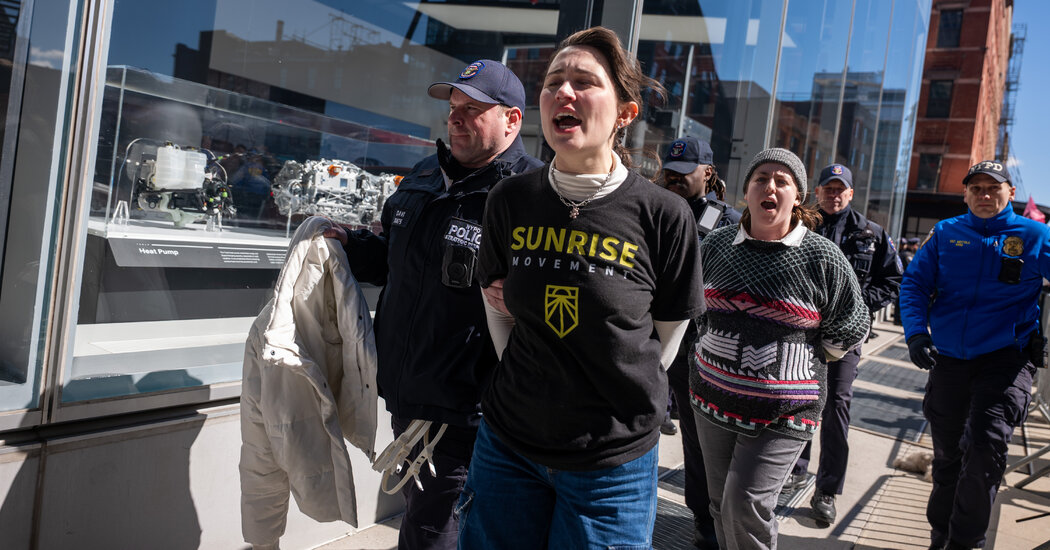
Lower Manhattan witnessed a different form of protest as demonstrators descended on a Tesla showroom in the West Village. Hundreds gathered, wielding signs with messages like “Nobody voted for Elon Musk” and “Oligarchs out, democracy in.” Organizers reported a two-hour blockade that shuttered the dealership, leading to six arrests on charges ranging from disorderly conduct to resisting arrest. State Senator Brad Hoylman-Sigal emphasized the significance of such acts, noting the necessity for public expression against Musk’s influence in federal governance.
The unrest is not confined to the U.S.; in Germany, simultaneous fires erupted at a Tesla factory site near Berlin, prompting an arson investigation. In France, a dozen Tesla vehicles caught fire near Toulouse, which the prosecutor’s office confirmed was intentional. These events reflect a growing international dissent against Musk’s involvement in politics particularly tied to the newly formed Department of Government Efficiency, which Musk heads.
Closer scrutiny has also fallen on Musk’s social media conduct, with a controversial gesture at President Trump’s inauguration causing further outrage. His dismissal of criticism, responding via the platform X with, “The ‘everyone is Hitler’ attack is sooo tired,” only fueled further discontent among his critics.
As these events unfolded, federal prosecutors in Colorado charged an individual with vandalizing a Tesla dealership, notably spray-painting “Nazi” and threatening with a Molotov cocktail. This signifies the tension surrounding Tesla’s political entanglements and Musk’s perceived alignment with conservative policies.
Additionally, some Tesla vehicle owners have expressed discomfort with the association, opting to sell their cars to dissociate from Musk’s political activities. “I’m sort of embarrassed to be seen in that car now,” admitted one anonymized owner.
As Tesla grapples with this challenging climate, the impacts of Elon Musk’s political affiliations reverberate through protests and acts of vandalism. This burgeoning backlash signifies broader societal tensions that question corporate influence on governmental direction, attracting both domestic and international focus. Nonetheless, the Tesla corporation has remained silent, not releasing any official comment on the incidents.
For digital readers, these events encapsulate the contentious intersection of technology, politics, and public dissent, marking a pivotal moment for Tesla as both a corporate and cultural entity within today’s global stage.
Original Source: https://www.nytimes.com/2025/03/08/business/elon-musk-tesla-violence-protests-vandalism.html
Category : Tesla Motors Inc,Musk, Elon,Demonstrations, Protests and Riots,Vandalism,Oregon,Colorado,Toulouse (France),Berlin (Germany),Electric and Hybrid Vehicles,United States Politics and Government,Automobiles,Automobile Service and Charging Stations,Arson,Trump, Donald J,Social Media,Government Efficiency Department (US)
Tags:
Publish Date: 2025-03-09 05:51:00