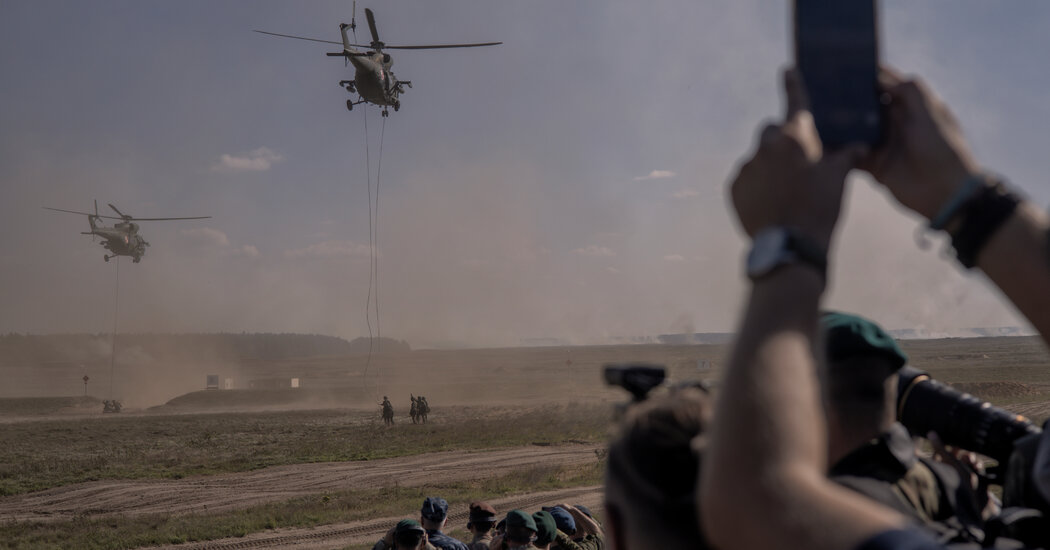

In a striking commentary on global geopolitics, Polish Prime Minister Donald Tusk addressed the Polish Parliament, urging a significant military expansion amid shifting international dynamics. He emphasized the need for Poland to potentially explore nuclear capabilities, a topic that resonates deeply given the ongoing Russian invasion of Ukraine. While Tusk did not explicitly suggest that Poland should develop nuclear weapons, he voiced the necessity of considering “the most modern weapons” and hinted at the exploration of nuclear and other advanced arms technologies.
These remarks come against the backdrop of changes in American foreign policy, notably under the leadership of President Donald Trump. His administration has cast shadows on the robustness of NATO alliances and has raised concerns across Eastern Europe. Poland, alongside Ukraine, feels the tremors of these geopolitical shifts, with Tusk noting, “Today, Poland’s situation, objectively, and Ukraine’s situation, in particular, is more difficult than it was a few months ago.” Despite these challenges, Tusk emphasized that maintaining strong ties with the U.S. remains crucial for Poland’s security strategy.
Poland is aligned with the Nuclear Nonproliferation Treaty, which restricts non-nuclear states from acquiring atomic weapons. However, Poland’s strategic discourse occasionally flirts with the prospect of nuclear armament, similar to nations like Israel, India, Pakistan, and North Korea, who either bypassed or exited the treaty to develop nuclear arsenals. Notably, Poland has initiated talks with France to possibly include Poland under its nuclear umbrella, a move reflecting Warsaw’s strategy to bolster its security posturing.
The legacy of nuclear expertise in Poland traces back to figures such as Nobel laureate Marie Sklodowska-Curie and mathematician Stanislaw Ulam, key contributors to advancing nuclear science. Although the country abandoned its Soviet-era nuclear ambitions, it recently rekindled its nuclear energy aspirations with plans for an atomic power station in collaboration with Westinghouse Electric.
Further highlighting Poland’s urgency is the notion of increased military preparedness, with Tusk advocating for training all adult men for potential wartime scenarios. Additionally, he projected a defense budget increase to 5% of GDP and proposed expanding Poland’s military personnel to half a million, underscoring the nation’s commitment to enhancing its defense capabilities.
In his speech, Tusk carefully avoided direct criticism of Trump, opting instead to frame the situation as a need for Europe to overcome its “lack of will to act” and bolster self-reliance. Nonetheless, he rejected the notion of deploying Polish troops to Ukraine, referring to potential European-led peacekeeping contingent post U.S.-brokered peace talks as unlikely.
The address underscores Poland’s role as a pivotal military power within NATO, particularly among former Warsaw Pact nations. As Europe grapples with a changing security landscape, Tusk’s call to action reflects Poland’s historical vigilance against regional threats and the persistent quest for strategic autonomy.
Original Source: https://www.nytimes.com/2025/03/07/world/europe/poland-nuclear-trump-tusk.html
Category : Russian Invasion of Ukraine (2022),United States International Relations,Nuclear Weapons,Nuclear Nonproliferation Treaty,North Atlantic Treaty Organization,Warsaw Pact,Trump, Donald J,Tusk, Donald,Poland,Russia,Ukraine
Tags:
Publish Date: 2025-03-08 06:55:00