
In a dramatic turn of events, President Donald Trump recently proposed, and then swiftly reversed, a sweeping 25% tariff on imports from Canada and Mexico. This decision, initially set to impact $1 trillion worth of goods under the U.S.-Mexico-Canada Agreement (USMCA), has brought the future of North American trade integration into question.
Initially introduced as part of Trump’s “America First” agenda, the tariffs had potential to destabilize the closely knit economic ties between the three nations. Economists warned that had the tariffs remained, they would have severely affected both Canada’s and Mexico’s economies, potentially tipping them into recession. According to Edward Alden, a senior fellow at the Council on Foreign Relations, “This is a day where the United States stopped seeing trade as a force for mutual benefit and began seeing it as a tool of economic warfare.”
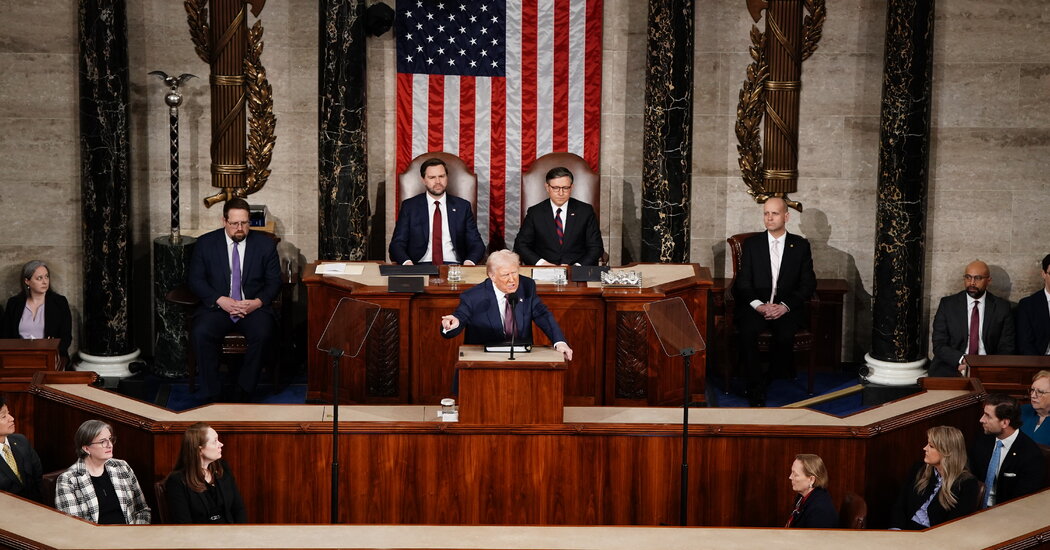
However, by Thursday, the President had suspended these tariffs, though he hinted at future “reciprocal” measures in an address to Congress, asserting that these moves were about “protecting the soul of our country.” Economists, however, cautioned that such volatile trade policies might deter investment, as businesses are left uncertain of the future trade climate.
Randy Carr, CEO of World Emblem, expressed how these tariffs made him reconsider his company’s plans, halting expansions and prompting a potential move of operations to the Dominican Republic. He stated, “Everyone’s sitting on their hands, waiting for the next thing to happen.”
The proposed tariffs highlighted stark geographical dependency. The United States, being a larger economy, felt insulated to some degree, but its biggest export markets are, in fact, Canada and Mexico. By disrupting these dynamics, American manufacturers and those reliant on raw materials from these countries would face rising costs, potentially shuttering businesses that can’t absorb the tariffs’ hit. Analysts at S&P Global Ratings projected a 0.6% decrease in the U.S. GDP over the next year if such tariffs were enacted, with an even more devastating 2%-3% hit to Canada’s and Mexico’s projections.
The abrupt policy shifts have also strained diplomatic trust among the involved governments. Prime Minister Justin Trudeau called Trump’s tariff rationale “completely false” and warned that the ensuing economic strife would have no winners. Notably, the automobile industry warned Trump that such tariffs could eliminate their profits due to new costs imposed by these tariffs.
Despite some support from groups like the United Auto Workers, who argue these tariffs counteract decades of free trade impacts on the working class, other industries fear the loss of integration. For example, the National Council of Textile Organizations highlighted that tariffs would inadvertently benefit Asian countries over North American textile industries heavily involved in intra-national trade.
The legacy of the North American Free Trade Agreement (NAFTA) has been riddled with controversy, and Trump’s potential trade war might resurrect tensions reminiscent of its early days. As Gordon Hanson from Harvard Kennedy School notes, the repercussions of disrupting free trade agreements could ironically mirror those initially caused by NAFTA, dismantling supply chains and creating economic dislocations.
The stakes are high as North America grapples with these trade tensions, where outcomes could redefine the landscape of international trade and relations within the region.
Original Source: https://www.nytimes.com/2025/03/06/us/politics/trump-tariffs-mexico-canada-us.html
Category : International Trade and World Market,United States Politics and Government,Protectionism (Trade),International Relations,United States Economy,Customs (Tariff),Factories and Manufacturing,Textiles,United States-Mexico-Canada Agreement
Tags:
Publish Date: 2025-03-07 06:48:00