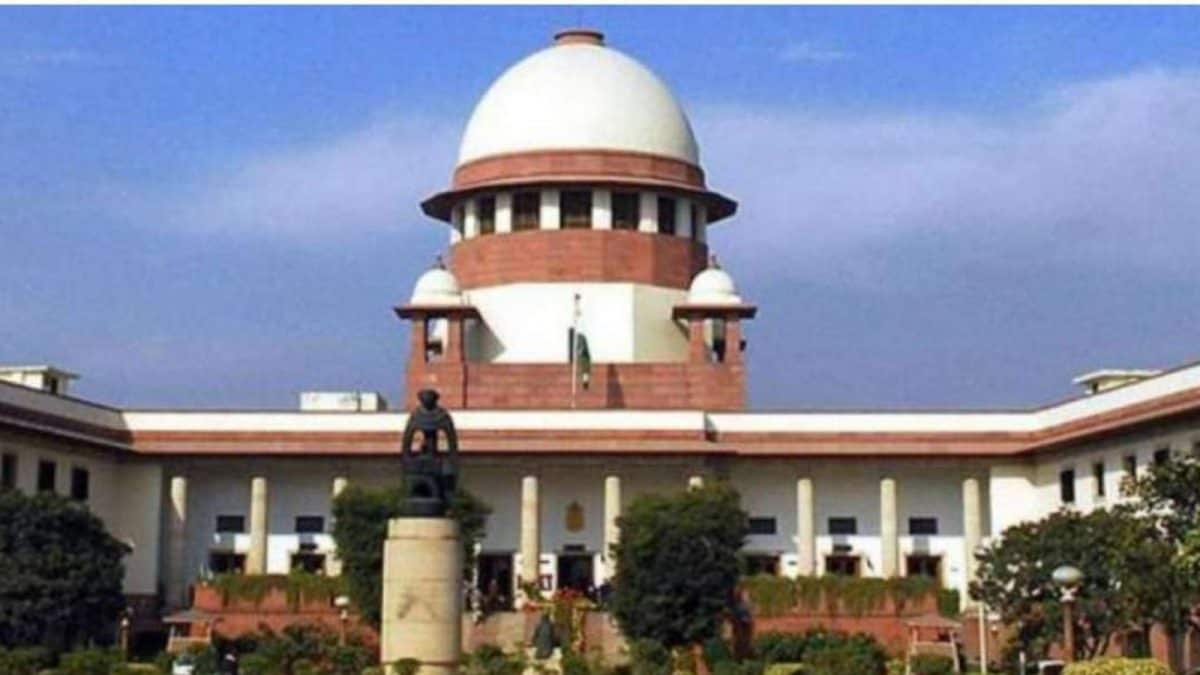
Supreme Court Ruling: Is Calling Someone ‘Miyan-Tiyan’ or ‘Pakistani’ Offensive? Shocking Verdict Revealed!

In a significant decision that underscores the boundaries of free speech and its intersection with cultural sensitivity, the Supreme Court of India determined that calling someone ‘Miyan-Tiyan’ or ‘Pakistani’ might be considered distasteful but does not legally constitute an offense of hurting religious sentiments. This ruling was delivered while closing a case involving a man accused of using derogatory language towards a government official. The judgment was rendered by a bench comprising Justices BV Nagarathna and Satish Chandra Sharma, emphasizing the distinction between poor taste and legal transgressions.
The case arose when an Urdu translator and acting clerk in Jharkhand alleged verbal abuse from the accused, centered on religious grounds. According to the complaint, the accused referred to the translator’s religious identity in derogatory terms during an exchange related to a Right to Information (RTI) application, where the official was fulfilling his duty by providing necessary information. The Supreme Court, in its review, emphasized that although the remarks were offensive, they did not meet the threshold for legal action under charges of disrupting religious harmony or inciting religious enmity.
Justice BV Nagarathna remarked, “The appellant is accused of hurting the religious feelings of the informant by calling him ‘Miyan-Tiyan’ and ‘Pakistani’. Undoubtedly, the statements made are in poor taste. However, it does not amount to hurting the religious sentiments of the informant.” This statement highlights the Court’s nuanced approach to balancing freedom of expression with respect for individual dignity and societal harmony. The ruling clarifies that while such comments may be culturally insensitive, they do not inherently provoke a breach of peace or violent reaction, which are critical criteria for legal repercussion under Indian Penal Code sections dealing with assault or criminal force against public servants.
The court’s assessment further revealed that no physical assault or coercive action was involved. Therefore, the charges under Section 353 of the Indian Penal Code, which refers to preventing a public servant from performing their duties through assault or criminal force, were deemed inapplicable. By dismissing the case, the Supreme Court reinforces the idea that the threshold for criminal liability in cases involving offensive speech requires more than mere incivility or cultural insensitivity. Such judgments are pivotal in delineating the parameters of free speech, especially in a country marked by diverse and often overlapping religious and cultural identities.
This ruling also provides guidance for the judiciary and public on how to differentiate between actionable offenses and socially unacceptable behavior that fails to meet legal criteria for punishment. As society grapples with evolving notions of speech and expression, the Supreme Court’s decision serves as a reminder of the importance of fostering a pluralistic culture where freedom of expression is protected while ensuring respect for all community identities.
The Supreme Court’s decision has significant implications not only for the legal community but also for public discourse in India. It prompts a reflection on how legal frameworks can accommodate the protection of individual sentiments alongside the safeguarding of fundamental rights to freedom of speech and expression. This balance remains a cornerstone of democratic societies and a critical consideration for the courts, citizens, and policymakers alike.
Location: Delhi, India
News Tags: India, Supreme Court, Free Speech, Religious Sentiments, Legal Judgment, Cultural Sensitivity.
Original Source: https://www.news18.com/india/calling-someone-miyan-tiyan-pakistani-in-poor-taste-but-not-an-offence-supreme-court-9248971.html
Category :
Tags:
Publish Date: 2025-03-04 23:06:00