“Sniffing Out a Cure: How African Giant Pouched Rats Are Revolutionizing TB Diagnosis” (Note: This title incorporates the keywords “African giant pouched rats” and “TB diagnosis, evokes emotion with the phrase “Sniffing Out a Cure”, uses power words “revolutionizing”, maintains a professional and credible tone, and is concise and optimized for digital readability.)

A New Breed of Detectors: Can African Giant Pouched Rats Help Combat the TB Pandemic?
Tuberculosis (TB) remains one of the deadliest diseases globally, with over 10 million new infections annually. In India, the situation is particularly dire, with an estimated 5 lakh deaths each year, translating to a TB death every minute. Despite medical advancements, detecting TB remains a significant challenge, especially in remote and underserved areas.
The National TB Elimination Programme aims to eradicate TB in India by 2025, but the goal seems uncertain. Although the latest report reveals a 16% decrease in TB incidence and an 18% decline in TB-related deaths since 2015, the fight against the disease is far from over.
Traditional diagnostic methods often struggle to detect TB in its early stages, particularly in children and those with low bacterial loads. This can lead to a significant number of cases going undetected, contributing to the disease’s spread.
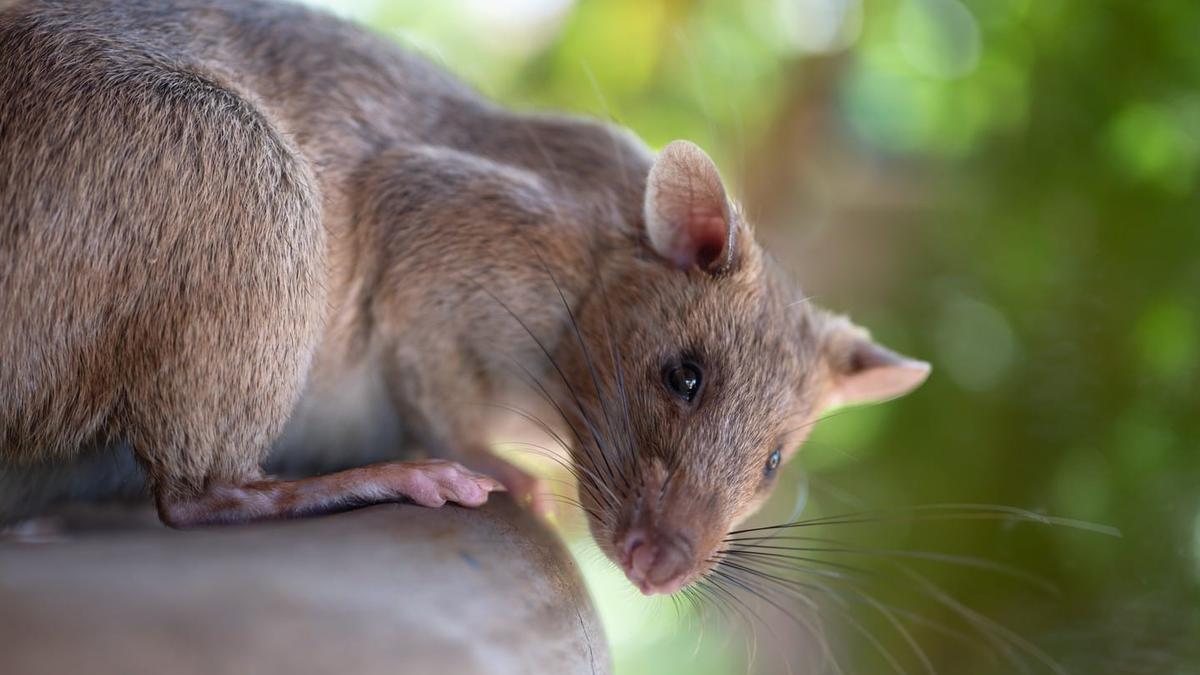
Enter African giant pouched rats, trained by non-profit organization APOPO to sniff out TB in sputum samples. These extraordinary rodents have an impressive ability to detect the disease, particularly in cases that traditional methods frequently miss. A study published in BMC Infectious Diseases last April demonstrated the rats’ remarkable accuracy, detecting TB at a rate twice that of conventional testing in both children and adults.
In Tanzania, Mozambique, and Ethiopia, these rats have successfully transformed TB diagnosis, serving as a secondary diagnostic tool. Their ability to identify TB quickly and accurately helps improve early diagnosis and limit transmission, particularly in areas with limited healthcare resources.
APOPO’s training process is rigorous, with the rats undergoing a nine-month program from two to three months old. They are exposed to sputum samples, and when they successfully identify TB-positive samples, researchers signal their success with a clicking sound, followed by a reward of a smoothie made from avocado, ground chow pellets, and banana.
The rats’ remarkable abilities have the potential to revolutionize TB diagnosis, particularly in areas with limited access to healthcare. In the words of Dr. Tefera Agizew, head of tuberculosis at APOPO, "These rats have an outstanding ability to sniff diseases due to their sensitive olfactory receptors. They could detect six times more when the bacillary load is scanty or 1+ compared to 2+ or 3+ in both children and adults."
The potential for these rats to aid in TB detection is vast, especially in India, where the disease remains a significant public health concern. The integration of rat-based TB detection into the National TB Elimination Programme could significantly enhance case detection, particularly among children and smear-negative patients.
As Dr. Debajit Saha, an assistant professor at Michigan State University, notes, "Insects can help us develop diagnostic tools faster." Ants, for instance, can detect cancer cells in just three days using chemical cues and a sugar reward. Honeybees, with their highly sensitive olfactory antennal lobes, can detect lung cancer using synthetic biomarkers.
The future of disease detection is promising, with animals like African giant pouched rats, dogs, and ants helping to bridge the gap between technology and medical breakthroughs. As the fight against TB and other diseases continues, it is crucial to explore innovative solutions like these, which can make a tangible difference in saving lives.
Original Source: https://www.thehindu.com/sci-tech/health/could-african-giant-pouched-rats-offer-a-solution-to-the-challenges-of-tb-diagnosis/article69265333.ece
Category :
Tags:
Publish Date: 2025-02-28 05:00:00