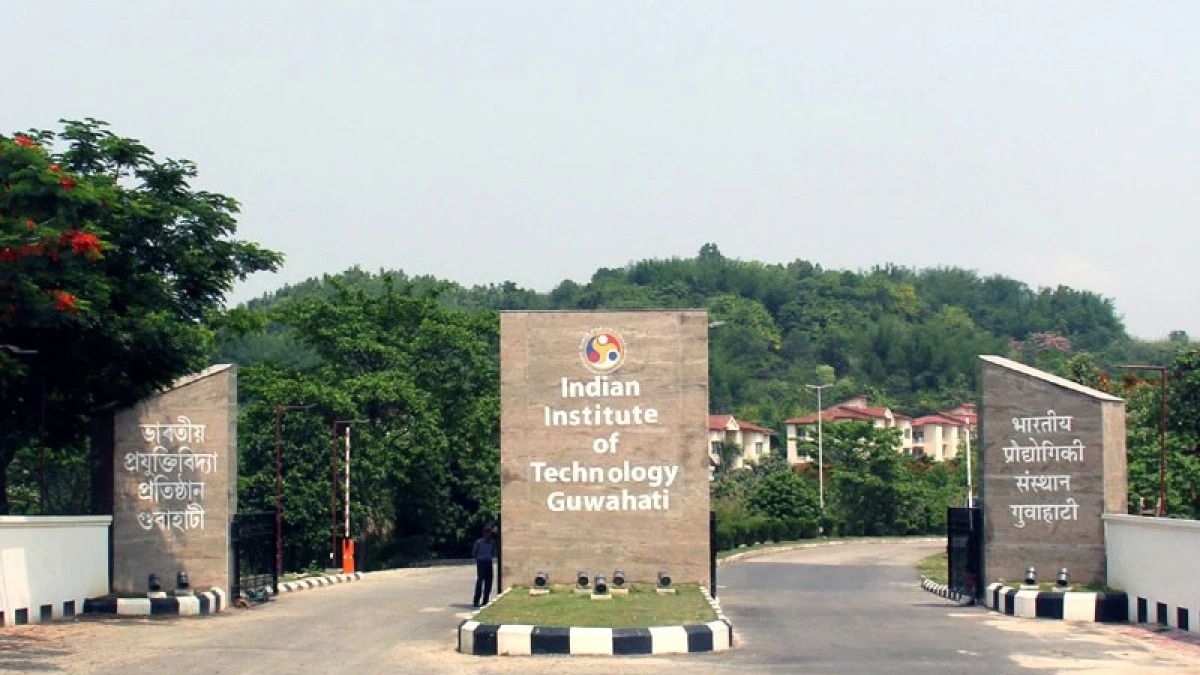
Revolutionary Breakthrough: IIT-Guwahati’s Cost-Effective Method to Detect Toxic Metals, Safeguarding Our Future

Researchers at the Indian Institute of Technology (IIT), Guwahati, have developed a breakthrough, cost-efficient technique to detect dangerous metals in both living cells and environmental settings. This innovation offers a potential leap forward in disease diagnostics and environmental monitoring by enhancing the detection and management of metal toxicity within biological systems. Their research has been published in esteemed journals, including the “Journal of Materials Chemistry C” and “Materials Today Chemistry.”
Leading the project, Assistant Professor Saikat Bhaumik from IIT-Guwahati’s Department of Physics revealed that the core of their research involves perovskite nanocrystals. Known for their unique properties, these advanced materials are ideal for identifying metal ions due to their interaction with light, making them effective as fluorescent probes within living cells. However, a challenge has been their rapid degradation in water, restricting their applications.
To overcome this hurdle, the team has successfully encapsulated these nanocrystals in silica and polymer coatings, substantially improving their stability and luminescent capabilities even in water. This advancement ensures the nanocrystals retain their functionality over extended periods, making them highly viable for practical applications. The modified nanocrystals emit an intense green light under specific wavelengths, allowing for the accurate detection of mercury ions, which are harmful even in low concentrations.
Bhaumik highlighted the serious health risks associated with mercury exposure, such as nervous system damage, organ dysfunction, and cognitive impairments. The study demonstrated that their nanocrystals can detect mercury at concentrations as low as a few nanomolars. Importantly, these nanocrystals proved non-toxic to live mammalian cells, preserving cell function while monitoring mercury ions effectively.
Beyond mercury, these nanocrystals have the potential for broader applications, such as identifying other toxic metals and adapting for drug delivery, enabling real-time treatment monitoring, paving the way for significant advancements in medical and environmental safety.
Original Source: https://www.indiatodayne.in/assam/story/iit-guwahati-develop-cost-effective-method-to-detect-harmful-metals-in-cells-environment-1161444-2025-01-27?utm_source=rssfeed
Category :
Tags:
Publish Date: 2025-01-27 17:39:00