Groundbreaking SC Directive: Bulldozer Justice Curtailed to Uphold Rights – A Pan-India Transformation

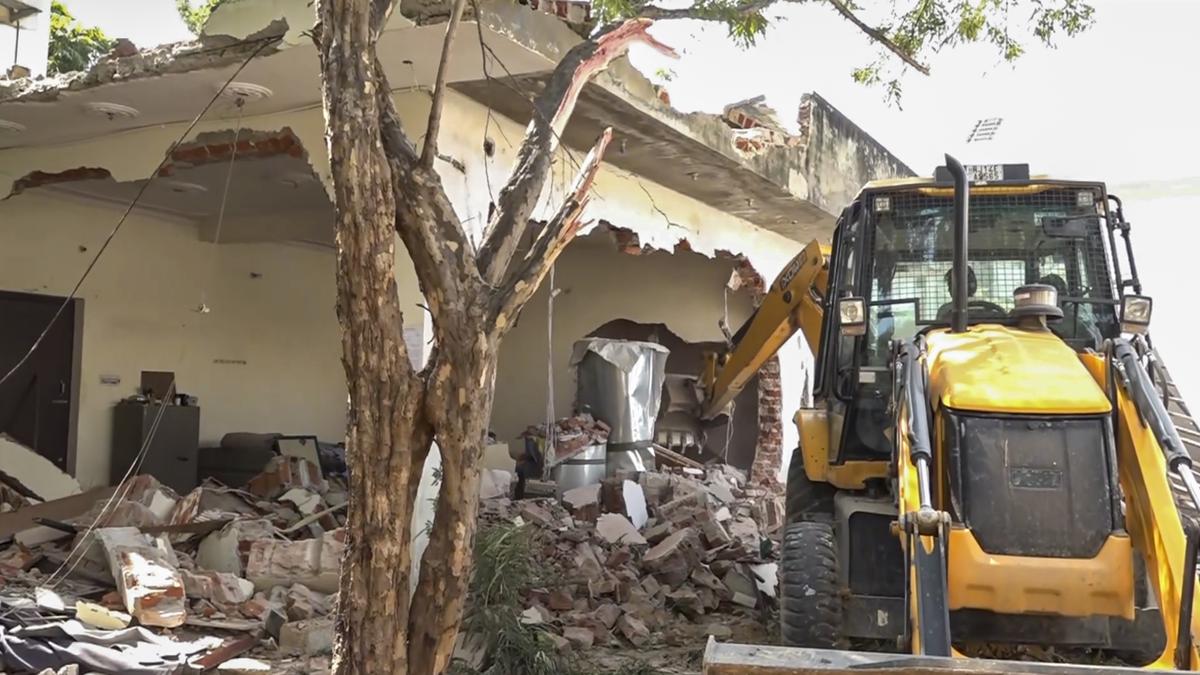
A bulldozer demolishing illegal construction. | Photo Credit: PTI
On November 13, 2024, the Supreme Court criticized the illegal demolitions of private properties, including homes of individuals accused of crimes, and mandated compensation for the victims of such actions. In a suo motu case, Justices B.R. Gavai and K.V. Viswanathan asserted that even convicted criminals must be protected from punitive state-sponsored demolitions. Previously, the court had stayed all illegal demolitions nationally as of September 17. The Supreme Court emphasized that the state cannot assume judicial powers to declare someone guilty without a court trial. It condemned the practice of demolishing homes of the accused as a misuse of power, declaring such actions undemocratic.
The court clarified that its ruling doesn’t cover encroachments on public land or unauthorized structures. It stressed that executive authorities are not judges and shouldn’t demolish property based solely on accusations, underscoring that this undermines the rule of law. To prevent arbitrary demolitions, the court issued new guidelines, including a 15-day notice for residents, ensuring demolitions do not leave families, especially children, women, and elderly, homeless. Demolitions must be recorded as evidence if legality is contested. Notices should be sent via registered post detailing the unauthorized aspects, and a personal hearing must be granted to the property owner. The final decision must consider the owner’s objections and a report on the demolition must be submitted to the Municipal Commissioner.
Original Story https://www.thehindu.com/news/national/supreme-court-on-illegal-demolition-verdict/article68862530.ece
Category :
Tags: