The Hybrid Edtech Moat: Architecting Profitable Growth Beyond the App

Beyond the Digital Pipe: Why the Next Era of EdTech Is an Architectural Challenge
For nearly a decade, the prevailing orthodoxy in consumer technology-especially edtech-was simple: build a digital pipe, pour content into it, and let near-zero marginal costs deliver infinite scale. That illusion has quietly shattered. Today, raw reach is no longer a defensible moat; reliable human outcomes and unit-economic discipline are.
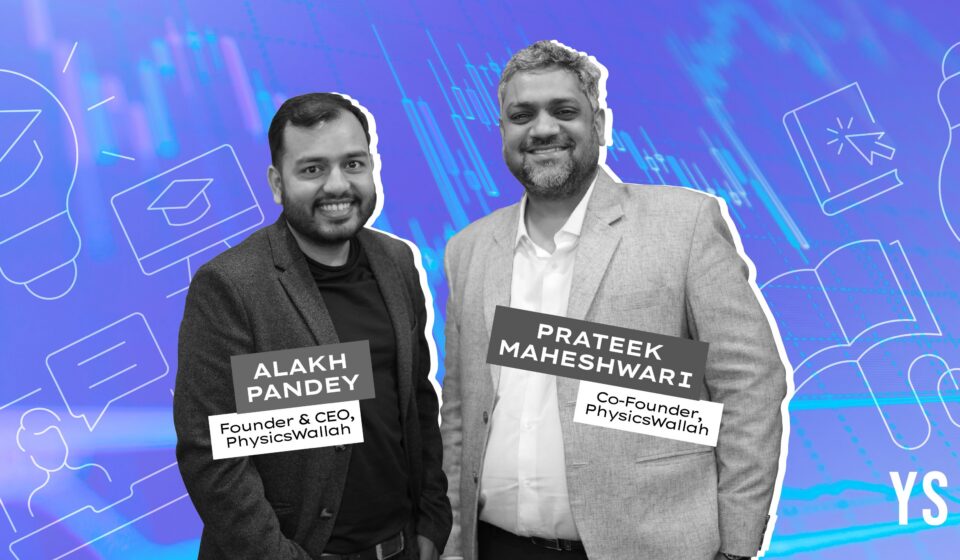
This structural shift came into sharp focus recently when PhysicsWallah outlined its FY30 ambition-targeting Rs 9,000–10,000 crore in revenue alongside pre-Ind AS EBITDA margins above 20%, with online operations driving two-thirds of the business even as its physical network expands. Framed against recent sector consolidation, rising investments in AI-supported assessments, and tightening state and central regulations, the industry is clearly entering a far more demanding phase of architectural maturity.
Engineering the “Phygital” Balance
From a software architecture standpoint, scaling a pure-play video platform is a solved problem. Content Delivery Networks (CDNs), elastic cloud storage, and adaptive bitrate streaming can serve millions of concurrent learners with relative ease. The real engineering friction begins when an enterprise blends high-margin digital scale with brick-and-mortar infrastructure.
Running offline learning centers alongside a massive digital platform is not merely a real estate challenge; it is a distributed systems problem. It demands unified ERP backbones, real-time cohort telemetry, and precise revenue-recognition engines that account for seasonal enrollment cycles. If an organization’s underlying software treats physical centers as disconnected silos rather than edge nodes of a unified cloud-native architecture, operational drag will quickly erode any targeted margin expansion. Profit can only grow faster than revenue when every physical touchpoint is instrumented with the same data discipline as a cloud microservice.
From Content Pipes to Adaptive Intelligence
Equally telling is the market’s pivot from distribution to verifiable teaching quality. Families are no longer persuaded by marketing reach alone; they judge institutions on measurable results.
Technically, this renders the traditional Content Management System (CMS) obsolete. The next decade belongs to platforms integrating Generative AI and machine learning directly into the assessment and diagnostic layer. In my work advising academic boards and mentoring startups, I consistently observe that static video libraries rarely solve learning gaps on their own. The real technological leverage lies in adaptive feedback loops-systems that analyze individual learning patterns, flag conceptual bottlenecks early, and empower educators with actionable intelligence rather than attempting to replace them.
Governance by Design
Tightening central and state guidelines around fee transparency, student welfare, infrastructure, and explicit consent for student testimonials also mark the end of unchecked growth hacking. For CTOs and founders, regulatory compliance can no longer remain a downstream legal checkbox; it must become “governance by design.”
Immutable consent ledgers, automated refund and fee-recognition workflows, and auditable student-welfare records must be native to the platform’s core data layer. Building compliance into the architecture early prevents crippling technical debt when regulatory scrutiny inevitably intensifies.
The Bharat Imperative
This disciplined evolution holds profound significance for emerging regions like Northeast India. Across our smaller cities and towns, educational aspiration is sky-high, yet families remain acutely sensitive to both cost and institutional credibility. Purely online models often hit a wall here against last-mile bandwidth inconsistencies and engagement fatigue, while traditional offline coaching hubs remain prohibitively expensive.
A frugal, cloud-native backbone paired with trusted, accessible physical touchpoints-ensuring families never have to exhaust their life savings for a child’s education-is the exact blueprint required to democratize opportunity across Bharat.
Strategic Takeaways for Tech Leaders
- Unify the Edge: Treat physical centers and digital apps as one synchronized data plane to protect unit economics.
- Instrument for Outcomes: Shift R&D investment from passive content delivery to AI-assisted diagnostic and assessment engines.
- Bake in Compliance: Architect regulatory transparency and verifiable consent tracking directly into core enterprise databases.
- Design for Frugality: Prioritize resilient, low-latency architectures that serve Tier-2 and Tier-3 realities reliably.
Technology achieves its highest purpose not when it merely amplifies noise at scale, but when it quietly engineers trust, affordability, and human potential over the long haul.
About the Author: Sanjeev Sarma is the Founder Director and Chief Software Architect at Webx Technologies. With a core focus on Generative AI integration, Cloud-Native Scalability, and Enterprise Software Architecture, he has spent over two decades driving digital transformation across Northeast India and beyond. Beyond his corporate leadership, Sanjeev is deeply invested in shaping the future of the IT industry. He serves as an Industry Expert on the Board of Studies for Assam Don Bosco University’s School of Technology, advises state technology committees, and actively mentors emerging tech startups at STPI. He brings a unique, dual perspective of high-level enterprise execution and future-ready academic curriculum development.