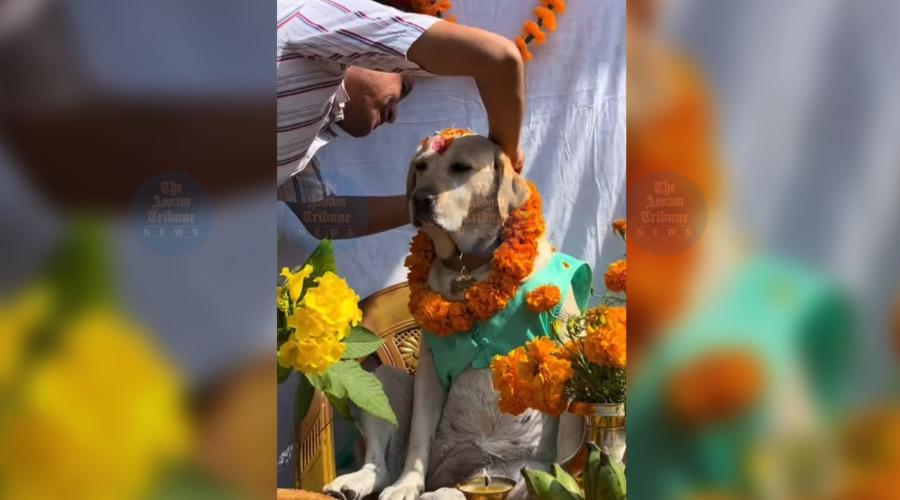

Gangtok, Nov 8: As autumn chill settles over the Eastern Himalayas, Sikkim is celebrating Tihar, or Yamapanchak, a five-day festival of lights that coincides with Diwali but is distinguished by a nature-centric ethos, animal worship and community performances. While Diwali in many parts of India centers on Lord Rama’s return, fireworks and festive shopping, Tihar here celebrates bonds among humans, animals, nature and family.
A defining feature is dedicated days of worship for animals traditionally associated with Yama, the Hindu god of death. Kaag Tihar begins with offerings of grains, seeds and sweets to crows and ravens, believed to be Yama’s messengers. Kukur Tihar honors dogs, including pets and street dogs, with red tika, marigold garlands and special meals for their loyalty and protective instincts. Gai Tihar worships cows as symbols of nourishment associated with Goddess Lakshmi, followed by Goru Tihar for oxen and their role in agriculture. This animal focus sets Tihar apart from Diwali celebrations elsewhere centered on Lakshmi-Ganesha Puja, Chhoti Diwali and Govardhan Puja, though animal worship appears in some regional traditions.
“Tihar is not just about illuminating our homes; it is about extending our respect to every living being that sustains our life in the mountains,” said Archana Pradhan, a Gangtok resident preparing marigold garlands. “When we feed crows on Kaag Tihar or garland dogs on Kukur Tihar, we acknowledge that nature does not belong to humans alone.”
As dusk settles, Sikkim’s celebrations feature traditional songs and community performances, not firecrackers. On Lakshmi Puja night, girls go house to house performing Bhailini, singing folk songs wishing peace and prosperity. The following evenings belong to Deusi, when young men and community members visit neighborhoods, recite verses, play guitars and traditional instruments such as the madal, and dance through the night. Householders welcome them with lit diyas, homemade sel roti, fruits and tokens of appreciation.
“In big cities, Diwali has largely become an indoor family affair or a commercial exchange of gift boxes,” said cultural researcher Sunita Rai. “Here, through Deusi and Bhailini, the entire village or neighborhood becomes your family for the night.”
Homes across Sikkim are illuminated with clay diyas, marigold strings and rangoli patterns to welcome Goddess Lakshmi. The fourth day coincides with Mha Puja, observed by the Newar community and marking the New Year of the Nepal Sambat calendar. Family members sit before intricate Mha Mandalas drawn with rice flour, colored powders and sand; the eldest female member leads rituals offering lights, flowers, fruits and itaa to invoke health, prosperity and protection.
The festival closes with Bhai Tika, Sikkim’s counterpart of Bhai Dooj, when sisters apply a seven-colored tika on brothers’ foreheads and pray for their long life and prosperity. “The rainbow-colored tika and the long-lasting makhamali flower garlands carry our prayers for our brothers’ strength and well-being,” said Srijana Chettri, holding a wooden tray prepared for final rituals.
Tihar offers a glimpse into a tradition in which devotion extends beyond the household and into the natural world, bringing people, animals and communities together.
Original Source: https://assamtribune.com/north-east/a-festival-beyond-lights-how-sikkims-tihar-celebrates-people-animals-nature-1622387
Category: North East,Featured
Tags:
Publish Date: 2026-11-08 16:23:00