Architecting the Full-Stack Platform for Distributed Clean Energy

The $10M Is Not the Story. The 48-Hour Decision Is.
Most conversations about India’s clean energy transition still begin with the cost of capital. I would argue the binding constraint is duller and far more architectural: the time it takes to say yes.
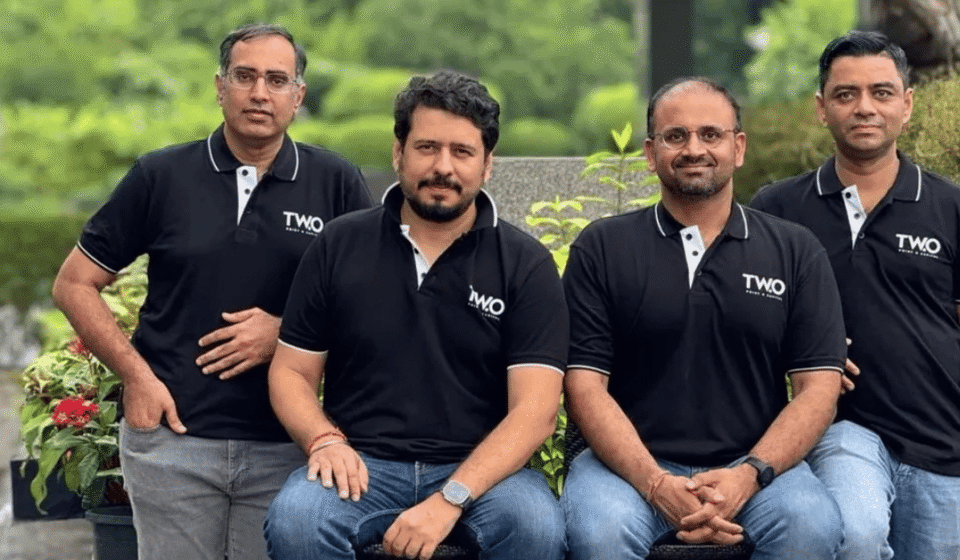
Two Point O Capital’s $10 Mn Series A, led by Transition Venture Capital, is being read in the market as a bet on distributed C&I solar. I read it differently – as a bet on an underwriting engine. The startup finances rooftop solar, BESS, energy efficiency and wastewater treatment through a wholly-owned NBFC plus a separate operating entity, executes via OEMs and EPC partners rather than in-house crews, and claims a techno-commercial proposal within 24–48 hours. It now plans to enter the SME segment and build a $75–100 Mn AUM.
Where the actual engineering sits
Strip away the financing language and you find a data modelling problem. A techno-commercial proposal requires fusing two completely different ontologies: physical plant specifications on one side, credit risk on the other. Most NBFCs handle this with two departments and a spreadsheet handoff. That handoff is where three weeks disappear.
The NBFC-plus-opco structure is also worth pausing on. It’s composable architecture in a regulatory wrapper – the balance sheet, the lease book, and the service layer decoupled so each can scale or fail independently. Cleaner separation than most enterprise platforms manage.
The more interesting move is IoT telemetry on deployed assets. Once you can observe generation, consumption and performance in real time, collateral stops being a static balance sheet line and becomes a live data feed. That is a genuine shift in lending philosophy – from asset-pledge to instrumented cash-flow verification. It also quietly builds the most valuable thing in this business: a proprietary performance dataset that no bank can replicate from the outside.
The complexity has not been removed – it has been relocated
The “light-touch” model is often described as asset-light. In my experience, it is really integration-heavy. Every OEM and EPC partner becomes an external system with its own telemetry formats, SLAs and failure modes. If those data contracts are not standardised early, the oversight layer accumulates technical debt far faster than the capital stack grows. Scale does not forgive this.
The SME expansion is the real stress test
The same holds for the multi-asset model. Four asset classes with four different risk profiles will either converge on one abstract underwriting core or quietly fork into four codebases and four teams. The SME pivot sharpens this: thin credit files, smaller tickets, a long tail of partners. Underwriting engines tuned on 25–30 large accounts routinely fail on distribution economics rather than on credit quality.
The India Stack bridge
This is precisely where our public digital rails matter. For distributed clean energy in regions like the Northeast – tea processing, cold chain, hospitality, small manufacturing – the financing gap is wider still, and thin credit history is the reason. Account Aggregator, OCEN and the Unified Lending Interface were built to make thin-file underwriting tractable. A platform that already holds asset-level telemetry is the ideal candidate to sit on those rails, provided its data model is interoperable rather than proprietary.
What I’d tell young founders
Your defensible moat is rarely the stack you build. It is the data contracts you negotiate in year one.
Takeaways
- Underwriting speed is a systems design outcome, not a staffing outcome.
- Regulatory structure and software structure should mirror each other – the NBFC/opco split is the right pattern.
- Asset telemetry turns collateral into a live feed and is the real long-term asset.
- Light-touch operations concentrate risk in partner integration, not in execution.
- SME lending stresses data quality long before it stresses credit appetite.
Capital gets you into the game. Information architecture decides whether you stay.
About the Author: Sanjeev Sarma is the Founder Director and Chief Software Architect at Webx Technologies. With a core focus on Generative AI integration, Cloud-Native Scalability, and Enterprise Software Architecture, he has spent over two decades driving digital transformation across Northeast India and beyond. Beyond his corporate leadership, Sanjeev is deeply invested in shaping the future of the IT industry. He serves as an Industry Expert on the Board of Studies for Assam Don Bosco University’s School of Technology, advises state technology committees, and actively mentors emerging tech startups at STPI. He brings a unique, dual perspective of high-level enterprise execution and future-ready academic curriculum development.