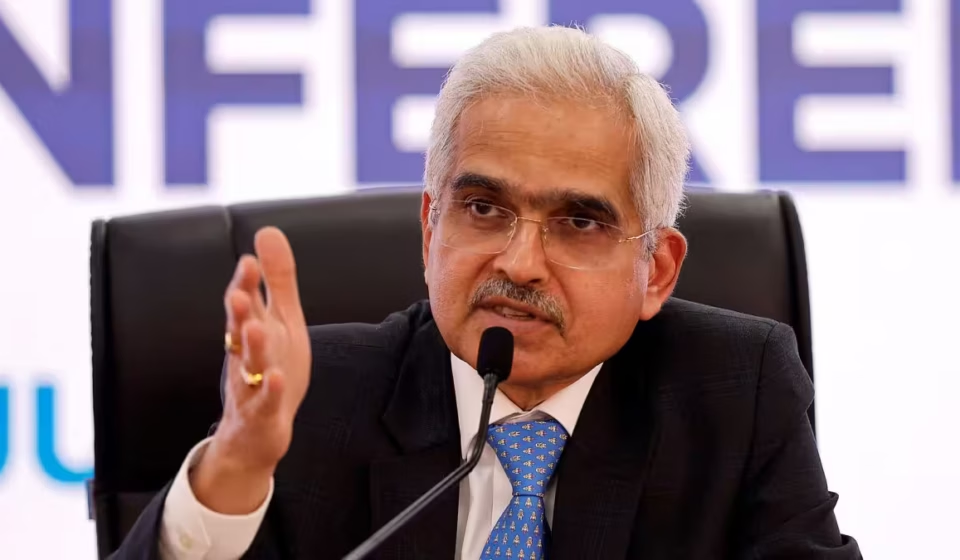

India’s real GDP grew 7.8 per cent in the first quarter of 2026-27, while average growth over the four quarters from July 2025 to June 2026 remained slightly above 8 per cent, according to Shaktikanta Das, Principal Secretary-2 to Prime Minister Narendra Modi. Speaking at the Kautilya Economic Conclave, Das said a decade of structural reforms has strengthened India’s ability to withstand global shocks, although economic growth is expected to moderate.
Das credited reforms including flexible inflation targeting, the Goods and Services Tax, fiscal consolidation, digital payments and banking-sector reforms with creating stronger economic buffers. He said these measures have helped India absorb disruptions while sustaining relatively robust domestic demand. The banking system has also improved, with gross non-performing assets-a measure of stressed loans-falling to 1.68 per cent in June 2026. Bank profitability has risen significantly, according to Das.
India’s external sector has provided additional support. Strong services exports, remittances from Indians abroad, greater export diversification and a sustained services trade surplus have helped cushion the economy against external pressures. Das said these buffers had been tested by the Covid-19 pandemic, supply-chain disruptions, geopolitical tensions and volatility in energy markets.
However, Allianz Research expects India’s growth to slow to 7.5 per cent in 2026, 7.1 per cent in 2027 and 6.8 per cent in 2028. It forecasts consumer price inflation will increase from 4.7 per cent in 2026 to 5.2 per cent in 2027 before easing to 4.2 per cent in 2028. The firm also expects India and South Korea to enter a monetary-tightening cycle in the fourth quarter of 2026, with policy remaining sensitive to energy and food prices as well as currency pressures.
Das said sustaining India’s growth momentum will require further reforms and investment in artificial intelligence, deeper financial markets, strategic self-reliance, sustainability and human capital. He said AI could raise productivity and improve public services, but data governance, algorithmic bias, AI safety and cybersecurity must also be addressed. Stronger corporate bond markets, pension and insurance funds, municipal finance and other long-term sources of capital could help meet the economy’s financing needs. Strategic self-reliance in energy and manufacturing, alongside better skills and employment for India’s large working-age population, will be critical to converting recent resilience into sustained productivity and income growth.
Original Source: https://www.firstpost.com/business/india-growth-shaktikanta-das-reforms-economic-resilience-14050354.html
Category: India
Tags:
Publish Date: 2026-10-05 05:39:00