Accountability by Design: Governing AI Mobility at Autonomous Scale

Autonomy’s Missing Layer Is Incident Response
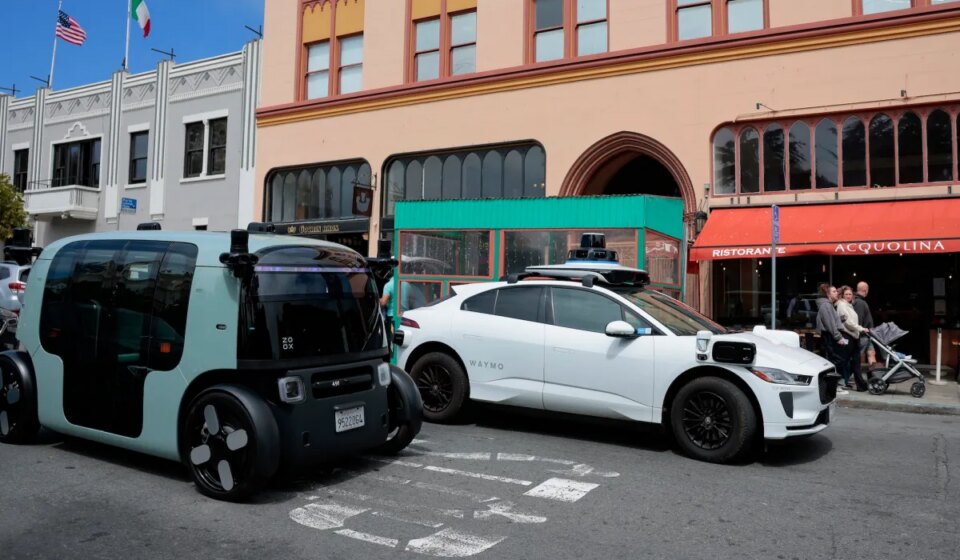
We tend to measure robotaxis by miles driven, pickup times, and how rarely human intervention is required. Society will measure them differently: by what happens when a vehicle is disabled, confused, or obstructing a fire engine.
Autonomy does not become valuable merely because it removes a driver. It becomes valuable when it reduces risk without creating a new burden for the public.
California’s new Senate Bill 1246 marks an important inflection point. From July 2028, autonomous vehicle operators will face stronger obligations for local incident support, qualified remote drivers, emergency notifications, and accountability when vehicles interfere with first responders. The important shift is not one particular rule or the 30-minute threshold. It is the recognition that an autonomous vehicle is an operating public-service system-not simply a vehicle powered by an algorithm.
From Driving Capability to Operational Resilience
Most discussions around autonomous mobility focus on perception, planning, and mapping. These capabilities are essential, but they answer only part of the production question: What happens when the system encounters a situation outside its designed operating envelope?
A production-grade AV architecture needs three distinct planes:
- Safety plane: Real-time decisions executed on the vehicle, even when connectivity is unreliable.
- Fleet-coordination plane: Routing, charging, software updates, and resource optimisation across the fleet.
- Incident-response plane: Detection, triage, local recovery, emergency coordination, and evidence preservation.
If the third plane is bolted on after deployment, the result is architectural debt. Incident support is not overhead to be minimised; it is part of the service and must be included in network planning and unit economics.
Remote assistance alone will not be sufficient. Network latency, ambiguous location data, cyber incidents, and conflicting human instructions can turn a minor malfunction into a serious failure. Operators will need defined recovery protocols, severity-based service levels, regional response capability, and secure coordination with police, fire, and medical services.
Accountability Must Become an Interface
The deeper architectural challenge is interoperability. If every AV company invents its own incident codes, logs, escalation processes, and emergency interfaces, local agencies will carry the integration burden.
A useful industry standard would define how vehicles report:
- Exact location and operational status
- Nature and severity of the incident
- Whether the vehicle is moving, immobilised, or awaiting recovery
- Remote assistance status
- Relevant diagnostic and event logs
This standard must also include privacy, access control, retention, and chain-of-custody rules. More telemetry does not automatically mean better governance; data minimisation and Zero Trust principles remain essential.
California may not have produced the perfect framework, but it has exposed the correct architectural question. Other jurisdictions may follow-or wait for federal guidance-but fragmented rules will increase compliance costs and slow deployment.
The Lesson for Complex Systems Beyond Mobility
This challenge extends well beyond robotaxis. Every AI-enabled system operating in the physical world needs a defined path from automation to human accountability. The relevant board-level questions are not only:
- How accurate is the model?
- How much can the system scale?
- What happens when it fails?
CTOs and founders should also ask: Who owns recovery, how quickly can the system reach a safe state, and can the organisation reconstruct what happened afterwards?
For India, copying California’s staffing model would be neither practical nor desirable. Heterogeneous traffic, weather, road conditions, and uneven local infrastructure make incident response especially difficult. A more scalable approach could involve shared incident codes, secure telemetry standards, regional response cells, and clear interagency protocols. The goal should not be a fleet that never encounters uncertainty, but a mobility ecosystem that manages uncertainty without transferring the cost to citizens or first responders.
The next benchmark for autonomous mobility will not be zero incidents. It will be zero incidents that become society’s problem.
Key takeaways
- Treat incident response as a core architectural plane, not a post-launch support function.
- Include response costs, recovery times, and local coverage in autonomy business cases.
- Standardise machine-readable incident data and emergency interfaces across operators.
- Measure autonomous systems by graceful degradation and accountable recovery-not automation alone.
About the Author: Sanjeev Sarma is the Founder Director and Chief Software Architect at Webx Technologies. With a core focus on Generative AI integration, Cloud-Native Scalability, and Enterprise Software Architecture, he has spent over two decades driving digital transformation across Northeast India and beyond. Beyond his corporate leadership, Sanjeev is deeply invested in shaping the future of the IT industry. He serves as an Industry Expert on the Board of Studies for Assam Don Bosco University’s School of Technology, advises state technology committees, and actively mentors emerging tech startups at STPI. He brings a unique, dual perspective of high-level enterprise execution and future-ready academic curriculum development.