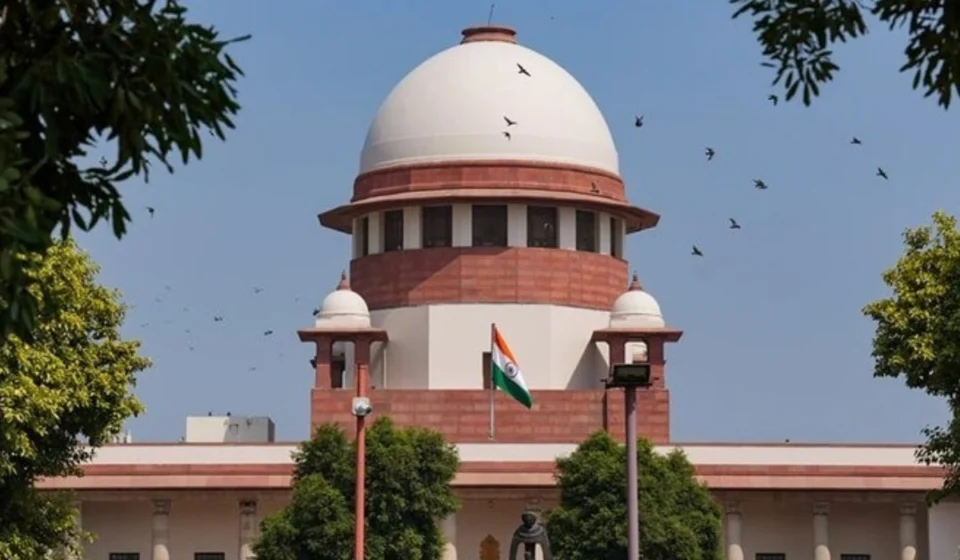

The Supreme Court has indicated that individuals who choose not to sing the National Song, Vande Mataram, out of genuine religious conviction or as conscientious objectors should not face criminal penalties for their decision.
The remark came on Tuesday, September 22, during a hearing before a Supreme Court bench comprising Chief Justice Surya Kant and Justices Joymalya Bagchi and V Mohana. The court was examining a petition that challenges the constitutional validity of the 2026 amendment to the Prevention of Insults to National Honour Act, 1971, which extends legal protection under the Act to Vande Mataram.
The case was filed by acclaimed Carnatic musician T M Krishna, who has contested both the amendment and government directives requiring the singing of all six stanzas of Vande Mataram at official functions. Krishna has argued that certain later stanzas contain references to Hindu deities and that compelling individuals to sing them infringes upon fundamental freedoms of conscience and religion.
Drawing on precedent, the bench referred to the Supreme Court’s landmark 1986 judgment in the Bijoe Emmanuel case, which safeguarded students who respectfully declined to sing the National Anthem on the basis of genuine religious belief. Justice Bagchi observed that the legal principle established in that ruling remains valid and continues to apply.
The court made clear that a conscientious objector should not be subject to criminal consequences for electing not to sing some or all stanzas of Vande Mataram on religious grounds.
However, the Supreme Court signaled that it would not rule at this stage on whether Vande Mataram should be formally recognized as the National Song or whether its official rendition should comprise two or six stanzas. The court stated that matters concerning national symbols fall within the domain of the elected government.
Instead, the judiciary will focus on a more fundamental question: whether attaching criminal penalties to a citizen’s refusal to sing the National Song on grounds of conscience or religion is consistent with the country’s fundamental rights.
Under the 2026 amendment, the existing provisions governing the National Anthem have been extended to Vande Mataram. The revision makes it an offence to intentionally prevent the singing of the National Song or to cause disturbance to an assembly engaged in its rendition, with punishability prescribed under the Act.
The Supreme Court has asked the Union Government to file its response to Krishna’s petition within two weeks, setting the stage for further hearings on the constitutional implications of the amendment.
Original Source: https://www.guwahatiplus.com/india/refusing-to-sing-vande-mataram-for-religious-reasons-should-not-invite-criminal-action-sc
Category: India
Tags:
Publish Date: 2026-09-22 18:33:00