Beyond the Summit: Architecting US-China AI and Tech Dominance

The Chip Wars Are Really About Who Owns the Architecture
Ten years ago, when most enterprises were busy migrating to the cloud, few paused to ask a far more consequential question: Who actually owns the physical and intellectual substrate that makes cloud computing possible? Today, that question isn’t theoretical – it’s the central axis around which global geopolitics, and by extension, enterprise technology strategy, now rotates.
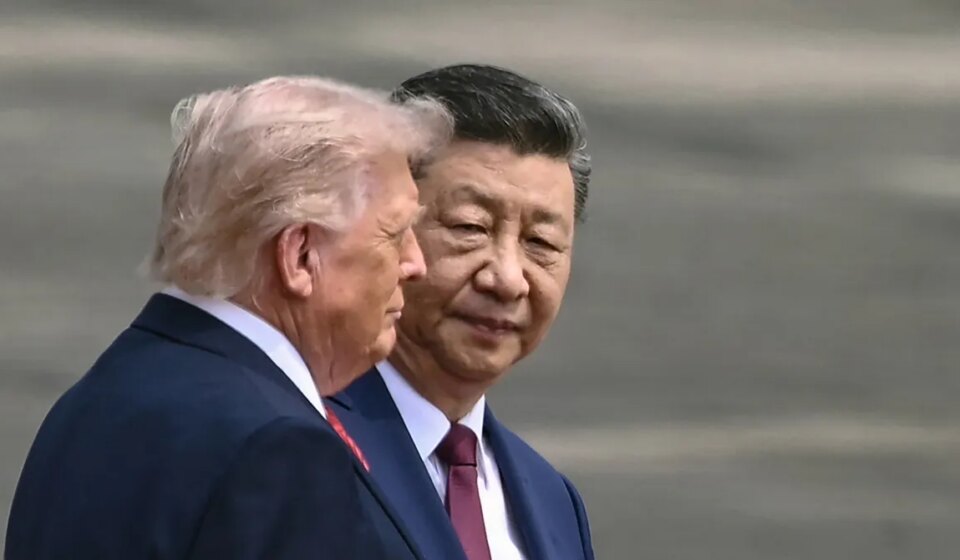
The upcoming meeting between President Trump and Chinese President Xi Jinping, set against the backdrop of the United Nations General Assembly, is being closely watched for signs of détente on trade. But strip away the diplomatic language, and what emerges is a high-stakes architectural negotiation over the foundational layers of the global technology stack. The Busan trade truce, set to expire on November 10, isn’t just about tariffs and Boeing orders. Its most consequential clause – the lifting of China’s export restrictions on rare earths and minerals – touches the very hardware that powers automobiles, defense systems, and crucially, artificial intelligence. Simultaneously, bilateral discussions on AI safety and chip export controls reveal that both superpowers recognize a truth any enterprise architect would immediately grasp: the most critical risk in any technology ecosystem isn’t a software bug; it’s dependency on an uncontrollable supply chain.
What this means for enterprise architecture and technology leadership is profound and often underappreciated. We are witnessing the gradual but irreversible fragmentation of the global tech stack into sovereign layers. Export controls on semiconductors aren’t merely trade policy – they are architectural constraints that force entire industries to redesign their infrastructure. When a company can no longer rely on a consistent supply of advanced chips or the raw minerals that fabricate them, every prior assumption about scalability, cost optimization, and vendor selection becomes void. The concept of “cloud-native” loses its meaning if the underlying silicon is subject to geopolitical gatekeeping.
This reality demands a fundamental shift in how technology leaders think about resilience. The old paradigm prioritized efficiency – lean supply chains, just-in-time procurement, single-vendor dependencies. The new imperative is redundancy with purpose. Chief Architects and CTOs must now design systems that can gracefully degrade across alternative hardware platforms, migrate workloads between geographically sovereign data centers, and evaluate sourcing risk as a first-class architectural concern alongside latency and throughput. The trade-off is stark: speed versus stability, optimization versus survivability. Most legacy systems were engineered for the former. Very few were built for the latter.
For India – and for the Northeast in particular – this moment carries its own significance. As the nation accelerates its semiconductor mission and pushes for self-reliant digital infrastructure under frameworks like Digital Public Infrastructure, the global chip contest validates a path that policymakers have long championed. The challenge, however, is equally architectural: building indigenous capability in chip design, rare earth processing, and AI research requires more than funding. It demands a radical rethinking of talent pipelines, research collaboration models, and the willingness to accept short-term inefficiency in service of long-term sovereignty. I have often noted that India’s digital public stack – UPI, Aadhaar, ONDC – succeeded precisely because it was designed for a constraint-rich environment. That same frugal architectural philosophy may be precisely what is needed to navigate a world of fragmented technology supply chains.
Key Takeaways for Technology Leaders:
- Treat supply chain as architecture. Sourcing risk for critical minerals, chips, and rare earths should be modeled with the same rigor as system availability and disaster recovery.
- Design for fragmentation. Multi-vendor, multi-region, and hardware-agnostic architectures are no longer idealistic – they are essential.
- Re-evaluate “cloud-native” assumptions. Sovereignty constraints may require hybrid or on-premises deployments that were previously considered suboptimal.
- Invest in sovereign capability. Whether at the national or enterprise level, the long-term cost of dependency will always exceed the short-term cost of building alternative capacity.
We are entering an era where the most important architecture diagram isn’t drawn on a whiteboard – it’s etched into geopolitical treaties and mineral supply routes. The leaders who recognize this today will be the ones whose systems still stand a decade from now.
About the Author: Sanjeev Sarma is the Founder Director and Chief Software Architect at Webx Technologies. With a core focus on Generative AI integration, Cloud-Native Scalability, and Enterprise Software Architecture, he has spent over two decades driving digital transformation across Northeast India and beyond. Beyond his corporate leadership, Sanjeev is deeply invested in shaping the future of the IT industry. He serves as an Industry Expert on the Board of Studies for Assam Don Bosco University’s School of Technology, advises state technology committees, and actively mentors emerging tech startups at STPI. He brings a unique, dual perspective of high-level enterprise execution and future-ready academic curriculum development.