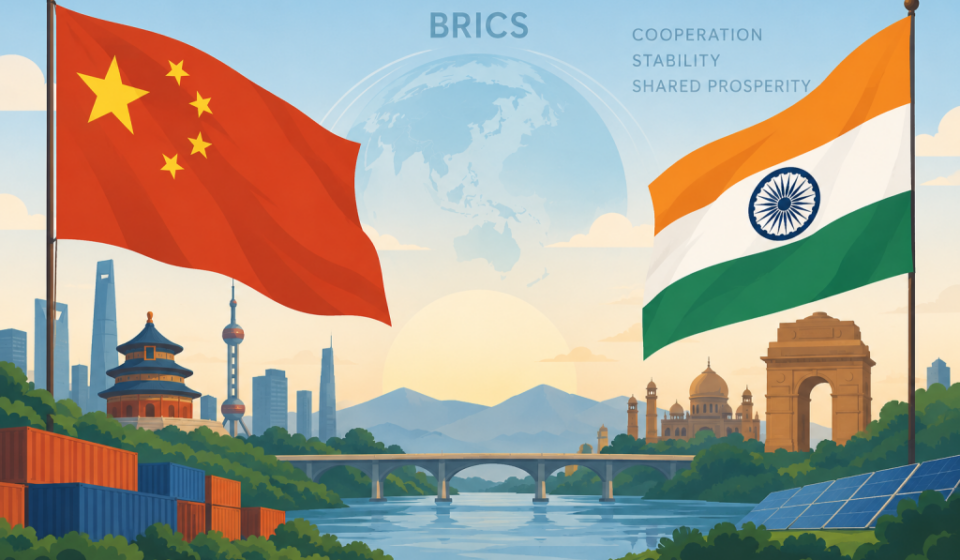

The world’s attention focused on the 18th BRICS Summit as China and India, two of the most influential neighboring powers, navigated the complexities of their bilateral relations against a backdrop of expanding global responsibilities. Following pivotal discussions held in Kazan and Tianjin, the meeting between the leaders of both nations in New Delhi marked a defining moment at a critical juncture in their diplomatic relationship.
The summit provided a high-profile platform for China and India to address longstanding tensions while exploring areas of cooperation that could reshape the strategic landscape of the region. As two of the largest economies in Asia, the direction of their relationship carries profound implications for trade, security, and governance across the Global South. The New Delhi encounter signaled a mutual willingness to engage constructively, even as both countries pursue distinct national interests on the world stage.
The talks in Kazan and Tianjin had already set the tone for a more deliberate approach to managing the bilateral dynamic, with both sides recognizing the importance of stability in their dealings. The convergence of leaders in New Delhi built on those discussions, emphasizing the need for steady and long-term engagement rather than short-term tactical gains. This approach reflects a growing understanding among policymakers in both capitals that sustained dialogue is essential to navigating the competitive dimensions of their partnership.
Regional and global observers closely followed the proceedings, aware that the outcomes of these exchanges could influence broader geopolitical alignments. The BRICS framework itself has become an important venue for China and India to voice their priorities, with the summit serving as more than just a diplomatic formality. For both nations, the ability to balance rivalry with cooperation within multilateral settings remains a defining challenge of contemporary international relations.
The significance of the New Delhi meeting extends beyond bilateral considerations. As major voices in the Global South, China and India share an interest in promoting development, reforming international institutions, and asserting greater autonomy in global decision-making. Their ability to present a coordinated front on these issues, even amid competition, will shape the future trajectory of multilateral governance.
While much remains unresolved between the two powers, the recent diplomatic momentum suggests a recalibration toward pragmatic engagement. The path forward will depend on continued communication, mutual respect for core interests, and a shared recognition that the costs of miscalculation are too high for either side to bear. The new strategic landscape being charted by China and India will be closely watched by capitals around the world.
Original Source: https://eastmojo.com/neighbourhood-watch/2026/09/19/opening-a-new-strategic-landscape-for-steady-and-long-term-china-india-relations/
Category: China,National News,Neighbourhood Watch,News,Northeast News,Opinion,Premium ,World
Tags:
Publish Date: 2026-09-19 11:40:00