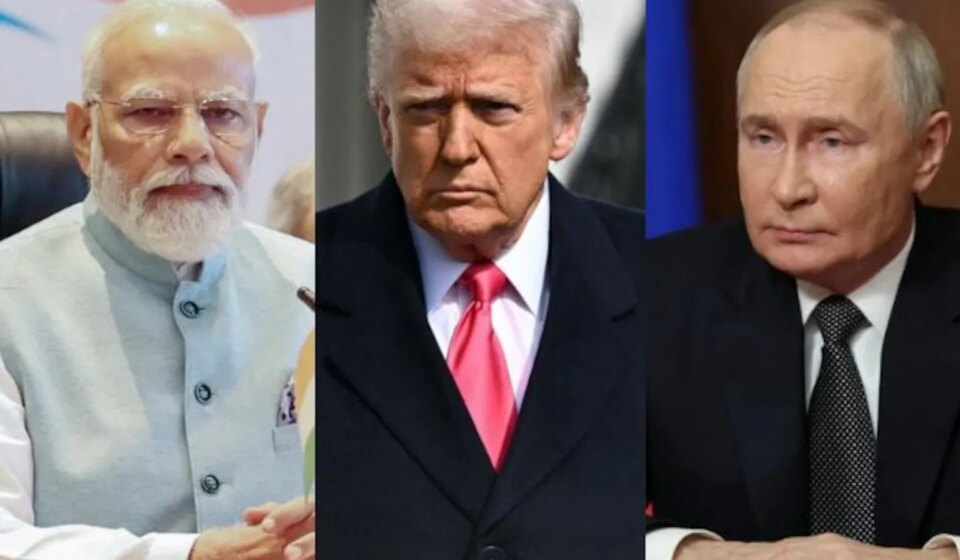

US President Donald Trump has signed the Russia sanctions bill into law, opening the door to tariffs of up to 100 per cent on countries that purchase Russian oil and gas, a move that directly threatens India and China. The decision followed a decisive 262-159 vote in the Republican-led House of Representatives two days earlier, signalling broad bipartisan support for tightening economic pressure on Moscow.
The legislation, formally known as the Lindsey O Graham Sanctioning Russia and Iran Act of 2026, is named after Senator Lindsey Graham, a prominent Ukraine advocate in Washington who passed away in July shortly after visiting Kyiv. At its core, the bill is designed to choke off the financial resources fuelling Russia’s war in Ukraine. It targets Russian government officials, banks, energy interests, and any foreign entities that continue to support Moscow’s military operations. According to the House Ways and Means Committee, the law authorises tariffs of up to 500 per cent on Russian goods and duties of up to 100 per cent on imports from nations identified as major buyers of Russian energy or facilitators of sanctions evasion. It also imposes direct sanctions on Russian President Vladimir Putin and senior figures within the Russian government.
For India, the signing of this bill introduces a significant new tariff risk. A Democratic amendment introduced by Congressman Steny Hoyer had explicitly named ten countries, including India, China, the UAE, Turkiye, Singapore, Azerbaijan, Kazakhstan, Hungary, Kyrgyzstan, and Slovakia, as eligible for secondary tariffs of up to 100 per cent. While the amendment itself does not automatically impose such a duty, President Trump now holds the authority to enforce it. If he does, the 100 per cent tariff would be stacked on top of an existing 10 per cent duty that the United States currently levies on Indian imports, imposed as a penalty related to forced labour concerns. The actual economic impact on Indian exports, however, remains uncertain until the US announces specific tariff rates.
India’s ties with the United States were already under strain last year when Trump levied an additional 25 per cent tariff on Indian imports of Russian crude, layered over a 25 per cent reciprocal tariff. Although those additional tariffs were lifted in February 2026, the reciprocal tariff was reduced to 18 per cent under a broader US-India trade framework.
India’s foreign ministry responded firmly when the US Congress passed the bill, stating that New Delhi is determined to protect its trade and economic interests. “As stated on several earlier occasions, India remains firmly committed to ensuring energy security for its 1.4 billion people. It will continue to do so through diversified sourcing and based on evolving market dynamics,” the ministry said in a statement. Officials noted that India’s oil trade with Russia has been discussed at high levels with US counterparts, and the potential implications for both the bilateral relationship and the global energy market have been clearly communicated.
Notably, the bill was not without internal dissent. While most Republican lawmakers voted in favour, many privately urged party leaders to remove the new tariff powers from the legislation. According to CNN, these lawmakers warned that the tariffs risked driving up consumer prices domestically, introducing a layer of tension within the party as the economic consequences of the sanctions take shape.
Original Source: https://www.ndtv.com/world-news/donald-trump-signs-russia-sanctions-bill-amid-ukraine-war-clears-way-for-100-tariffs-on-india-china-12067070#publisher=newsstand
Category:
Tags:
Publish Date: 2026-09-19 07:21:00