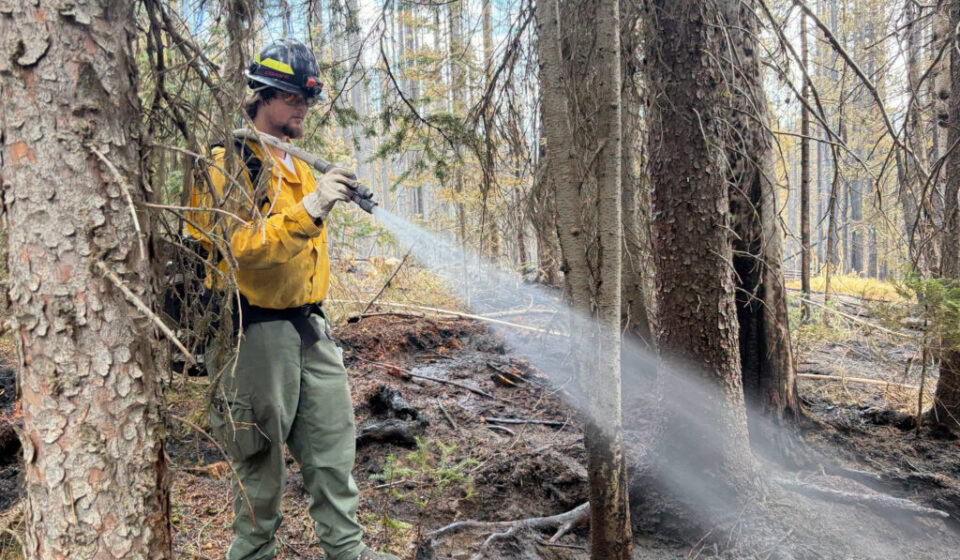
Architecting Scalable, Data-Driven Wildfire Response and Resilience

When a single summer storm briefly slows a fast-moving wildfire, it feels like a reprieve – until the next heat wave returns and the fire reignites. The episode in southwestern Montana this August, where three large fires raced across tens of thousands of acres and forced communities and agencies into an intense operational response, is not just an environmental story. It’s an operational case study for every architect and CTO designing systems for climate resilience.
Context
I recently read a report about three wildfires in southwestern Montana that burned roughly 47,000+ acres, challenged inter-agency coordination, and exposed how rapidly weather shifts can overturn containment gains. Rainfall bought firefighters time to strengthen lines; rising heat and lower humidity immediately reversed the risk calculus.
Analysis – what this means for enterprise architecture and resilience
-
Events are data problems – but they require real-time, trusted pipelines. Wildfire managers rely on satellite imagery, meteorological models, lightning detection, and field reports. For enterprises building resilience platforms, the architectural lesson is clear: implement low-latency, multi-source ingestion with provenance. Event-driven architectures (stream processing + time-series stores) that fuse remote sensing, ground sensors, and human reports produce a more actionable single source of truth than siloed dashboards.
-
Edge-first processing is no longer optional. Many critical sensors operate in low-connectivity terrain. Push preliminary analytics to the edge (e.g., anomalous temperature rises, smoke signatures), then sync summarized events to the cloud. This reduces false negatives from delayed telemetry and preserves bandwidth during emergency surge.
-
Models must be judged by operational impact, not just accuracy metrics. Fire-spread forecasts trade lead time for confidence. Longer-horizon predictions might be less precise but more valuable for logistics and insurance decisions; short-horizon forecasts help tactical firefighting. Design systems that expose model confidence and allow decision-makers to choose the right model for the problem (strategic vs tactical).
-
Interoperability and governance matter. The Montana response involved multiple agencies, crews and contractors. In tech terms, that means standardized APIs, shared ontologies for incident data, and clear SLAs for information sharing. Equally important: data governance frameworks that define what gets shared publicly, what stays within agencies, and who certifies data for insurance or disaster grants.
-
Funding, insurance and incentives are part of the architecture. Technology alone cannot rebuild a damaged ski lift or re-open a small business. System designers must therefore model financial flows: trigger-based grants, parametric insurance payouts using verified sensor data, and audit trails that reduce friction for funding decisions.
-
Trade-offs – speed vs. stability; openness vs. control. In emergencies you want fast access to data, but too-open systems invite misinformation or misuse. Design with role-based access, cryptographic signing of critical telemetry, and immutable audit logs to balance transparency and security.
Localization – a practical bridge to India’s context
The operational lessons are directly applicable to India’s forested and hilly regions, including parts of Northeast India. Frugal sensor networks (solar-powered IoT, community reporting apps), smartphone-first alerting, and localised predictive models (trained on local vegetation and microclimate) can amplify scarce firefighting capacity. Importantly, combine tech with social architecture: incentivise village-level defensible-space programs and integrate them into the incident data fabric.
Takeaways – what leaders should act on, now
- Build event-driven, multi-source data platforms with edge summarization and cloud analytics.
- Expose model confidence and provide operational playbooks that map forecast horizons to decisions.
- Standardize APIs and ontologies for inter-agency data exchange; include cryptographic signing and immutable logs.
- Design financial triggers into systems (parametric insurance, grant automation) to accelerate recovery.
- Invest in frugal, local sensor deployments and community integration for last-mile detection.
Closing thought
Climate extremes are shifting the failure modes of our systems – the most resilient architectures will be those that treat disasters as socio-technical events, not just engineering problems.
About the Author: Sanjeev Sarma is the Founder Director and Chief Software Architect at Webx Technologies. With a core focus on Generative AI integration, Cloud-Native Scalability, and Enterprise Software Architecture, he has spent over two decades driving digital transformation across Northeast India and beyond. Beyond his corporate leadership, Sanjeev is deeply invested in shaping the future of the IT industry. He serves as an Industry Expert on the Board of Studies for Assam Don Bosco University’s School of Technology, advises state technology committees, and actively mentors emerging tech startups at STPI. He brings a unique, dual perspective of high-level enterprise execution and future-ready academic curriculum development.