Recycling Oil Windfalls to Build Scalable EV Infrastructure

A structural shock, not a short-term tantrum
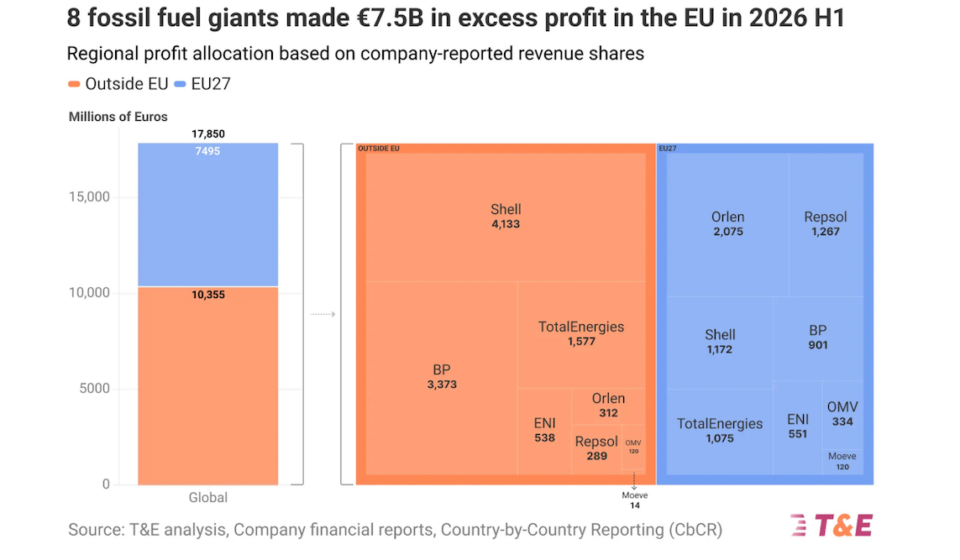
We’ve grown used to thinking of oil-price shocks as temporary market events that consumers endure until “normal” returns. The recent analysis showing large excess profits by a handful of oil majors – and the policy call to capture some of those gains for an accelerated shift away from fossil‑fuel exposure – reframes the conversation. This is less about a one-off fiscal grab and more about designing resilient mobility and energy systems that are measurable, auditable and accountable.
The signal in two sentences
Transport & Environment’s analysis (reported widely) identifies large year‑on‑year excess profits for several oil companies in early 2026 and proposes a permanent windfall tax with revenues ring‑fenced to reduce drivers’ exposure to volatile fossil fuels – for example by making electric driving more affordable. The key policy lever is revenue recycling to accelerate structural change.
What this means for system design and governance
-
Data first, policy second: Effective windfall taxation depends on transparency. T&E’s methodology deliberately sidesteps profit-booking distortions by applying country-level revenue shares to group profits – a pragmatic workaround, but a fragile one. If governments want durable policy, they need digital infrastructures that surface trusted, auditable economic flows: standardized country-by-country reporting, tamper-evident revenue registries, and interoperable APIs between regulators and firms. Building these data fabrics is squarely a systems‑engineering challenge – not merely a taxation problem.
-
Architecture of enforcement: Tax policy becomes an exercise in secure data sharing. That requires:
- A modular data platform that can ingest company disclosures, national sales data, and downstream indicators (fuel volumes, EV uptake, charging transactions).
- Strong provenance and audit trails (immutable logs, cryptographic signatures) so disputes are resolvable.
- Privacy and competition safeguards so commercial data sharing doesn’t create new systemic risks.
These are the same architectural patterns I advocate for when designing any critical public data system: clear contracts, versioned schemas, and zero‑trust access controls.
-
Revenue recycling as an interoperability problem: If the objective is to make electric driving more affordable, the funds must flow into interventions that are measurable – subsidies for vehicle purchase, targeted incentives for charging infrastructure in underserved areas, or demand‑side support for low‑income drivers. That requires end‑to‑end systems linking tax receipts to program outcomes: beneficiary registries, payment rails, and outcome analytics that can be independently verified.
-
Automation vs human judgment: AI can detect anomalies in reported revenues or fuel-sale patterns, but automated flags must be paired with institutional capacity to investigate and arbitrate. Fast decisioning reduces leakages but increases the cost of false positives; design trade‑offs must be explicit.
Why this matters to technology leaders and founders
- For CTOs in regulated industries: expect higher demand for secure data exchange platforms and explainable analytics. Build for auditability from day one – logs, data lineage and immutable records are not optional.
- For founders in energy and mobility: policy signals that recycle revenue to electrification change product-market fit. Solutions that reduce consumers’ total cost of ownership (charging-as-a-service, managed home-charging that aligns with grid constraints) will find calmer waters if policy supports demand-side transition.
- For public-sector architects: this is a moment to invest in interoperable public data infrastructure that supports tax fairness while enabling industrial transformation. Design choices made now determine whether funds accelerate low‑carbon access or dissipate in compliance headaches.
A pragmatic note for India (and similar markets)
The broader lesson is transferable: transparency, digital trust, and outcome‑linked spending beat headline policymaking. Whether in India’s metro corridors or in the Northeastern states with their unique grid and geographic constraints, revenue recycled into targeted charging infrastructure, localized incentives, and load‑aware grid upgrades would deliver outsized social value – provided the underlying data plumbing is built right.
Key takeaways
- Windfall taxation is effective only when supported by transparent, auditable data systems.
- Build modular, privacy‑aware data platforms with strong provenance to enable enforcement and public trust.
- Recycled revenues must connect to measurable interventions; design outcome pipelines, not only budget lines.
- Balance automation with institutional capacity to investigate and adjudicate.
Closing thought
Fiscal tools and technology must co-evolve – capturing excess profits is only the beginning; what follows is a systems problem of governance, data architecture and trustworthy execution. Get the plumbing right, and policy becomes a lever that scales, rather than a flash in the pan.
About the Author: Sanjeev Sarma is the Founder Director and Chief Software Architect at Webx Technologies. With a core focus on Generative AI integration, Cloud-Native Scalability, and Enterprise Software Architecture, he has spent over two decades driving digital transformation across Northeast India and beyond. Beyond his corporate leadership, Sanjeev is deeply invested in shaping the future of the IT industry. He serves as an Industry Expert on the Board of Studies for Assam Don Bosco University’s School of Technology, advises state technology committees, and actively mentors emerging tech startups at STPI. He brings a unique, dual perspective of high-level enterprise execution and future-ready academic curriculum development.